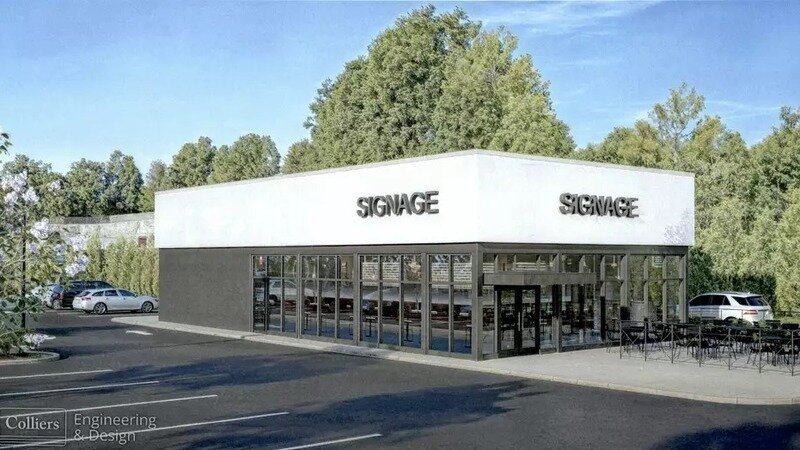
Examples of proposed architecture for "Guilford Village West"

Guilford holds the distinction of having the third largest collection of historic homes in New England, with over 450 structures dating back to the 17th, 18th, and 19th centuries. These homes are living artifacts that reflect centuries of architectural, cultural, and civic identity. Together, they form a kind of open-air museum, a preserved landscape that speaks to the values and craftsmanship of generations past.
To continue allowing large swaths of Guilford’s limited remaining land to be sold off is to abandon our responsibility as stewards of that legacy. The proposed development at 1940 Boston Post Road, like others before it, offers little more than a sterile, utilitarian structure - a box devoid of character, context, or connection to its surroundings. These buildings are indistinguishable from those found in any suburban corridor across America. They do not belong in Guilford, or in any New England town that values authenticity and place.
Modern commercial architecture, in its most common form, is not neutral. It is actively destructive. It erases the aesthetic continuity that gives towns like Guilford their soul. It favors cost-efficiency and brand visibility over architectural harmony and civic dignity. And worst of all, it does so to serve developers who have no personal stake in the long-term well-being of the communities they build in - only in the short-term profits they can extract from them.
We must ask: what do we gain by trading in our woodlands and cultural identity for vacant storefronts and parking lots? What do we lose when we allow the built environment to drift further and further from the language of our town’s history?
Guilford doesn’t need more generic construction. It needs guardianship - a commitment to preservation, to beauty, and to building with intention and respect. The integrity of our town is not something to be negotiated. It is something to be protected.