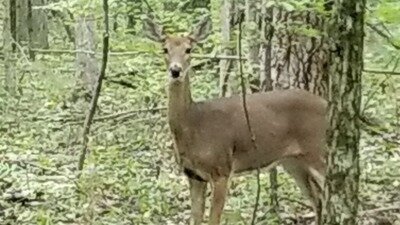

Adopt a Deer Management Program in Brunswick OH
The Issue
This petition is for signatures to take to the city council of Brunswick, Ohio to persuade them to create a deer management plan that can go to the Ohio Department of Natural Resources (ODNR) for implementation and assistance with the management of the plan. ODNR will not act until the city takes the initial steps.
In 2022 and 2023 there has been a noticeable increase in the number of deer living in the residential areas near North Park. While this has created an enjoyable experience for some, it has created many negative deer-human interactions.
In these past 2 years, many residents in the North Park area have had gardens, outdoor plants, and landscaping destroyed by deer. This includes bushes, trees and shrubs. There has been damage to outdoor property such as fences and furniture on porches as well.
Public safety has become a viable concern. Residents and North Park visitors have had deer stand their ground while walking in the park and surrounding neighborhoods. The deer do not run off. Some even rise and stomp at people. This is a type of posturing may eventually lead to attacks on people and/or pets.
Not only is safety a concern but the health of deer and humans are at risk when large amounts of deer are congregated in a small area, such as the North Park population, making it easy for disease to take hold and spread. Disease-carrying organisms such as ticks, Lyme's disease and worms can then spread illness to humans and pets alike. The increase in scat in resident's yards and walkways make an easy source of transmission of these diseases.
However, the deer population should not be managed solely to help reduce negative interactions people and pets have with the deer, but also used as a holistic approach to the health of the North Park eco-system.
An excess deer population will lead a to negative eco-system impact in North Park. Over population will lead to a decrease in the plant life at ground and mid-understory levels (where deer forage). Other wildlife species that depend upon these disappearing resources will decrease as well. Some residents in the area have already noticed a decrease in other smaller wildlife species they have enjoyed observing over the years.
“Browse lines” develop in areas with too many deer. Spring plants, especially typically abundant forest wildflowers, are hit hard after long winters. As these plants are repeatedly browsed, they are unable to reproduce and often die out because their nutrient-energy reserve is depleted without the ability to go through a normal seasonal growth cycle. Seedling trees are heavily browsed by deer, and can occur to the point where forest regeneration stops. Plants that are not preferred by deer expand, including grass, some sedge, and many unwanted exotic (non-native) species.
The cumulative effect on natural areas, especially forested areas like North Park, can be so great it devastates the ecosystem. This type of devastation has already occurred in the nearby Cleveland Metroparks. Some of those forest areas will take many years to recover. Some have been impacted by deer browsing to such a severe degree that reproduction of new forest trees has essentially stopped. In these areas, native plants, like annual wildflowers, need to be re-introduced. NEO tropical migrating and year-round songbirds are dependent upon groundcover and the shrub/tree understory that provide nesting, foraging cover and food. These species have been challenged to find nesting opportunities in the Cleveland Metroparks forest areas that lack understory and groundcover habitat decimated by deer browsing. We want to avoid this occurring in North Park.
Ultimately, the goal of the deer management program should be to ensure the balance of the deer population is aligned with and maintains native plant species growth, continued North Park forest regeneration and successful forest health that supports ALL the wildlife that live in the area. This includes protecting resident's landscaping, food/flower gardens, pets, and personal property from deer destruction and disease.

Petition Closed
The Issue
This petition is for signatures to take to the city council of Brunswick, Ohio to persuade them to create a deer management plan that can go to the Ohio Department of Natural Resources (ODNR) for implementation and assistance with the management of the plan. ODNR will not act until the city takes the initial steps.
In 2022 and 2023 there has been a noticeable increase in the number of deer living in the residential areas near North Park. While this has created an enjoyable experience for some, it has created many negative deer-human interactions.
In these past 2 years, many residents in the North Park area have had gardens, outdoor plants, and landscaping destroyed by deer. This includes bushes, trees and shrubs. There has been damage to outdoor property such as fences and furniture on porches as well.
Public safety has become a viable concern. Residents and North Park visitors have had deer stand their ground while walking in the park and surrounding neighborhoods. The deer do not run off. Some even rise and stomp at people. This is a type of posturing may eventually lead to attacks on people and/or pets.
Not only is safety a concern but the health of deer and humans are at risk when large amounts of deer are congregated in a small area, such as the North Park population, making it easy for disease to take hold and spread. Disease-carrying organisms such as ticks, Lyme's disease and worms can then spread illness to humans and pets alike. The increase in scat in resident's yards and walkways make an easy source of transmission of these diseases.
However, the deer population should not be managed solely to help reduce negative interactions people and pets have with the deer, but also used as a holistic approach to the health of the North Park eco-system.
An excess deer population will lead a to negative eco-system impact in North Park. Over population will lead to a decrease in the plant life at ground and mid-understory levels (where deer forage). Other wildlife species that depend upon these disappearing resources will decrease as well. Some residents in the area have already noticed a decrease in other smaller wildlife species they have enjoyed observing over the years.
“Browse lines” develop in areas with too many deer. Spring plants, especially typically abundant forest wildflowers, are hit hard after long winters. As these plants are repeatedly browsed, they are unable to reproduce and often die out because their nutrient-energy reserve is depleted without the ability to go through a normal seasonal growth cycle. Seedling trees are heavily browsed by deer, and can occur to the point where forest regeneration stops. Plants that are not preferred by deer expand, including grass, some sedge, and many unwanted exotic (non-native) species.
The cumulative effect on natural areas, especially forested areas like North Park, can be so great it devastates the ecosystem. This type of devastation has already occurred in the nearby Cleveland Metroparks. Some of those forest areas will take many years to recover. Some have been impacted by deer browsing to such a severe degree that reproduction of new forest trees has essentially stopped. In these areas, native plants, like annual wildflowers, need to be re-introduced. NEO tropical migrating and year-round songbirds are dependent upon groundcover and the shrub/tree understory that provide nesting, foraging cover and food. These species have been challenged to find nesting opportunities in the Cleveland Metroparks forest areas that lack understory and groundcover habitat decimated by deer browsing. We want to avoid this occurring in North Park.
Ultimately, the goal of the deer management program should be to ensure the balance of the deer population is aligned with and maintains native plant species growth, continued North Park forest regeneration and successful forest health that supports ALL the wildlife that live in the area. This includes protecting resident's landscaping, food/flower gardens, pets, and personal property from deer destruction and disease.
Petition Updates
Share this petition
Petition created on October 21, 2023