A Welfare Journey: Let’s Save Harriet the Badger
The Issue
Harriet’s Welfare Must Come First – An Appeal for Her Future 🦡 💌
(Petition update notice: Please note that the wording and scope of this petition have been updated since the original version. As circumstances have developed, the educational licence was not granted/cancelled, meaning that Harriet’s care and future arrangements have had to be reconsidered. The petition has therefore been updated to reflect the next steps in her care, maintain our commitment to her welfare and continue exploring every appropriate alternative to euthanasia. Our aim remains to give Harriet the best possible chance of a future through suitable care, specialist assessment and alternative placement options.)
Harriet’s welfare must come first This petition and additional fundraiser are about supporting Harriet’s current care while helping to establish what the most appropriate long-term arrangements should be. Above all, our aim is to ensure that every decision made about Harriet is guided by her welfare, individual needs and best interests. We believe it is important to recognise the dedication and care that Graeme has already shown Harriet, while also acknowledging the importance of independent assessment and specialist wildlife expertise.
These two things do not have to be in opposition. ⬆️
Harriet is currently thriving in Graeme’s care. She is happy, active and continuing to display natural, instinctive behaviours. It is important to recognise that the care she has received so far has been beneficial to her. Indeed, our understanding is that, without the intervention and care she received, euthanasia (the veterinary term for putting an animal to sleep) was being considered as an outcome at that stage. Harriet’s progress demonstrates why her individual circumstances deserve careful consideration and why every possible appropriate alternative should be explored before any irreversible decision is made.
Recognising Graeme’s intentions and dedication It is equally important to clarify that Graeme has NOT simply been demanding to keep Harriet. His priority has been finding the best possible outcome for her. He has been exploring opportunities across the country, including licensed zoos and other appropriate placements, while considering which environment would best meet Harriet’s long-term welfare needs. We believe his efforts and intentions should be represented fairly.
🦡Who Is Harriet, and How Did She Come Into Graeme’s Care?
Harriet is a young badger who came into Graeme’s care after being found in an extremely vulnerable condition. She was very small, severely underweight, struggling with dehydration and, by all accounts, very close to not surviving without intervention.
Graeme took Harriet in and dedicated himself to helping her recover, providing the intensive care, feeding and attention she desperately needed. Through this care, Harriet gradually regained her strength, health and confidence, eventually reaching a much more settled and stable condition.
From the very beginning, there were clear indications that Harriet was already familiar with human contact before Graeme took her in. She confidently grasped a bottle with both paws and drank milk in a manner that suggested this was not an entirely unfamiliar experience for her. This raised important questions about her earlier circumstances and whether human contact had already been established before she came into Graeme’s care.
Over time, Harriet and Graeme developed a bond through the essential care and feeding she required to survive. Graeme effectively had to take on the role of a maternal caregiver, including bottle-feeding and meeting her needs during a particularly vulnerable stage of her life.
🏡 Harriet’s home and daily environment
It is important to understand that Harriet’s current environment is not simply a case of a wild animal being kept in an ordinary domestic setting.
Graeme’s property has extensive garden space, enclosed areas and separate pens, providing different environments for Harriet and opportunities for her to have space away from human contact whenever she chooses.
Interactions are not forced. Graeme allows Harriet to approach him when she wishes, and if she does not seek interaction, he respects that and leaves her alone. Her ability to choose whether to engage or remain independent is an important part of the way he describes managing her daily care.
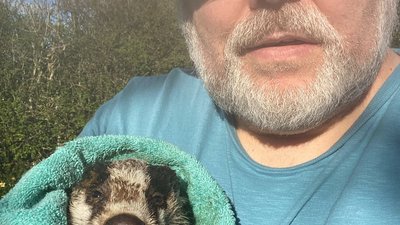
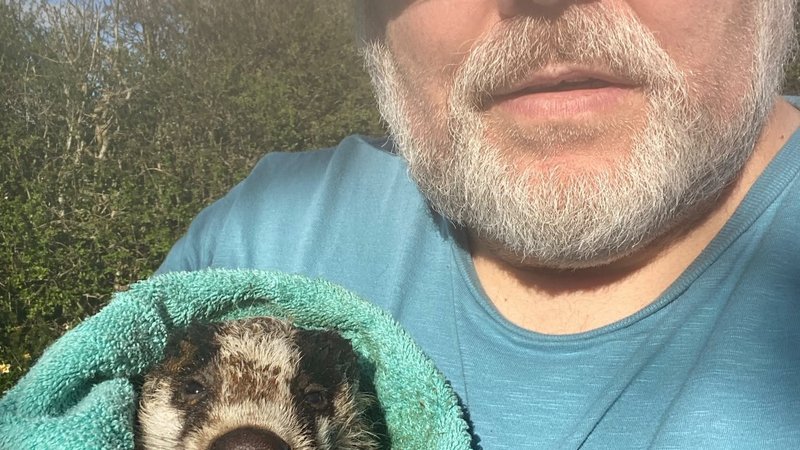
There has been media attention surrounding images of Graeme handling Harriet, including footage in which he picked her up for the camera and she snuggled against his face. It is important, however, that an isolated image or video is not taken as a complete representation of their everyday relationship.
The behaviour shown could have included natural social or grooming-related behaviour, such as investigating his face. It should not automatically be interpreted as evidence that Harriet is routinely handled or that her daily interactions are forced.
We believe the full circumstances of Harriet’s care, her environment, her behaviour and her individual welfare needs deserve proper consideration rather than conclusions being drawn from a small selection of media footage.
❤️ The bond between Harriet and Graeme matters
The message that people should not touch or handle wild badgers is absolutely correct as general public advice.
However, there is an important distinction between members of the public approaching a wild badger and the circumstances in which an animal has required intensive human care and bottle-feeding to survive.
Harriet did not simply arrive as a healthy, independent wild badger. She was a tiny, vulnerable animal who required round-the-clock attention and human intervention.
The closeness that developed between Harriet and Graeme needs to be understood in that context. Their relationship developed through the care she needed at a critical stage of her life.
Harriet is now happy, healthy and displaying natural instincts and behaviours. We believe that any decision about her future must properly consider the attachment that has developed, her current quality of life and the potential impact of moving her away from the environment and caregiver she knows.
This does not mean that independent assessment should be avoided. Quite the opposite: it should be an essential part of determining what is genuinely in Harriet’s best interests.
📋 The educational licence and why the situation has changed
The original aim of this petition and fundraiser was to support the possibility of Graeme obtaining an educational licence for Harriet.
The intention was to allow him to create educational content, raise awareness about badgers and wildlife welfare, and help educate the public about why wild animals should not be taken from the wild or handled unnecessarily.
The educational purpose did not mean that Harriet would need to be constantly handled, filmed closely or made to interact with people.
The intention was to explore ways of producing educational videos about Harriet and her environment, including natural footage of her going about her daily activities, with filming that did not require direct contact or disturbance.
Unfortunately, the educational licence was not granted. This has fundamentally changed the circumstances and meant that the next steps in Harriet’s care and future have had to be reconsidered.
As a result, Graeme is now having to explore alternative licensed facilities and suitable placements that could accommodate Harriet and meet her specialist welfare requirements.
This is proving extremely difficult because the facilities being considered would need to provide the appropriate environment, space, enrichment, specialist knowledge and individual care Harriet requires.
There is also an important question that cannot be overlooked: if Harriet is already receiving many of these provisions in her current environment, what would be the actual welfare benefit of moving her, and what would the consequences of that move be?
We are not suggesting that Harriet should automatically remain where she is without proper assessment. We are asking why the positive progress she has made, her established bond with Graeme and her current quality of life should not be given equal consideration when exploring her future.
💔 Why we are asking for support
The heartbreaking part of this situation is that Harriet has already come so far.
She arrived extremely vulnerable, and through intensive care she has recovered, developed confidence and established a relationship with the person who helped her through that critical period.
Now, because the original educational licensing route has not been successful, the possibility of moving Harriet away from her current home is being explored, whether or not that is ultimately the most beneficial outcome for her.
Graeme has not simply demanded to keep Harriet. He has been exploring licensed zoos and other appropriate opportunities across the country, trying to establish where she could receive the best possible long-term care.
We believe this process should involve independent protected-species specialists, wildlife organisations, charities and appropriate licensing authorities, with open communication and a genuine willingness to consider every suitable option.
Our appeal is simple: please do not allow Harriet’s future to become about personalities, headlines or assumptions. Let it be about Harriet.
🐾 Her recovery matters.
🦡 Her natural behaviours matter.
❤️ Her bond and emotional welfare matter.
🏡 Her current environment and quality of life matter.
🩺 Independent specialist assessment matters.
And above all, every appropriate alternative to euthanasia or an unnecessary and potentially disruptive move must be properly explored.
Harriet deserves a future based on her individual welfare needs, not assumptions about what that future should look like.
Wanting the best possible outcome for Harriet is not the same as insisting on keeping her permanently.
🔓 The importance of collaboration and independent expertise There are other protected-species specialists, wildlife organisations and charities whose knowledge and experience could contribute positively to finding the right solution for Harriet. We believe meaningful communication and collaboration are essential. It is concerning if important discussions and opportunities for collaboration are taking place without all relevant people being brought into the conversation. Rather than allowing the situation to become focused on an individual through media coverage (!!) we would like to see greater emphasis placed on constructive communication, specialist advice and practical support.
Direct engagement with Graeme, alongside independent professional assessment, could be far more beneficial to Harriet’s welfare than personal criticism or a public narrative (!!) that risks overlooking the wider circumstances.
We are not asking for decisions to be made without proper scrutiny, nor are we suggesting that one person’s care should automatically determine Harriet’s future.
We are asking that: Harriet’s positive progress and current quality of life are recognised. Graeme’s efforts and intentions are represented fairly. Independent wildlife and protected-species specialists are involved. Licensed and suitable long-term placements are properly explored. All appropriate alternatives are considered before any decision about euthanasia is made. There should be no disagreement about the most important consideration: Harriet’s welfare must come first.
Her future should be determined through compassion, evidence, independent assessment and collaboration between the people and organisations best placed to help her.
A reminder about badger welfare and legal protection We would also like to take this opportunity to remind everyone that badgers are wild animals and a legally protected species in Scotland under the Protection of Badgers Act 1992, as amended. Badgers should never be approached, handled, fed or disturbed by members of the public. ‼️
If you come across a badger that appears injured, unwell, distressed or in an unusual situation, please: Keep a safe distance. Do not attempt to touch, handle, feed or move the animal.
Do not attempt to rescue it yourself. Seek advice from qualified wildlife professionals and follow their instructions.
Only handle or intervene with a badger if an appropriately qualified professional specifically instructs you to do so.
🩷 Who to contact if you have concerns about badgers in Scotland Scottish SPCA ☎️ 03000 999 999
🩷 https://www.scottishspca.org/ Scottish Badgers https://www.scottishbadgers.org.uk/
🩷 Scottish Badgers can provide information about badger conservation, local groups and advice on concerns involving badgers.
Please remember: badgers are wild animals, and respecting their welfare means allowing them to remain undisturbed wherever possible and ensuring that any necessary intervention is carried out by people with the appropriate knowledge, experience and authority. Harriet’s circumstances are individual, and her welfare needs must be considered accordingly.
Her situation should never be interpreted as encouragement for members of the public to handle or keep wild badgers. ❌
Ultimately, this petition and additional fundraiser is about compassion, responsible decision-making and giving Harriet the best possible chance of a future. Her welfare, happiness and quality of life must remain at the heart of every decision.
How the Funds Raised Will Be Used All funds raised in addition to this petition will go towards supporting Harriet’s welfare and care, both in the short term and, where necessary, her temporary and ongoing long-term care. This includes, but is not limited to:
- Care and accommodation: Supporting Harriet’s immediate, temporary and longer-term care requirements.
- Veterinary and medical needs: Veterinary assessments, treatment, medication and any other necessary medical expenses.
- Specialist transportation:
Safe and appropriate transportation to veterinary appointments, assessments or suitable alternative placements.
Enrichment and welfare:
Appropriate enrichment, activities and environmental provisions to support Harriet’s physical and psychological wellbeing. - Specialist care: Any additional equipment, resources or professional support required to maintain her welfare.
The priority is to ensure that Harriet receives the care, attention and appropriate support she needs, while continuing to explore the best possible options for her future.
💡Any funds remaining after Harriet’s necessary care and associated expenses have been met will be made available to GW Ecology Rehabilitation and Rescue, a non-profit organisation, to support its ongoing work helping other animals, wildlife and creatures in need. 🦔
This means that any additional funds can continue to make a positive difference beyond Harriet, helping other vulnerable animals and wildlife receive support, rehabilitation and care. 🥹
📌 Every signature and donation will be used with the intention of making a positive difference to animal welfare, with Harriet’s needs remaining the first priority.
2,856
The Issue
Harriet’s Welfare Must Come First – An Appeal for Her Future 🦡 💌
(Petition update notice: Please note that the wording and scope of this petition have been updated since the original version. As circumstances have developed, the educational licence was not granted/cancelled, meaning that Harriet’s care and future arrangements have had to be reconsidered. The petition has therefore been updated to reflect the next steps in her care, maintain our commitment to her welfare and continue exploring every appropriate alternative to euthanasia. Our aim remains to give Harriet the best possible chance of a future through suitable care, specialist assessment and alternative placement options.)
Harriet’s welfare must come first This petition and additional fundraiser are about supporting Harriet’s current care while helping to establish what the most appropriate long-term arrangements should be. Above all, our aim is to ensure that every decision made about Harriet is guided by her welfare, individual needs and best interests. We believe it is important to recognise the dedication and care that Graeme has already shown Harriet, while also acknowledging the importance of independent assessment and specialist wildlife expertise.
These two things do not have to be in opposition. ⬆️
Harriet is currently thriving in Graeme’s care. She is happy, active and continuing to display natural, instinctive behaviours. It is important to recognise that the care she has received so far has been beneficial to her. Indeed, our understanding is that, without the intervention and care she received, euthanasia (the veterinary term for putting an animal to sleep) was being considered as an outcome at that stage. Harriet’s progress demonstrates why her individual circumstances deserve careful consideration and why every possible appropriate alternative should be explored before any irreversible decision is made.
Recognising Graeme’s intentions and dedication It is equally important to clarify that Graeme has NOT simply been demanding to keep Harriet. His priority has been finding the best possible outcome for her. He has been exploring opportunities across the country, including licensed zoos and other appropriate placements, while considering which environment would best meet Harriet’s long-term welfare needs. We believe his efforts and intentions should be represented fairly.
🦡Who Is Harriet, and How Did She Come Into Graeme’s Care?
Harriet is a young badger who came into Graeme’s care after being found in an extremely vulnerable condition. She was very small, severely underweight, struggling with dehydration and, by all accounts, very close to not surviving without intervention.
Graeme took Harriet in and dedicated himself to helping her recover, providing the intensive care, feeding and attention she desperately needed. Through this care, Harriet gradually regained her strength, health and confidence, eventually reaching a much more settled and stable condition.
From the very beginning, there were clear indications that Harriet was already familiar with human contact before Graeme took her in. She confidently grasped a bottle with both paws and drank milk in a manner that suggested this was not an entirely unfamiliar experience for her. This raised important questions about her earlier circumstances and whether human contact had already been established before she came into Graeme’s care.
Over time, Harriet and Graeme developed a bond through the essential care and feeding she required to survive. Graeme effectively had to take on the role of a maternal caregiver, including bottle-feeding and meeting her needs during a particularly vulnerable stage of her life.
🏡 Harriet’s home and daily environment
It is important to understand that Harriet’s current environment is not simply a case of a wild animal being kept in an ordinary domestic setting.
Graeme’s property has extensive garden space, enclosed areas and separate pens, providing different environments for Harriet and opportunities for her to have space away from human contact whenever she chooses.
Interactions are not forced. Graeme allows Harriet to approach him when she wishes, and if she does not seek interaction, he respects that and leaves her alone. Her ability to choose whether to engage or remain independent is an important part of the way he describes managing her daily care.
There has been media attention surrounding images of Graeme handling Harriet, including footage in which he picked her up for the camera and she snuggled against his face. It is important, however, that an isolated image or video is not taken as a complete representation of their everyday relationship.
The behaviour shown could have included natural social or grooming-related behaviour, such as investigating his face. It should not automatically be interpreted as evidence that Harriet is routinely handled or that her daily interactions are forced.
We believe the full circumstances of Harriet’s care, her environment, her behaviour and her individual welfare needs deserve proper consideration rather than conclusions being drawn from a small selection of media footage.
❤️ The bond between Harriet and Graeme matters
The message that people should not touch or handle wild badgers is absolutely correct as general public advice.
However, there is an important distinction between members of the public approaching a wild badger and the circumstances in which an animal has required intensive human care and bottle-feeding to survive.
Harriet did not simply arrive as a healthy, independent wild badger. She was a tiny, vulnerable animal who required round-the-clock attention and human intervention.
The closeness that developed between Harriet and Graeme needs to be understood in that context. Their relationship developed through the care she needed at a critical stage of her life.
Harriet is now happy, healthy and displaying natural instincts and behaviours. We believe that any decision about her future must properly consider the attachment that has developed, her current quality of life and the potential impact of moving her away from the environment and caregiver she knows.
This does not mean that independent assessment should be avoided. Quite the opposite: it should be an essential part of determining what is genuinely in Harriet’s best interests.
📋 The educational licence and why the situation has changed
The original aim of this petition and fundraiser was to support the possibility of Graeme obtaining an educational licence for Harriet.
The intention was to allow him to create educational content, raise awareness about badgers and wildlife welfare, and help educate the public about why wild animals should not be taken from the wild or handled unnecessarily.
The educational purpose did not mean that Harriet would need to be constantly handled, filmed closely or made to interact with people.
The intention was to explore ways of producing educational videos about Harriet and her environment, including natural footage of her going about her daily activities, with filming that did not require direct contact or disturbance.
Unfortunately, the educational licence was not granted. This has fundamentally changed the circumstances and meant that the next steps in Harriet’s care and future have had to be reconsidered.
As a result, Graeme is now having to explore alternative licensed facilities and suitable placements that could accommodate Harriet and meet her specialist welfare requirements.
This is proving extremely difficult because the facilities being considered would need to provide the appropriate environment, space, enrichment, specialist knowledge and individual care Harriet requires.
There is also an important question that cannot be overlooked: if Harriet is already receiving many of these provisions in her current environment, what would be the actual welfare benefit of moving her, and what would the consequences of that move be?
We are not suggesting that Harriet should automatically remain where she is without proper assessment. We are asking why the positive progress she has made, her established bond with Graeme and her current quality of life should not be given equal consideration when exploring her future.
💔 Why we are asking for support
The heartbreaking part of this situation is that Harriet has already come so far.
She arrived extremely vulnerable, and through intensive care she has recovered, developed confidence and established a relationship with the person who helped her through that critical period.
Now, because the original educational licensing route has not been successful, the possibility of moving Harriet away from her current home is being explored, whether or not that is ultimately the most beneficial outcome for her.
Graeme has not simply demanded to keep Harriet. He has been exploring licensed zoos and other appropriate opportunities across the country, trying to establish where she could receive the best possible long-term care.
We believe this process should involve independent protected-species specialists, wildlife organisations, charities and appropriate licensing authorities, with open communication and a genuine willingness to consider every suitable option.
Our appeal is simple: please do not allow Harriet’s future to become about personalities, headlines or assumptions. Let it be about Harriet.
🐾 Her recovery matters.
🦡 Her natural behaviours matter.
❤️ Her bond and emotional welfare matter.
🏡 Her current environment and quality of life matter.
🩺 Independent specialist assessment matters.
And above all, every appropriate alternative to euthanasia or an unnecessary and potentially disruptive move must be properly explored.
Harriet deserves a future based on her individual welfare needs, not assumptions about what that future should look like.
Wanting the best possible outcome for Harriet is not the same as insisting on keeping her permanently.
🔓 The importance of collaboration and independent expertise There are other protected-species specialists, wildlife organisations and charities whose knowledge and experience could contribute positively to finding the right solution for Harriet. We believe meaningful communication and collaboration are essential. It is concerning if important discussions and opportunities for collaboration are taking place without all relevant people being brought into the conversation. Rather than allowing the situation to become focused on an individual through media coverage (!!) we would like to see greater emphasis placed on constructive communication, specialist advice and practical support.
Direct engagement with Graeme, alongside independent professional assessment, could be far more beneficial to Harriet’s welfare than personal criticism or a public narrative (!!) that risks overlooking the wider circumstances.
We are not asking for decisions to be made without proper scrutiny, nor are we suggesting that one person’s care should automatically determine Harriet’s future.
We are asking that: Harriet’s positive progress and current quality of life are recognised. Graeme’s efforts and intentions are represented fairly. Independent wildlife and protected-species specialists are involved. Licensed and suitable long-term placements are properly explored. All appropriate alternatives are considered before any decision about euthanasia is made. There should be no disagreement about the most important consideration: Harriet’s welfare must come first.
Her future should be determined through compassion, evidence, independent assessment and collaboration between the people and organisations best placed to help her.
A reminder about badger welfare and legal protection We would also like to take this opportunity to remind everyone that badgers are wild animals and a legally protected species in Scotland under the Protection of Badgers Act 1992, as amended. Badgers should never be approached, handled, fed or disturbed by members of the public. ‼️
If you come across a badger that appears injured, unwell, distressed or in an unusual situation, please: Keep a safe distance. Do not attempt to touch, handle, feed or move the animal.
Do not attempt to rescue it yourself. Seek advice from qualified wildlife professionals and follow their instructions.
Only handle or intervene with a badger if an appropriately qualified professional specifically instructs you to do so.
🩷 Who to contact if you have concerns about badgers in Scotland Scottish SPCA ☎️ 03000 999 999
🩷 https://www.scottishspca.org/ Scottish Badgers https://www.scottishbadgers.org.uk/
🩷 Scottish Badgers can provide information about badger conservation, local groups and advice on concerns involving badgers.
Please remember: badgers are wild animals, and respecting their welfare means allowing them to remain undisturbed wherever possible and ensuring that any necessary intervention is carried out by people with the appropriate knowledge, experience and authority. Harriet’s circumstances are individual, and her welfare needs must be considered accordingly.
Her situation should never be interpreted as encouragement for members of the public to handle or keep wild badgers. ❌
Ultimately, this petition and additional fundraiser is about compassion, responsible decision-making and giving Harriet the best possible chance of a future. Her welfare, happiness and quality of life must remain at the heart of every decision.
How the Funds Raised Will Be Used All funds raised in addition to this petition will go towards supporting Harriet’s welfare and care, both in the short term and, where necessary, her temporary and ongoing long-term care. This includes, but is not limited to:
- Care and accommodation: Supporting Harriet’s immediate, temporary and longer-term care requirements.
- Veterinary and medical needs: Veterinary assessments, treatment, medication and any other necessary medical expenses.
- Specialist transportation:
Safe and appropriate transportation to veterinary appointments, assessments or suitable alternative placements.
Enrichment and welfare:
Appropriate enrichment, activities and environmental provisions to support Harriet’s physical and psychological wellbeing. - Specialist care: Any additional equipment, resources or professional support required to maintain her welfare.
The priority is to ensure that Harriet receives the care, attention and appropriate support she needs, while continuing to explore the best possible options for her future.
💡Any funds remaining after Harriet’s necessary care and associated expenses have been met will be made available to GW Ecology Rehabilitation and Rescue, a non-profit organisation, to support its ongoing work helping other animals, wildlife and creatures in need. 🦔
This means that any additional funds can continue to make a positive difference beyond Harriet, helping other vulnerable animals and wildlife receive support, rehabilitation and care. 🥹
📌 Every signature and donation will be used with the intention of making a positive difference to animal welfare, with Harriet’s needs remaining the first priority.
Supporter Voices
Petition Updates
Share this petition
Petition created on 25 October 2026