
SUPPORT Golden Girl Housing for all Canadians!
The Issue
Bill 69, The Golden Girl ACT, 2019 a private member’s bill introduced by Lindsay Park, MPP received outstanding support in the house from all political parties and multiple front-line agencies, caregivers, and not-for-profit organizations. The Federal government even produced a document promoting and supporting “Co-housing” to local development throughout the Province.
Sadly, the reality is developers continue to face huge roadblocks and barriers to entry to produce inventory. A developer in Peterborough, purchased a home last year intending to house up to 8-10 seniors, he and his partner renovated the property with their own money, marketed the project and less than a year later have closed the project down due to multiple barriers with insurance companies, financing and the lack of municipal and government support. Rent for space was targeted to seniors in the range of $950-$1095 per month. Each rental space included a private bedroom, shared bathroom, and common space in the kitchen, living room, recreation room, decks, and yards.
Lenders refused to finance housing that was planned for unrelated seniors living together. CMHC removed the risk of mortgage default from lenders with a mortgage insurance program years ago. Why can the same risk analysis not be applied to these vulnerable housing groups?
Why is the Ontario Human Rights for CODE protected seniors not being respected and enforced? We are asking this to be corrected immediately and consideration be given to support and finance innovative housing or even pilot project options in this time of housing crisis.
The Peterborough developer advised us that he connected with multiple insurance companies for quotes for liability insurance for his co-living home. Again he was faced with barriers when advised that the insurance would be 2x to 3x more costly than a normal residential housing insurance policy and some companies even suggested they would charge commercial insurance for a single residential dwelling unit with unrelated seniors living together. This is a clear example, of a CODE violation under the OHRC. This is unacceptable and we ask for your support to correct this inexcusable discrimination on our most vulnerable population.
Why when we discuss project development or innovative housing options is the OHRC ignored and shuffled to the side and yet, under the residential tenancy act for rentals aggressively enforced usually against the landlord?
The Ontario Human Rights Code, enacted in 1962 prohibits actions that discriminate against people in housing or accommodation; and yet we do! Time for a change and enforcement almost 60 years since development and we haven’t got it right yet? We can do better.
Seniors living together, supporting one another, sharing in-home support services, like shopping, cooking cleaning, laundry, and transportation will ensure our seniors live happier healthier lives. This type of supportive living will reduce social and emotional issues that many seniors are currently facing in this pandemic. It will enable seniors to stay in the communities they chose to live in with the people they know and love.
In fact, co-living may reduce the risks for thousands of seniors just due to the “togetherness” and the mere fact, they are not “alone and lonely.” Together people are stronger and together they will create a “family-like” environment financially paying for their own existence as they have always done. This will provide support and relief for caregivers and family members, who are struggling to raise their own children. Social and financial issues like elder abuse, wealth protection, and inheritance are further protected when there are other eyes, ears, and support from co-living friends and family. Seniors living together is, in fact, safer as it will reduce the chances of fire, medication errors, food handling problems, and unnecessary 911 calls from lonely unhappy, or desperate seniors. Co-living could very well be the answer to options for housing the vulnerable sector aging throughout Canada.
I became aware last week of the CMHC program to assist developers to build/renovate up to 3000 units according to the guidelines, to help Canadians in 15 municipalities to find affordable housing. The target market is senior women, indigenous persons, and black Canadians who are unable to find housing they can afford.
Is any of this money targeted for co-living homes? If not, why not? Will the developers of these “units” be challenged with financing and insurance issues based on their planned ownership or tenancy? Will occupants' age, colour, and race be part of the discussion for financing or insuring these new units? Is the government only supporting traditional housing “units?” Is there any innovative supportive housing?
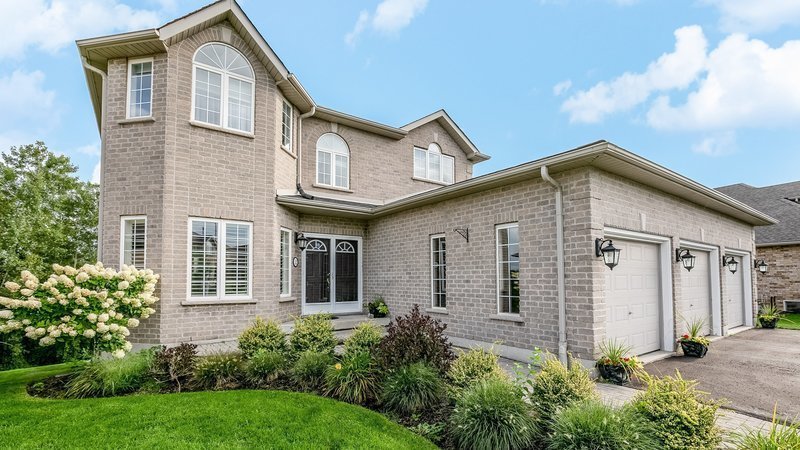
Solterra has a finished co-living residential home sitting empty with 5 bed/sitting rooms, 6 bathrooms, a 3-stop hydraulic elevator, 1421 sq. ft. of the common area across from all the amenities, green space, and walking trails in the urban core of Barrie.
What if, government money is spent to prove to you that co-living can work as it has done in Bracebridge, Brechin, and Port Perry? Why not, take it on as a “pilot project.” To date, private money purchased the home, renovated it, and has held onto it. Due to some serious health issues, the developer is unable to finish. Why are we losing this opportunity and sitting back watching inventory slide away and be sold on the open market?
The CMHC program, “Rapid Housing Initiative’” is to assist with the lack of affordable housing for our most vulnerable and may put more units on the ground but, can the lower-income individuals afford them in today’s challenging construction market? Building costs, material, and labour have increased substantially making any development a challenge and forcing rental values to increase beyond the reach of many.
Initially, I applauded the program and its’ potential start to this housing crisis we are faced with. However, there are many more seniors, both men, and women who will need other alternatives and cannot Age at Home without supportive measures in place.
Promoting and building separate apartment units where everyone lives alone and separate from one another may not be the solution for many of our senior population. Quite frankly, how is this any different than what we are faced with currently? Our public in-home support services organizations are already overwhelmed and unable to meet the current demand and these seniors are becoming frailer every day. Aging at Home solutions from other countries have proven successful yet, our governments are failing to adopt or recognize their successes.
Judy Steed, in her 2007, Atkinson fellowship paper, “Ontario braces for the grey wave,” traveled throughout the world and writes about government-backed solutions and financially sustainable housing but to my knowledge, we have learned nothing and we still refuse to look outside the box at feasible solutions that could be easily adapted using existing housing stock in every community in the province. It won’t be until the left hand follows up with the right hand that we are able to support these innovative solutions. Again, we are asking for your support to promote co-living in every community in this province and across Canada.
We were in attendance at the grand opening of the co-living shared home in Port Perry, for the “Golden Girls of Port Perry” where the Honourable Steve Clark, Minister of Housing spoke of change and innovation for housing for our vulnerable seniors.
Shelley Raymond started marketing co-housing in 2009, with her company Solterra Co-housing Ltd., she was forced to OMB in Bracebridge because the municipality couldn’t see past the fundamental human rights issues. The municipality repealed their unlawful comprehensive zoning bylaw in 2014 when Barbara Hall, of the OHRC, spoke up and advised now two municipalities where projects were planned that “people zoning” was unacceptable behaviour for a municipality. The Planning ACT was amended to include this change in 1972, years earlier, and yet we are still faced with issues in housing relating to this very simple point. In the spring of 2014, Barbara Hall advised that she intended to enforce the CODE against these two municipalities but only after multiple projects have been started in Bracebridge, Brechin, Port Perry, and Barrie by this company.
Finally, to help seniors in their everyday lives moving forward, why can’t we negotiate flat rates for the internet and utilities as we have done during the pandemic? These people are on a fixed income and are often forced to stop one activity to pay the bills to house themselves, safely. Good housing is safe housing; eliminating disease, infections, asthma, injuries, and mental health. Public health has long addressed issues in housing targeting poor sanitation, overcrowding, inadequate ventilation reducing fire hazards and injuries. Why not directly assist individuals again?
It should be noted that historically, the private sector builds 26 times more “units” than the government yet many applicants of those units want to Age in Place with dignity and comfort in an all-inclusive downtown rental unit close to all amenities but pay rent equal to what the government support programs provide $600-$750 per unit. This is no longer feasible and unattainable for the developer.
In conclusion, affordability must be self-sustaining over the long-term and it must be affordable to the developer who builds it the landlord that runs it, and the tenant who lives in it – and quite frankly, this is getting harder and harder for more than one-half of the Canadian population moving forward whether this discussion is about ownership or rental the challenges continue to grow and our housing needs continue to dominate our discussions. https://www.youtube.com/watch?v=nwye4CRJhDI&feature=emb_title

Petition Closed
The Issue
Bill 69, The Golden Girl ACT, 2019 a private member’s bill introduced by Lindsay Park, MPP received outstanding support in the house from all political parties and multiple front-line agencies, caregivers, and not-for-profit organizations. The Federal government even produced a document promoting and supporting “Co-housing” to local development throughout the Province.
Sadly, the reality is developers continue to face huge roadblocks and barriers to entry to produce inventory. A developer in Peterborough, purchased a home last year intending to house up to 8-10 seniors, he and his partner renovated the property with their own money, marketed the project and less than a year later have closed the project down due to multiple barriers with insurance companies, financing and the lack of municipal and government support. Rent for space was targeted to seniors in the range of $950-$1095 per month. Each rental space included a private bedroom, shared bathroom, and common space in the kitchen, living room, recreation room, decks, and yards.
Lenders refused to finance housing that was planned for unrelated seniors living together. CMHC removed the risk of mortgage default from lenders with a mortgage insurance program years ago. Why can the same risk analysis not be applied to these vulnerable housing groups?
Why is the Ontario Human Rights for CODE protected seniors not being respected and enforced? We are asking this to be corrected immediately and consideration be given to support and finance innovative housing or even pilot project options in this time of housing crisis.
The Peterborough developer advised us that he connected with multiple insurance companies for quotes for liability insurance for his co-living home. Again he was faced with barriers when advised that the insurance would be 2x to 3x more costly than a normal residential housing insurance policy and some companies even suggested they would charge commercial insurance for a single residential dwelling unit with unrelated seniors living together. This is a clear example, of a CODE violation under the OHRC. This is unacceptable and we ask for your support to correct this inexcusable discrimination on our most vulnerable population.
Why when we discuss project development or innovative housing options is the OHRC ignored and shuffled to the side and yet, under the residential tenancy act for rentals aggressively enforced usually against the landlord?
The Ontario Human Rights Code, enacted in 1962 prohibits actions that discriminate against people in housing or accommodation; and yet we do! Time for a change and enforcement almost 60 years since development and we haven’t got it right yet? We can do better.
Seniors living together, supporting one another, sharing in-home support services, like shopping, cooking cleaning, laundry, and transportation will ensure our seniors live happier healthier lives. This type of supportive living will reduce social and emotional issues that many seniors are currently facing in this pandemic. It will enable seniors to stay in the communities they chose to live in with the people they know and love.
In fact, co-living may reduce the risks for thousands of seniors just due to the “togetherness” and the mere fact, they are not “alone and lonely.” Together people are stronger and together they will create a “family-like” environment financially paying for their own existence as they have always done. This will provide support and relief for caregivers and family members, who are struggling to raise their own children. Social and financial issues like elder abuse, wealth protection, and inheritance are further protected when there are other eyes, ears, and support from co-living friends and family. Seniors living together is, in fact, safer as it will reduce the chances of fire, medication errors, food handling problems, and unnecessary 911 calls from lonely unhappy, or desperate seniors. Co-living could very well be the answer to options for housing the vulnerable sector aging throughout Canada.
I became aware last week of the CMHC program to assist developers to build/renovate up to 3000 units according to the guidelines, to help Canadians in 15 municipalities to find affordable housing. The target market is senior women, indigenous persons, and black Canadians who are unable to find housing they can afford.
Is any of this money targeted for co-living homes? If not, why not? Will the developers of these “units” be challenged with financing and insurance issues based on their planned ownership or tenancy? Will occupants' age, colour, and race be part of the discussion for financing or insuring these new units? Is the government only supporting traditional housing “units?” Is there any innovative supportive housing?
Solterra has a finished co-living residential home sitting empty with 5 bed/sitting rooms, 6 bathrooms, a 3-stop hydraulic elevator, 1421 sq. ft. of the common area across from all the amenities, green space, and walking trails in the urban core of Barrie.
What if, government money is spent to prove to you that co-living can work as it has done in Bracebridge, Brechin, and Port Perry? Why not, take it on as a “pilot project.” To date, private money purchased the home, renovated it, and has held onto it. Due to some serious health issues, the developer is unable to finish. Why are we losing this opportunity and sitting back watching inventory slide away and be sold on the open market?
The CMHC program, “Rapid Housing Initiative’” is to assist with the lack of affordable housing for our most vulnerable and may put more units on the ground but, can the lower-income individuals afford them in today’s challenging construction market? Building costs, material, and labour have increased substantially making any development a challenge and forcing rental values to increase beyond the reach of many.
Initially, I applauded the program and its’ potential start to this housing crisis we are faced with. However, there are many more seniors, both men, and women who will need other alternatives and cannot Age at Home without supportive measures in place.
Promoting and building separate apartment units where everyone lives alone and separate from one another may not be the solution for many of our senior population. Quite frankly, how is this any different than what we are faced with currently? Our public in-home support services organizations are already overwhelmed and unable to meet the current demand and these seniors are becoming frailer every day. Aging at Home solutions from other countries have proven successful yet, our governments are failing to adopt or recognize their successes.
Judy Steed, in her 2007, Atkinson fellowship paper, “Ontario braces for the grey wave,” traveled throughout the world and writes about government-backed solutions and financially sustainable housing but to my knowledge, we have learned nothing and we still refuse to look outside the box at feasible solutions that could be easily adapted using existing housing stock in every community in the province. It won’t be until the left hand follows up with the right hand that we are able to support these innovative solutions. Again, we are asking for your support to promote co-living in every community in this province and across Canada.
We were in attendance at the grand opening of the co-living shared home in Port Perry, for the “Golden Girls of Port Perry” where the Honourable Steve Clark, Minister of Housing spoke of change and innovation for housing for our vulnerable seniors.
Shelley Raymond started marketing co-housing in 2009, with her company Solterra Co-housing Ltd., she was forced to OMB in Bracebridge because the municipality couldn’t see past the fundamental human rights issues. The municipality repealed their unlawful comprehensive zoning bylaw in 2014 when Barbara Hall, of the OHRC, spoke up and advised now two municipalities where projects were planned that “people zoning” was unacceptable behaviour for a municipality. The Planning ACT was amended to include this change in 1972, years earlier, and yet we are still faced with issues in housing relating to this very simple point. In the spring of 2014, Barbara Hall advised that she intended to enforce the CODE against these two municipalities but only after multiple projects have been started in Bracebridge, Brechin, Port Perry, and Barrie by this company.
Finally, to help seniors in their everyday lives moving forward, why can’t we negotiate flat rates for the internet and utilities as we have done during the pandemic? These people are on a fixed income and are often forced to stop one activity to pay the bills to house themselves, safely. Good housing is safe housing; eliminating disease, infections, asthma, injuries, and mental health. Public health has long addressed issues in housing targeting poor sanitation, overcrowding, inadequate ventilation reducing fire hazards and injuries. Why not directly assist individuals again?
It should be noted that historically, the private sector builds 26 times more “units” than the government yet many applicants of those units want to Age in Place with dignity and comfort in an all-inclusive downtown rental unit close to all amenities but pay rent equal to what the government support programs provide $600-$750 per unit. This is no longer feasible and unattainable for the developer.
In conclusion, affordability must be self-sustaining over the long-term and it must be affordable to the developer who builds it the landlord that runs it, and the tenant who lives in it – and quite frankly, this is getting harder and harder for more than one-half of the Canadian population moving forward whether this discussion is about ownership or rental the challenges continue to grow and our housing needs continue to dominate our discussions. https://www.youtube.com/watch?v=nwye4CRJhDI&feature=emb_title
The Decision Makers
Petition Updates
Share this petition
Petition created on January 18, 2021