

🚨Urgent Appeal for the Human Rights and Fair Trials of President Yoon and First Lady Kim
The Issue
🚨 URGENT INTERNATIONAL PETITION FOR THE PROTECTION OF THE HUMAN RIGHTS OF PRESIDENT YOON SUK YEOL AND FIRST LADY KIM KEON HEE AND THE GUARANTEE OF FAIR TRIALS
For the first time in the constitutional history of the Republic of Korea, a President and First Lady are being detained simultaneously.
I call upon the international community to take notice and act to protect their lives, health, fundamental human rights, and rights of defense, and to examine the legality and fairness of the investigations and judicial proceedings against them.
1. My Appeal to the International Community
President Yoon Suk Yeol of the Republic of Korea and First Lady Kim Keon Hee are both being held in detention.
Never before in the constitutional history of the Republic of Korea have a President and First Lady been detained at the same time.
Such a situation is rare even in the international context.
As a citizen of the Republic of Korea, I am bringing this reality to the attention of the international community.
Both are currently facing numerous criminal proceedings.
I have serious doubts about the legality of the investigations and prosecutions against them, and I do not agree with the judgments that have been rendered.
But there is an even more fundamental reason why I am appealing to the international community.
Regardless of the legitimacy of any investigation or trial, a person in detention still has human rights that must be protected.
A state may restrict an individual's liberty in accordance with the law. But the power to deprive someone of liberty does not give the state the right to disregard that person's life, health, or human dignity.
I am not asking for special treatment for either of them.
I am demanding the right to medical care, the right to an effective defense, and the right to a fair trial—rights that must be guaranteed to everyone.
Being a President or First Lady must never become a reason to deny someone the fundamental human rights that belong to every human being.

2. First Lady Kim Keon Hee's Deteriorating Health and Access to Outside Medical Care
The most urgent reason I have decided to launch this petition is the health of First Lady Kim Keon Hee.
Since her detention, her health has reportedly deteriorated significantly. She has reportedly suffered from extremely low blood pressure, substantial weight loss, and difficulty walking. I have also heard reports of chest pain and breathing difficulties.
On October 27, 2026, during a hearing on an additional detention warrant conducted by video link from Seoul Southern Detention Center, First Lady Kim reportedly explained her medical condition and requested approximately one month of inpatient treatment.
Yet I have been informed that even the formal process for requesting treatment at an outside specialist medical institution was not adequately guaranteed.
The claim that treatment can be provided inside a detention center must not be used to deny access to outside specialist medical care.
First Lady Kim has already stated that she needs hospitalization.
If the procedures for requesting medical treatment at an outside healthcare facility are not adequately guaranteed, serious concerns arise as to whether First Lady Kim has meaningful access to necessary medical care and whether the authorities are fulfilling their duty to protect her health.
First Lady Kim must be guaranteed the opportunity to receive an independent medical examination at an outside specialist medical institution, rather than being forced to rely solely on the judgment of the detention center.
Any necessary examinations, hospitalization, and treatment must follow the findings of that examination.
I have also heard troubling accounts concerning the location of her detention cell. If the cell is situated where other detainees passing by can see inside, measures must be taken to protect her privacy and dignity.
The United Nations Standard Minimum Rules for the Treatment of Prisoners (the Nelson Mandela Rules) require that prisoners have access to necessary healthcare services and provide for transfer to specialized institutions or civilian hospitals when specialized treatment is required.
Those standards must apply to everyone.
Chest pain and breathing difficulties can be warning signs of serious cardiovascular disease. If an emergency such as a heart attack occurs and prompt examination and treatment are unavailable, the consequences can be fatal.
To protect First Lady Kim Keon Hee's life and health, an independent examination at an outside specialist medical institution, together with all necessary testing and treatment, must be arranged without delay.
Any delay in providing appropriate medical evaluation and treatment could place her life and health at serious risk.
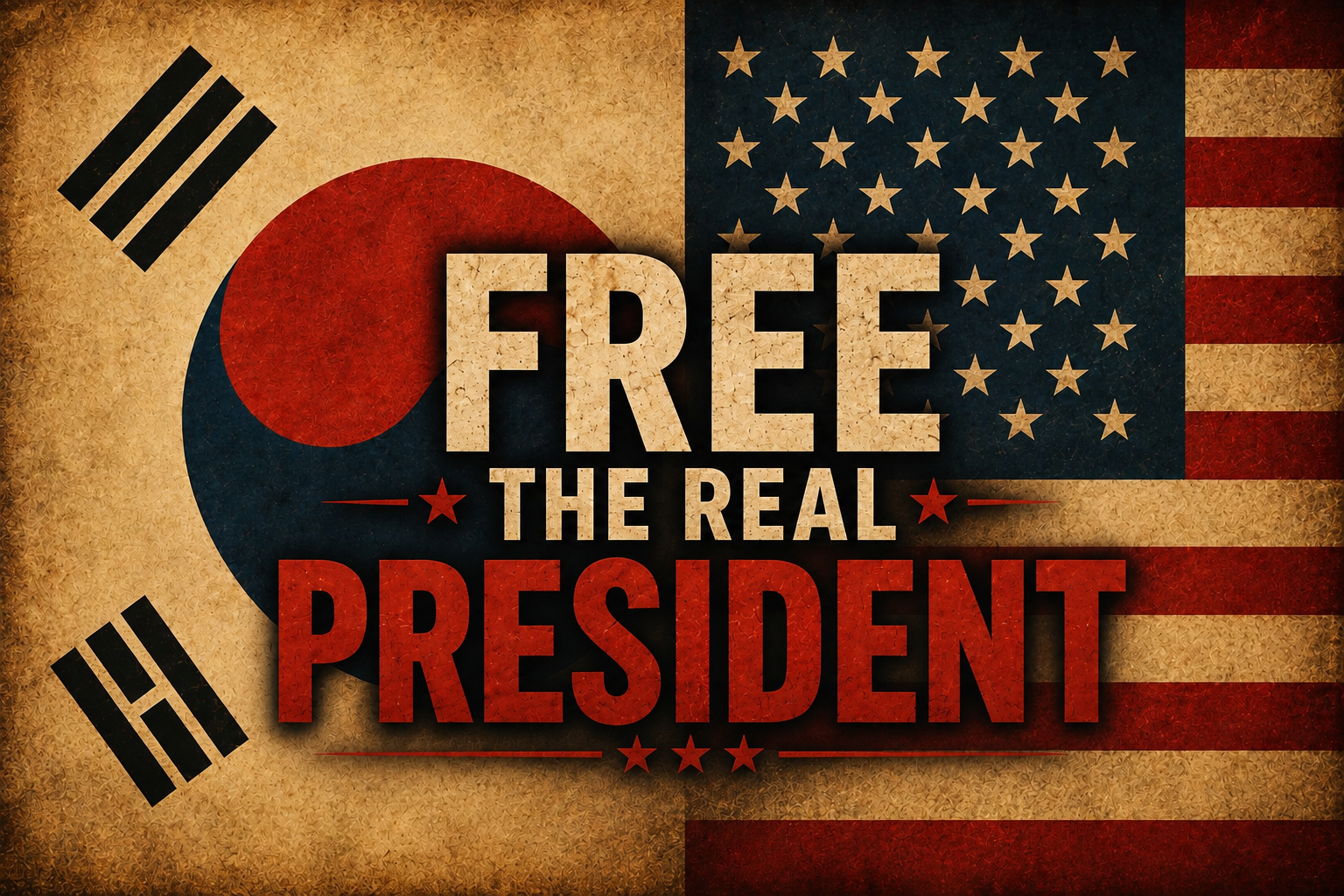
3. President Yoon Suk Yeol's Detention Conditions and Right to Medical Care
In July 2025, I launched my first international petition calling for the protection of President Yoon Suk Yeol's freedom and human rights.
At that time, I sought to draw attention to the high temperatures in his solitary cell, restrictions on the provision of drinking water, ophthalmological care, diabetes-related health management, and access to outside medical services.
A person in detention cannot independently choose where to receive medical treatment or change the conditions of their confinement.
The state therefore bears a heightened duty of care to protect the health and well-being of individuals in its custody.
It is essential to establish whether President Yoon is receiving appropriate medical care and whether his conditions of detention pose risks to his health.
Detention is a restriction of liberty under the law.
It is not a sentence to sacrifice one's health.

4. The Circumstances Surrounding the Declaration of Martial Law and the President's Constitutional Authority
On December 3, 2024, President Yoon Suk Yeol declared emergency martial law.
Article 77 of the Constitution of the Republic of Korea grants the President the authority to declare martial law and establishes the conditions and procedures governing its exercise.
In his final statement on November 5, 2026, President Yoon explained that he had concluded the Republic of Korea was facing a grave national crisis.
He cited repeated attempts by the opposition party, which held a substantial majority in the National Assembly, to impeach government officials, cuts to budgets relating to national security and public safety, and legislative activities that obstructed the functioning of the government.
He further explained that he declared martial law to alert the people to these circumstances and to confront the crisis facing the constitutional order together with the public.
When the National Assembly demanded that martial law be lifted, the President accepted that demand, and martial law was lifted in the early hours of the following morning.
I believe President Yoon's declaration of martial law was a decision made to defend the constitutional order of the free Republic of Korea.
The fact that the Constitution grants the President the authority to declare martial law, and the separate question of whether his exercise of that authority constituted the crime of insurrection, must be assessed through rigorous legal reasoning and evidence.
I believe it is necessary to thoroughly examine who, in the process of characterizing the President's exercise of constitutional authority as insurrection and seeking to punish him on that basis, may instead have undermined the constitutional order.
I ask the international community to examine not only the declaration of martial law itself, but also the circumstances and reasoning President Yoon personally described, as well as the legality of the investigations and trials that followed.
5. Fourteen Criminal Cases and the Right to a Fair Trial
President Yoon Suk Yeol is involved in ten criminal cases, and First Lady Kim Keon Hee in four—a total of fourteen cases.
In addition to these fourteen cases, at least five more cases involving President Yoon and First Lady Kim are reportedly still under police investigation.
As of November 22, 2026, each has received one final judgment from the Supreme Court, while proceedings in the remaining cases are ongoing.
A President and First Lady are being detained simultaneously while defending themselves against this extraordinary number of criminal cases.
I believe the investigations and prosecutions brought against them by special prosecutors have been politically motivated.
I strongly criticize the use of the special prosecutor system as a political instrument. I believe that the legality of the investigations and prosecutions, as well as the constitutional legitimacy of legislation and procedures concerning courts designated to handle insurrection-related cases, require thorough scrutiny.
The state's criminal justice powers must never become instruments for achieving political objectives.
Furthermore, both have declined to file constitutional complaints against judicial decisions before the Constitutional Court, taking the position that such a procedure would effectively create a fourth level of judicial review, which they regard as inconsistent with the three-tier judicial system under the Korean constitutional framework.
The greater the state's exercise of criminal justice power, the more strictly its constitutional limits must be observed.
Defending fourteen criminal cases requires reviewing extensive evidentiary records and maintaining continuous communication with legal counsel.
Any restrictions arising from detention that materially impair the defendants' ability to prepare their defense raise serious concerns as to whether their right to a fair trial is being effectively guaranteed.
The mere opportunity to appear before a court does not guarantee a fair trial. A trial can be fair only when the accused has a genuine and adequate opportunity to defend themselves.
6. The Crisis of Separation of Powers and the Responsibility of Political Leaders
I believe that the legislative, executive, and judicial branches of the Republic of Korea are failing to perform the constitutional functions of checks and balances that they are required to uphold.
The National Assembly, in particular, has a responsibility to monitor abuses of executive authority and protect the fundamental rights of the people.
Yet I do not believe there is a single politician holding a seat in the National Assembly—including members of the People Power Party—who is genuinely willing to stand alongside President Yoon and First Lady Kim, defend their rights, and actively fight against what I consider unjust investigations and trials.
I believe that South Korea's political establishment has effectively abandoned President Yoon Suk Yeol and First Lady Kim Keon Hee, leaving them without meaningful political support in defending their fundamental rights.
My criticism is not directed solely at those currently in power.
Every member of the National Assembly, including those belonging to the People Power Party, has a responsibility to ensure that constitutional rights and due process are respected.
The executive branch bears direct responsibility for the administration of detention facilities and the protection of detainees' right to medical care.
It must protect the lives and health of all detainees regardless of political considerations.
The judiciary, too, must remain independent of political power and make its decisions solely on the basis of the Constitution, the law, and the evidence.
Yet I have serious doubts about whether the judiciary of the Republic of Korea has maintained sufficient independence from political power.
It is my judgment that the separation of powers in the Republic of Korea is no longer functioning effectively in practice.
Against this backdrop, President Yoon and First Lady Kim remain detained while facing numerous criminal proceedings.
For them, this is not merely a political controversy.
Their health, their lives, their freedom, their dignity, and their right to assert their innocence and defend themselves are all at stake.
Because I believe that the domestic mechanisms intended to restrain abuses of power are not functioning adequately, international attention and independent scrutiny are more urgently needed than ever.
7. Proposed Restrictions on Inmate Funds and Access to Legal Counsel
I am particularly concerned about proposed legislation concerning inmate funds and access to legal counsel.
On November 17, 2026, a subcommittee of the National Assembly's Legislation and Judiciary Committee reportedly approved an amendment that would generally limit the amount of money an inmate may hold in their detention account to four million Korean won.
Legislation proposing changes to the rules governing the location, duration, and manner of meetings between detainees and their lawyers is also being pursued.
Inmate funds are necessary for daily life in detention.
But for President Yoon and First Lady Kim, there is an even more urgent issue.
That issue is the payment of legal fees and litigation expenses.
President Yoon and First Lady Kim are defending themselves in fourteen criminal cases.
Maintaining legal teams capable of examining the records in each case and presenting a defense in court requires substantial financial resources.
Yet shortly after controversy arose over the funds received by the two detainees, legislation was pursued to restrict inmate account balances and additional deposits.
The proposed amendment reportedly includes provisions allowing the use of funds for litigation expenses and certain exceptions. If so, the practical application of those exceptions must be made clear.
A restriction on the amount held in an inmate account is legally distinct from the payment of attorneys' fees outside the detention facility.
Nevertheless, both the wording of the law and its implementation must ensure that the appointment of privately retained counsel and the payment of litigation expenses are not obstructed.
When the President and First Lady are facing fourteen criminal proceedings, how can they be expected to exercise their right to an effective defense if their ability to pay legal fees is restricted?
The availability of court-appointed defense counsel cannot justify diminishing the right of defendants to receive assistance from lawyers of their own choosing.
I am not denying the importance of court-appointed defense counsel. My point is that defendants facing this many criminal proceedings must be able to maintain meaningful communication with their existing legal teams and prepare an effective defense.
The same principle applies to meetings with legal counsel.
For a detained defendant, meeting with a lawyer is not an ordinary visit. It is an essential part of preparing for trial and protecting one's legal rights.
Restrictions on inmate funds and access to legal counsel must not, in practice, undermine President Yoon and First Lady Kim's ability to defend themselves.
8. Equality Before the Law Must Apply to Everyone
Article 11 of the Constitution of the Republic of Korea declares that all citizens are equal before the law.
As I have watched the investigations and trials involving First Lady Kim Keon Hee, I have increasingly questioned whether this principle is being applied consistently.
The Deutsche Motors Stock Manipulation Case
In the Deutsche Motors case, Chairman Kwon Oh Soo was sentenced to three years in prison, with the sentence suspended for four years. Lee Jong Ho, head of Black Pearl Invest, was sentenced to two years in prison, with the sentence suspended for three years. Another investor, identified by the surname Son, was sentenced to six months in prison, with the sentence suspended for one year.
All three received suspended sentences.
First Lady Kim was initially not indicted by prosecutors but was subsequently indicted following an investigation by a special prosecutor.
Some Deutsche Motors-related charges that had resulted in acquittal or a judgment terminating the prosecution without a determination of guilt at the first-instance trial were subsequently found to constitute criminal offenses on appeal.
On November 19, 2026, the Supreme Court upheld a four-year prison sentence that included judgments concerning the Deutsche Motors case and the Unification Church-related receipt of valuables.
I recognize that the entire four-year sentence was not imposed solely for the Deutsche Motors case.
Nevertheless, when individuals who led or participated in the stock manipulation scheme received suspended sentences, I want to understand precisely what standards of evidence and punishment were applied to First Lady Kim.
Criminal responsibility must be determined according to each individual's conduct and the evidence against them.
That is exactly why the differences in the outcomes demand a clear and convincing explanation.
The Supreme Court's Final Judgment of November 19, 2026, and Questions About the Fairness of Its Review
On November 19, 2026, the Supreme Court, sitting en banc, dismissed First Lady Kim's final appeals concerning the Deutsche Motors stock manipulation case, the Myeong Tae Gyun public opinion polling case, and the Unification Church influence-peddling case, thereby upholding a four-year prison sentence.
During the announcement of its decision, the Court's explanation focused primarily on the Myeong Tae Gyun polling case, in which First Lady Kim had already been acquitted at both the first-instance and appellate levels.
By contrast, the Court did not provide a sufficiently detailed explanation in open court of its reasoning concerning the Deutsche Motors charges, for which the first-instance and appellate courts had reached different conclusions, or the influence-peddling charges, for which the scope of the guilty findings had expanded on appeal.
I consider this deeply troubling.
When the conclusions of the first-instance and appellate courts differ so substantially, and the resulting sentence increases significantly, the legal reasoning and evidentiary basis for the Supreme Court's decision to uphold the appellate judgment should be clearly explained.
During a hearing before Judge Woo In Sung on November 20, First Lady Kim also stated that she could not understand the guilty verdict in the Deutsche Motors case and questioned whether the Supreme Court justices had thoroughly examined her case.
She also emphasized the need for judicial proceedings to remain independent of political influence.
I believe a clear explanation is necessary of how the Supreme Court examined the grounds of appeal in the Deutsche Motors and influence-peddling cases, and on what legal basis it upheld the appellate convictions.
The fact that a judgment is final does not mean that legitimate questions about the judicial process simply disappear.
First Lady Kim Keon Hee's Influence-Peddling Case
First Lady Kim was indicted on allegations that she received luxury handbags, a necklace, and other items from individuals associated with the Unification Church. The court found that certain gifts constituted the unlawful receipt of benefits in exchange for arranging or mediating matters involving public officials' duties, commonly described in English as influence-peddling.
But receiving a gift and committing the crime of influence-peddling are not the same thing.
The central legal issue is whether money or other benefits were received in exchange for an undertaking to use influence in connection with the official duties of a public servant.
I am convinced that First Lady Kim neither accepted a specific request for an official appointment nor received valuables in exchange for such a request.
The mere receipt of a gift does not establish the crime of influence-peddling. There must be objective evidence that the benefit was received in return for an undertaking to influence a matter involving a public official's duties.
I do not believe the influence-peddling charges against First Lady Kim satisfied these legal requirements.
Beyond the fact that gifts were received, what evidence established that they were accepted in exchange for influence over the official duties of a public servant?
Was that evidence sufficient to establish guilt beyond a reasonable doubt?
The circumstances relied upon by the court and the soundness of its legal reasoning must be examined.
The Written Statement of the Chairman of Seohui Construction and the Influence-Peddling Allegations
One of the important pieces of evidence presented during the process leading to First Lady Kim's detention was a written statement voluntarily submitted to the special prosecutor by Lee Bong Kwan, chairman of Seohui Construction.
In that statement, Chairman Lee reportedly claimed that he had delivered expensive jewelry to First Lady Kim and made a request concerning the appointment of his son-in-law.
I believe the accuracy of that statement must be thoroughly examined against objective evidence.
It is necessary to establish the facts surrounding the claim that Chairman Lee originally purchased the jewelry for his three daughters.
If that was the original purpose of the purchase, then the circumstances under which the jewelry was later delivered to First Lady Kim, and the alleged personnel-related request described in the written statement, must be carefully tested against objective evidence.
The fact that the necklace and brooch were returned is also relevant. The circumstances of their delivery, possession, and return must all be considered.
If this written statement played an important role in the decision to detain First Lady Kim, it is essential to determine whether the statement was credible and sufficiently corroborated by objective evidence.
Comparisons With the Spouses of Other Presidents
Kwon Yang Sook, the spouse of President Roh Moo Hyun, was the subject of scrutiny by investigative authorities concerning allegations involving money and foreign currency, but those matters did not result in criminal punishment.
Kim Jung Sook, the spouse of President Moon Jae In, faced allegations concerning the use of a government aircraft and public funds for a solo visit to India, a Chanel jacket, and the alleged purchase of clothing using the presidential office's special activity funds.
In particular, it was reported that a police investigation confirmed that an official from the presidential office's Second Annex had paid for some of Kim Jung Sook's clothing using bundles of 50,000-won banknotes in official bank wrappers.
However, the source and circulation history of those banknotes were not established, and investigative authorities closed the case without charges, citing insufficient evidence that public funds had been used.
I believe there must be a clear explanation of why the investigation was concluded without establishing the source of those funds, despite reports confirming the use of bank-wrapped cash, and what evidentiary standards were applied.
Kim Hye Kyung, the spouse of President Lee Jae Myung, was investigated over allegations involving the private use of a Gyeonggi Province corporate credit card and public funds. In November 2024, she received a suspension of indictment in connection with those allegations. In a separate case involving a violation of the Public Official Election Act, she was convicted.
I am not suggesting that the allegations and evidence in all these cases were identical.
The allegations concerning Kim Jung Sook and Kim Hye Kyung included questions about the use of government budgets or public funds.
By contrast, First Lady Kim Keon Hee's influence-peddling case concerns the relationship between valuables received from private individuals and alleged influence over public officials' duties.
These cases involve different legal issues. Their outcomes alone cannot establish that one decision was unjust.
But it is entirely appropriate to compare the evidence accepted in each case and the standards used in deciding whether to prosecute or impose criminal liability.
The standards of justice must not change depending on whose spouse is involved or which political administration they belong to.
I want to know whether the standards applied to the investigation and prosecution of First Lady Kim Keon Hee were consistent and fair when compared with those applied in other cases.

9. My Requests to the Authorities of the Republic of Korea and the International Community
I call upon the judicial and administrative authorities of the Republic of Korea, the United States Congress, and relevant institutions within the international community to pay close attention to the protection of President Yoon Suk Yeol and First Lady Kim Keon Hee's human rights and the criminal proceedings against them.
This petition is not limited to demands for improved detention conditions.
It also concerns the legality of the investigations and prosecutions, the operation of the special prosecutor system, judicial independence, the fairness of the trials, and the right to effective assistance of legal counsel.
A letter reportedly sent to relevant Korean authorities by Oklahoma State Senator Shane Jett also emphasized the importance of due process, judicial independence, and fair trials.
I believe that domestic and international institutions must closely examine whether the criminal proceedings in the Republic of Korea comply with the Constitution and international human rights standards.
I therefore make the following requests:
1) Conduct an immediate and comprehensive medical evaluation of First Lady Kim Keon Hee and ensure her access to necessary examinations by outside medical specialists and inpatient treatment.
2) Examine the detention conditions of President Yoon Suk Yeol and First Lady Kim Keon Hee, including their access to appropriate medical services.
3) Guarantee effective access to legal counsel and the right to effective legal assistance, ensuring the full exercise of their rights of defense.
4) Examine the impact of proposed restrictions on inmate funds and lawyer consultations on their ability to retain privately chosen legal counsel and pay litigation expenses.
5) Review the constitutional legitimacy of the special prosecutor system and legislation concerning courts designated for insurrection-related cases, together with the legality of the investigative and prosecutorial procedures.
6) Determine whether equality before the law and fair judicial procedures have been respected in the investigations and trials involving both individuals.
7) Examine whether the separation of powers and judicial independence in the Republic of Korea are being effectively maintained, in light of international human rights standards and the rule of law.
10. My First International Petition and the Goal of This New Petition
In July 2025, I launched my first international petition on Change.org calling for the protection of President Yoon Suk Yeol's freedom and human rights.
Approximately 6,800 people signed that petition.
However, I concluded that the number of signatures was not sufficient to convey the strength of public concern to international institutions and relevant authorities.
I therefore decided to postpone its formal submission.
That decision was not based on any legally required minimum number of signatures. It was my own decision as the petition organizer.
The first petition remains preserved as a record of the concerns raised at the time and the citizens who chose to participate.
First International Petition: https://change.org/Only_Yoon_Again
Time has passed since then.
Now, not only President Yoon but also First Lady Kim Keon Hee is being held in detention.
The issues surrounding their health, human rights, and criminal proceedings have become even more complex.
That is why I am launching a new petition.
My goal for this international petition is at least 100,000 signatures.
Through these signatures, I want to bring the human rights concerns surrounding the President and First Lady to a wider audience and demand concrete responses from the relevant authorities.
11. Formal Submission and Follow-Up Action After Collecting Signatures
I have no intention of simply collecting signatures and stopping there.
Once at least 100,000 signatures have been collected, I intend to prepare Korean and English versions of the petition, a record of the signatures, and supporting materials, and pursue their submission to the National Human Rights Commission of Korea, the Ministry of Justice, Seoul Detention Center, and Seoul Southern Detention Center.
In the United States, I plan to submit the petition and relevant materials to the Tom Lantos Human Rights Commission of the U.S. House of Representatives, the U.S. Senate Committee on Foreign Relations, and the U.S. House Committee on Foreign Affairs, and to request the attention of the U.S. Embassy in Seoul.
I also intend to communicate the petition through appropriate channels to relevant United Nations human rights mechanisms, international human rights organizations, and other international institutions concerned with due process, judicial independence, and the rule of law.
However, the actual timing and method of submission will be determined only after appropriate consultation with the individuals concerned and their legal counsel, so that this petition does not interfere with their legal strategies or ongoing proceedings.
This is an independent citizens' petition initiated by me.
It is not a document prepared on behalf of President Yoon, First Lady Kim, or their legal teams.
Once submissions have been made, I will provide updates through Change.org, including submission dates, confirmation of receipt, official responses, and any verifiable developments.

12. My Final Appeal to the International Community
As a citizen of the Republic of Korea, I believe President Yoon Suk Yeol and First Lady Kim Keon Hee have been made to suffer for their efforts to defend the free Republic of Korea.
I understand that President Yoon continues to fight in court, even in proceedings he believes are stacked against him, because he wants his position and the truth of what happened to remain on the historical record.
I respect that determination.
But leaving the truth to history is not enough.
Above all else, we must protect their lives and health.
No matter how meaningful it may be to record their sacrifices for history, no historical record can bring back a life that has already been lost.
I believe President Yoon and First Lady Kim must be given the opportunity to remain alive, speak for themselves, defend themselves fully, and regain their freedom.
For them, this struggle is not merely about political honor.
It is a struggle for survival.
The question of guilt or innocence in a criminal case is for the courts to decide.
But whether the process leading to that judgment is fair, whether detained individuals receive the medical care they need, and whether they have adequate access to legal counsel are matters that should concern us all.
A person's freedom may be restricted under the law.
Their human dignity must never be taken away.
Because I believe the mechanisms designed to restrain the abuse of power in the Republic of Korea are failing to function properly, I consider international attention and independent scrutiny more urgent than ever.
I ask the international community to pay attention and take action to protect the lives, health, human rights, rights of defense, and rights to fair trials of President Yoon Suk Yeol and First Lady Kim Keon Hee.
And I ask everyone who recognizes the importance of these issues to sign and share this petition.
One person's signature may not change everything.
But when countless people ask the same questions, those questions become much harder to ignore.
Please stand with me in calling for the protection of President Yoon Suk Yeol and First Lady Kim Keon Hee's human rights and their right to fair trials.
Petition Organizer: Oracle Yoon
November 22, 2026
🚨윤석열 대통령님과 김건희 여사님의 인권 보호 및 공정한 재판을 촉구하는 긴급 국제청원
대한민국 헌정사상 처음으로 대통령과 영부인이 동시에 구금된 상황에서 두 분의 생명과 건강, 기본적 인권과 방어권을 보호하고 수사와 재판의 적법성 및 공정성을 확인하기 위해 국제사회의 관심과 행동을 요청합니다.
글이 길어서 한글본을 읽으시려면 제 유튜브 게시글로 오시면 읽으실 수 있으십니다.
📌1항애서 7항
https://youtube.com/post/Ugkxsgq8Rf7mnUuzkYsgakM9XlnW_-yjFzkl
📌 8항에서 12항
https://youtube.com/post/UgkxnswfBbxuaOS9WMYrecjnUKSBBV6eN67H

27
The Issue
🚨 URGENT INTERNATIONAL PETITION FOR THE PROTECTION OF THE HUMAN RIGHTS OF PRESIDENT YOON SUK YEOL AND FIRST LADY KIM KEON HEE AND THE GUARANTEE OF FAIR TRIALS
For the first time in the constitutional history of the Republic of Korea, a President and First Lady are being detained simultaneously.
I call upon the international community to take notice and act to protect their lives, health, fundamental human rights, and rights of defense, and to examine the legality and fairness of the investigations and judicial proceedings against them.
1. My Appeal to the International Community
President Yoon Suk Yeol of the Republic of Korea and First Lady Kim Keon Hee are both being held in detention.
Never before in the constitutional history of the Republic of Korea have a President and First Lady been detained at the same time.
Such a situation is rare even in the international context.
As a citizen of the Republic of Korea, I am bringing this reality to the attention of the international community.
Both are currently facing numerous criminal proceedings.
I have serious doubts about the legality of the investigations and prosecutions against them, and I do not agree with the judgments that have been rendered.
But there is an even more fundamental reason why I am appealing to the international community.
Regardless of the legitimacy of any investigation or trial, a person in detention still has human rights that must be protected.
A state may restrict an individual's liberty in accordance with the law. But the power to deprive someone of liberty does not give the state the right to disregard that person's life, health, or human dignity.
I am not asking for special treatment for either of them.
I am demanding the right to medical care, the right to an effective defense, and the right to a fair trial—rights that must be guaranteed to everyone.
Being a President or First Lady must never become a reason to deny someone the fundamental human rights that belong to every human being.
2. First Lady Kim Keon Hee's Deteriorating Health and Access to Outside Medical Care
The most urgent reason I have decided to launch this petition is the health of First Lady Kim Keon Hee.
Since her detention, her health has reportedly deteriorated significantly. She has reportedly suffered from extremely low blood pressure, substantial weight loss, and difficulty walking. I have also heard reports of chest pain and breathing difficulties.
On October 27, 2026, during a hearing on an additional detention warrant conducted by video link from Seoul Southern Detention Center, First Lady Kim reportedly explained her medical condition and requested approximately one month of inpatient treatment.
Yet I have been informed that even the formal process for requesting treatment at an outside specialist medical institution was not adequately guaranteed.
The claim that treatment can be provided inside a detention center must not be used to deny access to outside specialist medical care.
First Lady Kim has already stated that she needs hospitalization.
If the procedures for requesting medical treatment at an outside healthcare facility are not adequately guaranteed, serious concerns arise as to whether First Lady Kim has meaningful access to necessary medical care and whether the authorities are fulfilling their duty to protect her health.
First Lady Kim must be guaranteed the opportunity to receive an independent medical examination at an outside specialist medical institution, rather than being forced to rely solely on the judgment of the detention center.
Any necessary examinations, hospitalization, and treatment must follow the findings of that examination.
I have also heard troubling accounts concerning the location of her detention cell. If the cell is situated where other detainees passing by can see inside, measures must be taken to protect her privacy and dignity.
The United Nations Standard Minimum Rules for the Treatment of Prisoners (the Nelson Mandela Rules) require that prisoners have access to necessary healthcare services and provide for transfer to specialized institutions or civilian hospitals when specialized treatment is required.
Those standards must apply to everyone.
Chest pain and breathing difficulties can be warning signs of serious cardiovascular disease. If an emergency such as a heart attack occurs and prompt examination and treatment are unavailable, the consequences can be fatal.
To protect First Lady Kim Keon Hee's life and health, an independent examination at an outside specialist medical institution, together with all necessary testing and treatment, must be arranged without delay.
Any delay in providing appropriate medical evaluation and treatment could place her life and health at serious risk.
3. President Yoon Suk Yeol's Detention Conditions and Right to Medical Care
In July 2025, I launched my first international petition calling for the protection of President Yoon Suk Yeol's freedom and human rights.
At that time, I sought to draw attention to the high temperatures in his solitary cell, restrictions on the provision of drinking water, ophthalmological care, diabetes-related health management, and access to outside medical services.
A person in detention cannot independently choose where to receive medical treatment or change the conditions of their confinement.
The state therefore bears a heightened duty of care to protect the health and well-being of individuals in its custody.
It is essential to establish whether President Yoon is receiving appropriate medical care and whether his conditions of detention pose risks to his health.
Detention is a restriction of liberty under the law.
It is not a sentence to sacrifice one's health.
4. The Circumstances Surrounding the Declaration of Martial Law and the President's Constitutional Authority
On December 3, 2024, President Yoon Suk Yeol declared emergency martial law.
Article 77 of the Constitution of the Republic of Korea grants the President the authority to declare martial law and establishes the conditions and procedures governing its exercise.
In his final statement on November 5, 2026, President Yoon explained that he had concluded the Republic of Korea was facing a grave national crisis.
He cited repeated attempts by the opposition party, which held a substantial majority in the National Assembly, to impeach government officials, cuts to budgets relating to national security and public safety, and legislative activities that obstructed the functioning of the government.
He further explained that he declared martial law to alert the people to these circumstances and to confront the crisis facing the constitutional order together with the public.
When the National Assembly demanded that martial law be lifted, the President accepted that demand, and martial law was lifted in the early hours of the following morning.
I believe President Yoon's declaration of martial law was a decision made to defend the constitutional order of the free Republic of Korea.
The fact that the Constitution grants the President the authority to declare martial law, and the separate question of whether his exercise of that authority constituted the crime of insurrection, must be assessed through rigorous legal reasoning and evidence.
I believe it is necessary to thoroughly examine who, in the process of characterizing the President's exercise of constitutional authority as insurrection and seeking to punish him on that basis, may instead have undermined the constitutional order.
I ask the international community to examine not only the declaration of martial law itself, but also the circumstances and reasoning President Yoon personally described, as well as the legality of the investigations and trials that followed.
5. Fourteen Criminal Cases and the Right to a Fair Trial
President Yoon Suk Yeol is involved in ten criminal cases, and First Lady Kim Keon Hee in four—a total of fourteen cases.
In addition to these fourteen cases, at least five more cases involving President Yoon and First Lady Kim are reportedly still under police investigation.
As of November 22, 2026, each has received one final judgment from the Supreme Court, while proceedings in the remaining cases are ongoing.
A President and First Lady are being detained simultaneously while defending themselves against this extraordinary number of criminal cases.
I believe the investigations and prosecutions brought against them by special prosecutors have been politically motivated.
I strongly criticize the use of the special prosecutor system as a political instrument. I believe that the legality of the investigations and prosecutions, as well as the constitutional legitimacy of legislation and procedures concerning courts designated to handle insurrection-related cases, require thorough scrutiny.
The state's criminal justice powers must never become instruments for achieving political objectives.
Furthermore, both have declined to file constitutional complaints against judicial decisions before the Constitutional Court, taking the position that such a procedure would effectively create a fourth level of judicial review, which they regard as inconsistent with the three-tier judicial system under the Korean constitutional framework.
The greater the state's exercise of criminal justice power, the more strictly its constitutional limits must be observed.
Defending fourteen criminal cases requires reviewing extensive evidentiary records and maintaining continuous communication with legal counsel.
Any restrictions arising from detention that materially impair the defendants' ability to prepare their defense raise serious concerns as to whether their right to a fair trial is being effectively guaranteed.
The mere opportunity to appear before a court does not guarantee a fair trial. A trial can be fair only when the accused has a genuine and adequate opportunity to defend themselves.
6. The Crisis of Separation of Powers and the Responsibility of Political Leaders
I believe that the legislative, executive, and judicial branches of the Republic of Korea are failing to perform the constitutional functions of checks and balances that they are required to uphold.
The National Assembly, in particular, has a responsibility to monitor abuses of executive authority and protect the fundamental rights of the people.
Yet I do not believe there is a single politician holding a seat in the National Assembly—including members of the People Power Party—who is genuinely willing to stand alongside President Yoon and First Lady Kim, defend their rights, and actively fight against what I consider unjust investigations and trials.
I believe that South Korea's political establishment has effectively abandoned President Yoon Suk Yeol and First Lady Kim Keon Hee, leaving them without meaningful political support in defending their fundamental rights.
My criticism is not directed solely at those currently in power.
Every member of the National Assembly, including those belonging to the People Power Party, has a responsibility to ensure that constitutional rights and due process are respected.
The executive branch bears direct responsibility for the administration of detention facilities and the protection of detainees' right to medical care.
It must protect the lives and health of all detainees regardless of political considerations.
The judiciary, too, must remain independent of political power and make its decisions solely on the basis of the Constitution, the law, and the evidence.
Yet I have serious doubts about whether the judiciary of the Republic of Korea has maintained sufficient independence from political power.
It is my judgment that the separation of powers in the Republic of Korea is no longer functioning effectively in practice.
Against this backdrop, President Yoon and First Lady Kim remain detained while facing numerous criminal proceedings.
For them, this is not merely a political controversy.
Their health, their lives, their freedom, their dignity, and their right to assert their innocence and defend themselves are all at stake.
Because I believe that the domestic mechanisms intended to restrain abuses of power are not functioning adequately, international attention and independent scrutiny are more urgently needed than ever.
7. Proposed Restrictions on Inmate Funds and Access to Legal Counsel
I am particularly concerned about proposed legislation concerning inmate funds and access to legal counsel.
On November 17, 2026, a subcommittee of the National Assembly's Legislation and Judiciary Committee reportedly approved an amendment that would generally limit the amount of money an inmate may hold in their detention account to four million Korean won.
Legislation proposing changes to the rules governing the location, duration, and manner of meetings between detainees and their lawyers is also being pursued.
Inmate funds are necessary for daily life in detention.
But for President Yoon and First Lady Kim, there is an even more urgent issue.
That issue is the payment of legal fees and litigation expenses.
President Yoon and First Lady Kim are defending themselves in fourteen criminal cases.
Maintaining legal teams capable of examining the records in each case and presenting a defense in court requires substantial financial resources.
Yet shortly after controversy arose over the funds received by the two detainees, legislation was pursued to restrict inmate account balances and additional deposits.
The proposed amendment reportedly includes provisions allowing the use of funds for litigation expenses and certain exceptions. If so, the practical application of those exceptions must be made clear.
A restriction on the amount held in an inmate account is legally distinct from the payment of attorneys' fees outside the detention facility.
Nevertheless, both the wording of the law and its implementation must ensure that the appointment of privately retained counsel and the payment of litigation expenses are not obstructed.
When the President and First Lady are facing fourteen criminal proceedings, how can they be expected to exercise their right to an effective defense if their ability to pay legal fees is restricted?
The availability of court-appointed defense counsel cannot justify diminishing the right of defendants to receive assistance from lawyers of their own choosing.
I am not denying the importance of court-appointed defense counsel. My point is that defendants facing this many criminal proceedings must be able to maintain meaningful communication with their existing legal teams and prepare an effective defense.
The same principle applies to meetings with legal counsel.
For a detained defendant, meeting with a lawyer is not an ordinary visit. It is an essential part of preparing for trial and protecting one's legal rights.
Restrictions on inmate funds and access to legal counsel must not, in practice, undermine President Yoon and First Lady Kim's ability to defend themselves.
8. Equality Before the Law Must Apply to Everyone
Article 11 of the Constitution of the Republic of Korea declares that all citizens are equal before the law.
As I have watched the investigations and trials involving First Lady Kim Keon Hee, I have increasingly questioned whether this principle is being applied consistently.
The Deutsche Motors Stock Manipulation Case
In the Deutsche Motors case, Chairman Kwon Oh Soo was sentenced to three years in prison, with the sentence suspended for four years. Lee Jong Ho, head of Black Pearl Invest, was sentenced to two years in prison, with the sentence suspended for three years. Another investor, identified by the surname Son, was sentenced to six months in prison, with the sentence suspended for one year.
All three received suspended sentences.
First Lady Kim was initially not indicted by prosecutors but was subsequently indicted following an investigation by a special prosecutor.
Some Deutsche Motors-related charges that had resulted in acquittal or a judgment terminating the prosecution without a determination of guilt at the first-instance trial were subsequently found to constitute criminal offenses on appeal.
On November 19, 2026, the Supreme Court upheld a four-year prison sentence that included judgments concerning the Deutsche Motors case and the Unification Church-related receipt of valuables.
I recognize that the entire four-year sentence was not imposed solely for the Deutsche Motors case.
Nevertheless, when individuals who led or participated in the stock manipulation scheme received suspended sentences, I want to understand precisely what standards of evidence and punishment were applied to First Lady Kim.
Criminal responsibility must be determined according to each individual's conduct and the evidence against them.
That is exactly why the differences in the outcomes demand a clear and convincing explanation.
The Supreme Court's Final Judgment of November 19, 2026, and Questions About the Fairness of Its Review
On November 19, 2026, the Supreme Court, sitting en banc, dismissed First Lady Kim's final appeals concerning the Deutsche Motors stock manipulation case, the Myeong Tae Gyun public opinion polling case, and the Unification Church influence-peddling case, thereby upholding a four-year prison sentence.
During the announcement of its decision, the Court's explanation focused primarily on the Myeong Tae Gyun polling case, in which First Lady Kim had already been acquitted at both the first-instance and appellate levels.
By contrast, the Court did not provide a sufficiently detailed explanation in open court of its reasoning concerning the Deutsche Motors charges, for which the first-instance and appellate courts had reached different conclusions, or the influence-peddling charges, for which the scope of the guilty findings had expanded on appeal.
I consider this deeply troubling.
When the conclusions of the first-instance and appellate courts differ so substantially, and the resulting sentence increases significantly, the legal reasoning and evidentiary basis for the Supreme Court's decision to uphold the appellate judgment should be clearly explained.
During a hearing before Judge Woo In Sung on November 20, First Lady Kim also stated that she could not understand the guilty verdict in the Deutsche Motors case and questioned whether the Supreme Court justices had thoroughly examined her case.
She also emphasized the need for judicial proceedings to remain independent of political influence.
I believe a clear explanation is necessary of how the Supreme Court examined the grounds of appeal in the Deutsche Motors and influence-peddling cases, and on what legal basis it upheld the appellate convictions.
The fact that a judgment is final does not mean that legitimate questions about the judicial process simply disappear.
First Lady Kim Keon Hee's Influence-Peddling Case
First Lady Kim was indicted on allegations that she received luxury handbags, a necklace, and other items from individuals associated with the Unification Church. The court found that certain gifts constituted the unlawful receipt of benefits in exchange for arranging or mediating matters involving public officials' duties, commonly described in English as influence-peddling.
But receiving a gift and committing the crime of influence-peddling are not the same thing.
The central legal issue is whether money or other benefits were received in exchange for an undertaking to use influence in connection with the official duties of a public servant.
I am convinced that First Lady Kim neither accepted a specific request for an official appointment nor received valuables in exchange for such a request.
The mere receipt of a gift does not establish the crime of influence-peddling. There must be objective evidence that the benefit was received in return for an undertaking to influence a matter involving a public official's duties.
I do not believe the influence-peddling charges against First Lady Kim satisfied these legal requirements.
Beyond the fact that gifts were received, what evidence established that they were accepted in exchange for influence over the official duties of a public servant?
Was that evidence sufficient to establish guilt beyond a reasonable doubt?
The circumstances relied upon by the court and the soundness of its legal reasoning must be examined.
The Written Statement of the Chairman of Seohui Construction and the Influence-Peddling Allegations
One of the important pieces of evidence presented during the process leading to First Lady Kim's detention was a written statement voluntarily submitted to the special prosecutor by Lee Bong Kwan, chairman of Seohui Construction.
In that statement, Chairman Lee reportedly claimed that he had delivered expensive jewelry to First Lady Kim and made a request concerning the appointment of his son-in-law.
I believe the accuracy of that statement must be thoroughly examined against objective evidence.
It is necessary to establish the facts surrounding the claim that Chairman Lee originally purchased the jewelry for his three daughters.
If that was the original purpose of the purchase, then the circumstances under which the jewelry was later delivered to First Lady Kim, and the alleged personnel-related request described in the written statement, must be carefully tested against objective evidence.
The fact that the necklace and brooch were returned is also relevant. The circumstances of their delivery, possession, and return must all be considered.
If this written statement played an important role in the decision to detain First Lady Kim, it is essential to determine whether the statement was credible and sufficiently corroborated by objective evidence.
Comparisons With the Spouses of Other Presidents
Kwon Yang Sook, the spouse of President Roh Moo Hyun, was the subject of scrutiny by investigative authorities concerning allegations involving money and foreign currency, but those matters did not result in criminal punishment.
Kim Jung Sook, the spouse of President Moon Jae In, faced allegations concerning the use of a government aircraft and public funds for a solo visit to India, a Chanel jacket, and the alleged purchase of clothing using the presidential office's special activity funds.
In particular, it was reported that a police investigation confirmed that an official from the presidential office's Second Annex had paid for some of Kim Jung Sook's clothing using bundles of 50,000-won banknotes in official bank wrappers.
However, the source and circulation history of those banknotes were not established, and investigative authorities closed the case without charges, citing insufficient evidence that public funds had been used.
I believe there must be a clear explanation of why the investigation was concluded without establishing the source of those funds, despite reports confirming the use of bank-wrapped cash, and what evidentiary standards were applied.
Kim Hye Kyung, the spouse of President Lee Jae Myung, was investigated over allegations involving the private use of a Gyeonggi Province corporate credit card and public funds. In November 2024, she received a suspension of indictment in connection with those allegations. In a separate case involving a violation of the Public Official Election Act, she was convicted.
I am not suggesting that the allegations and evidence in all these cases were identical.
The allegations concerning Kim Jung Sook and Kim Hye Kyung included questions about the use of government budgets or public funds.
By contrast, First Lady Kim Keon Hee's influence-peddling case concerns the relationship between valuables received from private individuals and alleged influence over public officials' duties.
These cases involve different legal issues. Their outcomes alone cannot establish that one decision was unjust.
But it is entirely appropriate to compare the evidence accepted in each case and the standards used in deciding whether to prosecute or impose criminal liability.
The standards of justice must not change depending on whose spouse is involved or which political administration they belong to.
I want to know whether the standards applied to the investigation and prosecution of First Lady Kim Keon Hee were consistent and fair when compared with those applied in other cases.
9. My Requests to the Authorities of the Republic of Korea and the International Community
I call upon the judicial and administrative authorities of the Republic of Korea, the United States Congress, and relevant institutions within the international community to pay close attention to the protection of President Yoon Suk Yeol and First Lady Kim Keon Hee's human rights and the criminal proceedings against them.
This petition is not limited to demands for improved detention conditions.
It also concerns the legality of the investigations and prosecutions, the operation of the special prosecutor system, judicial independence, the fairness of the trials, and the right to effective assistance of legal counsel.
A letter reportedly sent to relevant Korean authorities by Oklahoma State Senator Shane Jett also emphasized the importance of due process, judicial independence, and fair trials.
I believe that domestic and international institutions must closely examine whether the criminal proceedings in the Republic of Korea comply with the Constitution and international human rights standards.
I therefore make the following requests:
1) Conduct an immediate and comprehensive medical evaluation of First Lady Kim Keon Hee and ensure her access to necessary examinations by outside medical specialists and inpatient treatment.
2) Examine the detention conditions of President Yoon Suk Yeol and First Lady Kim Keon Hee, including their access to appropriate medical services.
3) Guarantee effective access to legal counsel and the right to effective legal assistance, ensuring the full exercise of their rights of defense.
4) Examine the impact of proposed restrictions on inmate funds and lawyer consultations on their ability to retain privately chosen legal counsel and pay litigation expenses.
5) Review the constitutional legitimacy of the special prosecutor system and legislation concerning courts designated for insurrection-related cases, together with the legality of the investigative and prosecutorial procedures.
6) Determine whether equality before the law and fair judicial procedures have been respected in the investigations and trials involving both individuals.
7) Examine whether the separation of powers and judicial independence in the Republic of Korea are being effectively maintained, in light of international human rights standards and the rule of law.
10. My First International Petition and the Goal of This New Petition
In July 2025, I launched my first international petition on Change.org calling for the protection of President Yoon Suk Yeol's freedom and human rights.
Approximately 6,800 people signed that petition.
However, I concluded that the number of signatures was not sufficient to convey the strength of public concern to international institutions and relevant authorities.
I therefore decided to postpone its formal submission.
That decision was not based on any legally required minimum number of signatures. It was my own decision as the petition organizer.
The first petition remains preserved as a record of the concerns raised at the time and the citizens who chose to participate.
First International Petition: https://change.org/Only_Yoon_Again
Time has passed since then.
Now, not only President Yoon but also First Lady Kim Keon Hee is being held in detention.
The issues surrounding their health, human rights, and criminal proceedings have become even more complex.
That is why I am launching a new petition.
My goal for this international petition is at least 100,000 signatures.
Through these signatures, I want to bring the human rights concerns surrounding the President and First Lady to a wider audience and demand concrete responses from the relevant authorities.
11. Formal Submission and Follow-Up Action After Collecting Signatures
I have no intention of simply collecting signatures and stopping there.
Once at least 100,000 signatures have been collected, I intend to prepare Korean and English versions of the petition, a record of the signatures, and supporting materials, and pursue their submission to the National Human Rights Commission of Korea, the Ministry of Justice, Seoul Detention Center, and Seoul Southern Detention Center.
In the United States, I plan to submit the petition and relevant materials to the Tom Lantos Human Rights Commission of the U.S. House of Representatives, the U.S. Senate Committee on Foreign Relations, and the U.S. House Committee on Foreign Affairs, and to request the attention of the U.S. Embassy in Seoul.
I also intend to communicate the petition through appropriate channels to relevant United Nations human rights mechanisms, international human rights organizations, and other international institutions concerned with due process, judicial independence, and the rule of law.
However, the actual timing and method of submission will be determined only after appropriate consultation with the individuals concerned and their legal counsel, so that this petition does not interfere with their legal strategies or ongoing proceedings.
This is an independent citizens' petition initiated by me.
It is not a document prepared on behalf of President Yoon, First Lady Kim, or their legal teams.
Once submissions have been made, I will provide updates through Change.org, including submission dates, confirmation of receipt, official responses, and any verifiable developments.
12. My Final Appeal to the International Community
As a citizen of the Republic of Korea, I believe President Yoon Suk Yeol and First Lady Kim Keon Hee have been made to suffer for their efforts to defend the free Republic of Korea.
I understand that President Yoon continues to fight in court, even in proceedings he believes are stacked against him, because he wants his position and the truth of what happened to remain on the historical record.
I respect that determination.
But leaving the truth to history is not enough.
Above all else, we must protect their lives and health.
No matter how meaningful it may be to record their sacrifices for history, no historical record can bring back a life that has already been lost.
I believe President Yoon and First Lady Kim must be given the opportunity to remain alive, speak for themselves, defend themselves fully, and regain their freedom.
For them, this struggle is not merely about political honor.
It is a struggle for survival.
The question of guilt or innocence in a criminal case is for the courts to decide.
But whether the process leading to that judgment is fair, whether detained individuals receive the medical care they need, and whether they have adequate access to legal counsel are matters that should concern us all.
A person's freedom may be restricted under the law.
Their human dignity must never be taken away.
Because I believe the mechanisms designed to restrain the abuse of power in the Republic of Korea are failing to function properly, I consider international attention and independent scrutiny more urgent than ever.
I ask the international community to pay attention and take action to protect the lives, health, human rights, rights of defense, and rights to fair trials of President Yoon Suk Yeol and First Lady Kim Keon Hee.
And I ask everyone who recognizes the importance of these issues to sign and share this petition.
One person's signature may not change everything.
But when countless people ask the same questions, those questions become much harder to ignore.
Please stand with me in calling for the protection of President Yoon Suk Yeol and First Lady Kim Keon Hee's human rights and their right to fair trials.
Petition Organizer: Oracle Yoon
November 22, 2026
🚨윤석열 대통령님과 김건희 여사님의 인권 보호 및 공정한 재판을 촉구하는 긴급 국제청원
대한민국 헌정사상 처음으로 대통령과 영부인이 동시에 구금된 상황에서 두 분의 생명과 건강, 기본적 인권과 방어권을 보호하고 수사와 재판의 적법성 및 공정성을 확인하기 위해 국제사회의 관심과 행동을 요청합니다.
글이 길어서 한글본을 읽으시려면 제 유튜브 게시글로 오시면 읽으실 수 있으십니다.
📌1항애서 7항
https://youtube.com/post/Ugkxsgq8Rf7mnUuzkYsgakM9XlnW_-yjFzkl
📌 8항에서 12항
https://youtube.com/post/UgkxnswfBbxuaOS9WMYrecjnUKSBBV6eN67H
Petition Updates
Share this petition
Petition created on November 22, 2026