Self-determination: what you need to know

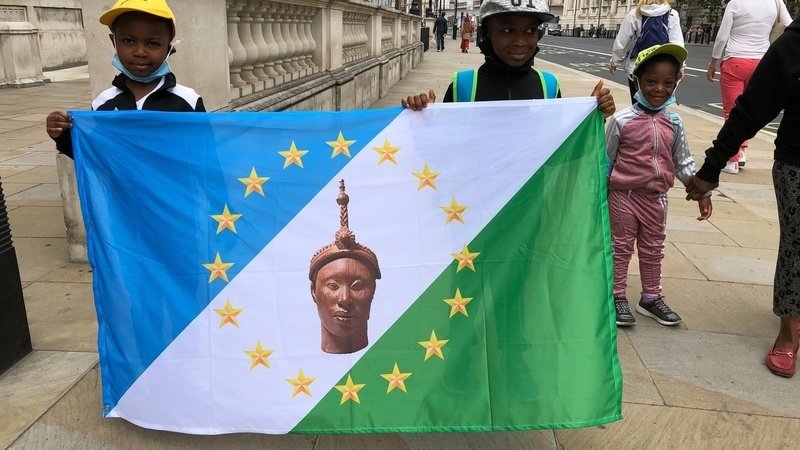
People cite the following factors as reasons for seeking self-determination: 1) a fraudulent 1999 constitution, 2) an unfair 1914 political structure, 3) inept Buhari presidency, and 4) Fulani pogroms and ethnic cleansing. In fact, all these factors are totally irrelevant.
UN Charter says: ‘All peoples have the RIGHT to self-determination; by virtue of that RIGHT they freely determine their political status and freely pursue their economic, social and cultural development.’
AU Charter says: ‘All peoples shall have the RIGHT to existence. They shall have the unquestionable and inalienable RIGHT to self- determination. They shall freely determine their political status and shall pursue their economic and social development…’
According to these internationally proclaimed Charters, self-determination is a RIGHT. A right is about freedom from oppression; a privilege that you can assert or not assert as you wish. It is not a gift or handout. The right to self-determination is protected from encroachment.
Self-determination is a legally guaranteed right; internationally and domestic. Neither Buhari nor the Fulani can veto our right to self-determination. Yoruba self-determination does not require agreement with Buhari or the Fulani. It is our inalienable right to do as we wish.
How can the right to self-determination be claimed by the ‘peoples’?
Step 1: Definition of ‘peoples’
Montevideo Convention of 1933, 4 requirements: a) a permanent population, b) a defined territory, c) a government, and d) the ability to form relations with other states.
President Bush 1991, 5 requirements: 1) self-determination consistent with democratic principles, 2) recognition of existing borders, 3) support for democracy & rule of law, 4) preservation of human rights & rights of minorities and, 5) respect for international law & obligation.
The Yoruba Nation fulfils all these criteria. The UN Charter says: ‘Inadequacy of political, economic, social or educational preparedness should never serve as a pretext for delaying independence.’
Step 2: Determination of what the ‘peoples’ want
Referendum is a plebiscite; direct vote of all the members of an electorate on an important public question such as self-determination.
Opinion poll measures the opinions of the public by questioning just a representative sample of the electorate.
Referendum has no real advantage over polling a dichotomous question, such as, ‘Do you want independence from Nigeria - yes/no’. The public are already aware, through the media and other political activities so a period of campaigning that a referendum requires, is not needed.
The political reality on the ground is clear. The mega rallies tell us that the Yoruba want an independent homeland. Observance of the IPOB stay-at-home tells us that Biafra want an independent homeland. Referendum is necessary only when you don't know the answer.
Step 3: Actualisation of the self-determination
The breakup of the Soviet Union and the Eastern European countries was actualised through the auspices of the UN.
Any Yoruba group, regardless of its size, could apply on behalf of the Yoruba Nation via the UN SG for consideration for UN membership under Rule 58 of the provisional rules of procedure of the Security Council and Rule 134 of the rules of procedure of the General Assembly.
The US and UK, being aware of the situation on the ground in Nigeria, could of their own accord use the UN ‘humanitarian intervention’ provisions of UN Chapter VII and GA Res 3314 [XXIX] to ensure that Nigeria does not deprive the Yoruba of their right to self-determination.
However, the US and UK will not use the UN ‘humanitarian intervention’ provisions to stop the Fulani committing genocide and human rights abuses in Nigeria, not because of oil, but because black lives do not matter to white people.
The US and UK will never use the UN ‘humanitarian intervention’ provisions to protect Nigeria’s Christians from Fulani murderers because Nigeria’s Christians are black, and lives of black Christians do not matter to white people.
A negotiated exit from Nigeria is not possible. The Fulani group, who divested the 3 ethnic groups - Hausa, Igbo and Yoruba - that negotiated Nigeria’s independence from the British of all power, are autocrats who use pogroms and human rights abuses to enforce political advantage.
Emancipation Proclamation is the only reality. Somaliland declared independence from Somalia in 1991. No foreign power recognises Somaliland's sovereignty, but it is self-governing with an independent government, democratic elections, and a distinct history.
Transnational networks - diaspora, neighbours, friendly states, potential trading partners, mass education, reputation, and resourcefulness - advantage the Yoruba more than impoverished Somaliland. It is certainty that Oduduwa Republic would succeed more than Nigeria ever would.
One of two things would happen if the Yoruba declared their Oduduwa Republic today.
1. The Fulani would capitulate and seek division of assets/liabilities.
2. The Fulani would declare war and we would have to fight them.
Sign, spread, support our UN petition http://chng.it/QJp8yJ6hPs if you like what you have just read above.