From the Yoruba Descendants to the Secretary General of the United Nations 5

1. Application
We the Yoruba Descendants respectfully submit this application for admission of the Oduduwa Republic to the membership of the United Nations. We base our application on the Yoruba people’s territorial, historic, cultural and legal rights guaranteed in international law and order. We should be most grateful if your Excellency would be gracious enough to convey this application to the Security Council pursuant to rule 58 of the provisional rules of procedure of the Security Council and to the General Assembly rule 134 of the rules of procedure of the General Assembly.
2. Declaration
We the Yoruba Descendants solemnly declare that the Yoruba are a peace-loving people who accept the obligations contained in the Charter of the United Nations and solemnly undertake to fulfil them in the Oduduwa Republic.
3. Letter
xxxxxx
xxxxxx
xxxxxx
xxxxxx
United Kingdom
(xxxxxx@outlook.com)
Our ref: Yorexit - UN5
17 May 2021
Mr Antonio Gutteres
The Secretary General
The United Nations
New York
NY10017
Your Excellency,
This is the fifth application by the Yoruba Descendants for self-determination for the Yoruba people of Nigeria. In it we respectfully draw the attention of the Security Council to the Yoruba problem and to the lack of shared values between the ethnic groups that make up the country, which in itself is a most fundamental reason for the Yoruba to leave Nigeria.
You should sir by now have received four previous applications from the Yoruba Descendants, dated respectfully 1 March 2022, 17 March 2021, 14 April 2021, and 2 May 2021, that we hoped might be the subject of your ‘Situation in xxx’ report to the Council for June 2021. Each of our previous applications, like this one, has been written specifically to highlight either a legal or a moral justification for self-determination for the Yoruba. We understand that other groups have also written to you to implore the UN to broker a peaceful dissolution of Nigeria, like has been done previously, for example, for the Soviet Union, Yugoslavia, and Czechoslovakia.
Herzl in 1896 argued that the Jewish problem was not a social question but a political question for the council of nations. He advocated for the creation of a Jewish state as solution to both anti-Semitism and the Jewish secular identity. The Yoruba problem is similarly a political question for the United Nations. Indeed, the Yoruba like the Jews are also scattered all over the world. The Yoruba question transcends the country Nigeria in which the Yoruba are currently being held against their wish.
First, the British incorporated the Yoruba nation into Nigeria as an act of colonialism. The Yoruba did not give their consent. The Yoruba had their own empire, established over several millennia, located south and west of the River Niger, and which they were able to successfully defend against jihadist incursions from the north. Clapperton, a Scottish explorer, wrote in 1826: ‘Here they [the jihadists] found more resistance than anywhere else, as they (the people of Yourriba) could not be made to believe in his doctrine or prophecy, as they were confirmed Kaffers, who, on the invasion of the Fellatas, put all the Mahometans to death…’. It was the British that conquered and thereafter, to enable them institute their practice of ‘indirect rule’, transferred the Ilorin ‘city state’, located on the northern border of the Yoruba Empire, to the Sokoto Caliphate.
Second, the Europeans between 1400 and 1800 captured and transported millions of Yoruba youths as slaves to their American colonies. Slavery consumed half of the Yoruba population of the time, and half of those slaves died horrible deaths on the enforced journey to the Americas. The blood and sweat of the Yoruba slaves made America the prosperous country that it is today. It was Onesimus, a Yoruba slave, who in 1716 introduced smallpox vaccination to America. The Yoruba have suffered more than the Jews. The world owes the Yoruba a homeland of their own to recompense for slavery just as the world recompensed the Jews for the holocaust. Descendants of Yoruba slaves particularly in the Americas and the Caribbean demand self-determination for the Yoruba nation. Recently, 1,000 women descendants of Yoruba slaves from all over the world visited Ile Ife, the spiritual home of the Yoruba, to highlight this demand for the Oduduwa Republic.
Third, apart from a shared colonial master and the legacy of that colonialism, the Yoruba have absolutely nothing in common with the other ethnic groups in Nigeria. The peoples of Nigeria are fundamentally different peoples just like the Italians of Europe are different from the Germans and the French are different from the English etc. And just like the different European ethnic groups have no common vision, in spite of the European Union, Nigeria’s ethnic groups also have no shared values and no common vision. The barbarity of the Fulani in deliberately orphaning Yoruba children, raping their mothers and sisters, and wantonly destroying Yoruba farms and communities attest to the Fulani deep-seated hatred for the Yoruba. That Fulani hatred has not been diminished by over 100 years of sharing a country.
Fourth, it was the British colonialists that grouped diverse peoples together into a single entity that they called Nigeria. The various ethnic groups, naturally demarcated by the ‘Y’ of the Niger and Benue Rivers, have never considered themselves part of the same culture. There is no Nigerian ‘nationalism’. ‘National’ leadership is always ethnically biased. Bloody confrontations between the different ethnic groups have been unrelenting since independence in 1960. Indeed, this situation led to a 3-year civil war that started in 1967. We Yoruba people seek to exit this toxic political and social environment that we know from our experience will never change because it is an enduring and permanent legacy of divergent governance histories.
In the Hausa-Fulani north, in the 1700s, centuries old indigenous Hausa sultanates were being toppled by Fulani Islamic jihadists. By 1807, the Sokoto Caliphate, with its Islamic culture and law, had been established centralising the system of government. The political structure was the Sultan of Sokoto ruling via emirate leaders that he had personally appointed. The Emir in turn controlled all local land, merely allocating pieces of it to families at his pleasure. The Emir was a mere interpreter and enforcer of the law whilst the Sultan was the embodiment of the state. The British abolished the Caliphate in 1906 and introduced ‘indirect rule’, which allowed the Sultan to remain as ceremonial ruler. The general effect of indirect rule was to entrench a leadership hostile to modernisation. The Sultan continues to wield considerable influence on the Hausa-Fulani peoples of northern Nigeria.
In the Yoruba west, where urbanisation was the norm, the ‘city state’ was the unit of the political structure. The apparatus of government was monarchical. The ‘city state’ (Ilu) was ruled by one person, the Oba but he was not a supreme ruler. The Oba’s rule was subject to veto by an institutionalised council of spokespersons (the Oyomesi Council of Chiefs) representing different institutions such as age groups, craft guilds and religious sects. The council operated in two functional groups; namely, Otun (‘to the right’), that looked after the interests and wellbeing of the monarchy institution and Osi (‘to the left’), that looked after the interests and wellbeing of the ordinary citizen. Each group could, and did, deliberate and act independent of the Oba as well as independent of each other. The Yoruba monarchical system encouraged the Oba to rule in the interest of his people. Corruption of these institutions by the British led to conflicts between several prominent Oba and their councils and eventually to the Yoruba civil wars of the late 1800s.
In the Igbo East, where urbanisation was not very advanced, the ‘village’ was the unit of the political structure. The unit of authority was small. The apparatus of government was gerontocratic. Authority for the affairs of the village was vested in a council of elders, a socio-cultural institution. The oldest person was usually chairman of council, but he did not have a domineering influence. Indeed, the council was represented not by him, but by a spokesman, usually younger, who would have been co-opted into the council on account of his competence in articulating the decisions and wishes of the council as well as his knowledge of the local laws and customs. All adult males, and elderly women, were entitled to attend council meetings and to contribute freely to the deliberations.
Nigerians’ perception of ‘country’ is based entirely on their different pre-colonial histories of governance. There is a clash of opposing cultures, which makes ‘unity’ an impossibility. The Hausa/Fulani have a liege culture. They coalesce under one leadership no matter how inept or mediocre. The Yoruba (and other Southerners) have an anti-liege culture. Leadership if given, is fettered and never 100%. The Hausa/Fulani perceive ‘country’ in jihadist terms, and they act accordingly and follow their leadership in that pursuit. The Yoruba (and other Southerners) perceive ‘country’ as a commonwealth, affording participation for each and every citizen. The Hausa/Fulani see the ruler as protector of a faith. The Yoruba (and other Southerners) see the ruler as a sacral figure. Northerner Nigerians, particularly the Fulani, view subjugation of Nigeria as their God-given mission and will stop at nothing to achieve it. The Yoruba (and other southerners) view the Fulani as slavers and oppressors.
On October 12, 1960, Ahmadu Bello, the Sardauna of Sokoto confirmed the Fulani attitude towards Nigeria when he said this: ‘The new nation called Nigeria should be an estate of our grandfather, Othman Danfodio. We must ruthlessly prevent a change of power. We must use the minorities in the North as willing tools and the South as conquered territories and never allow their future.’
To give effect to the Sardauna’s proclamation, in 1962, the Fulani-led Federal government used emergency powers to take over the administration of the Yoruba Western Region. In 1963, Obafemi Awolowo, the Yoruba leader, was imprisoned for 10 years. In 1964, the Midwest was hived off the Western Region to reduce the power of the West. In 1979, Awolowo was denied a runoff of the presidential election. More recently in 1992, the election of Mosood Abiola, a Yoruba, as president of Nigeria was annulled by a Fulani-led military fiat. Several Yoruba politicians and activists, including Mrs Ransome Kuti and Bola Ige, have been assassinated. Nigeria has had 13 rulers since independence in 1960, 9 of them have been Northerners. Nigeria has had 8 military coups since 1966, 7 of them have been staged by Northern army officers.
Nigeria’ s ethnic complexity has made it impossible for the country to be successful. The number of Nigeria’s ‘republics’ since independence in 1960 confirm that there is no governance formula in current practice in the world that was capable of competently accommodating this scale of ethnic diversity. Indeed, keeping the different peoples of Nigeria under one administrative roof has been a form of inhuman and degrading treatment for the Yoruba. Nigeria has only been kept as ‘one’ because governments have been concerned solely with cake sharing amongst the political class to who colonialism (and subsequently military rule) had bequeathed power. Nigeria’s political culture is ingrained with electoral malpractices. All elections since 1959 have one way or another been fought along ethnic lines and characterised by bitterness, violence, voter fraud, vote rigging, intimidation, and falsification of results, all in favour of the Fulani. Britain incorporated the Yoruba nation into Nigeria by force. There was neither consent nor an enabling treaty. Britain structured Nigeria to give military and political power to the Fulani. The 1967 Civil War attests to the difficulty faced by any ethnic group seeking to escape Fulani domination.
Nigeria’s poor economic record in the face of plenty can be traced directly to the inability to meld a unified country out of disparate ethnic nations. There was no sense of unity before the British came and it did not develop whilst they were in charge or after they left. Indeed, self-determination was a constant cry during colonial rule, as much as it is today. Why? First, the British designed the political structure to be divider not uniter. Second, access to political power was possible only through ethnic group support. Third, any Nigerian politician seeking to bridge the ethnic divides faced almost certain political ruin. Awolowo’s career in national politics is a case in point. The breakup of Nigeria is inevitable. Nigeria’s politicians simply do not believe in Nigeria.
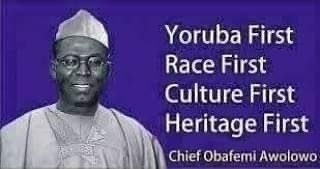
Our quest as Yoruba people to rid ourselves of Fulani domination is neither new nor recent. On September 19, 1963, Obafemi Awolowo, our leader said this: ‘Since 1957 I have fought, as your Lordship remarked, with vigour against the feudal system in the Northern Region and for its eradication. I have also fought to prevent the spread of this evil political system to other parts of Nigeria.’
We, the Yoruba Descendants, seek Yoruba independence from Nigeria to prevent our Yorubaland becoming an ‘estate’ of Othman Danfodio and for this, we plead for the assistance of the member states of the UN.
Yours sincerely
Chief (Dr) Olusola Oni
MBBS, MSc, MD, LLM, GDL, FRCSEd, FWACS, FMCS, FRCSEng
(Baasegun Alabe of Ijebu-Jesa, Osun State, Nigeria)
For and on Behalf of Yoruba Descendants