Nigeria’s domestic law guarantees the right to self-determination

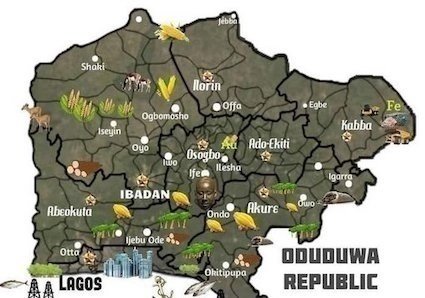
Over 1500 people have now signed http://chng.it/QJp8yJ6hPs our UN petition for self-determination for the Yoruba people. This update is to thank them for their support.
The Organisation of Africa Unity adopted the African Charter on Human and Peoples’ Rights on 28 June 1981. Article 20 (1) of the Charter says: ‘All peoples shall have the right to existence. They shall have the unquestionable and inalienable right to self-determination. They shall freely determine their political status and their economic and social development according to the policy they have freely chosen’.
The Charter has been widely accepted in Africa. Nigeria ratified the treaty on 22 June 1983 in accordance with Section 12 (1) of the 1979 Constitution, which says: ‘No treaty between the Federation and any other country shall have the force of law except to the extent to which any such treaty has been enacted into law by the National Assembly’. Nigeria domesticated the Charter and incorporated it in full and unaltered into domestic law through the The African Charter on Human and Peoples’ Rights (Ratification and Enforcement) Act Chapter A9 of 1983. Nigeria was the first country in Africa to do so. Indeed, the African Charter remains the only comprehensive human rights treaty ratified and domesticated by Nigeria. Chapter 4 of the 1979 Constitution of Nigeria contains provisions which guaranteed similar rights. The African Charter has been incorporated into Chapter 10 Vol 1 of the Laws of the Federation of Nigeria since 1990.
Section 12(1) of the 1999 Nigerian Constitution replicates Section 12(1) of the 1979 Constitution and the ratified and domesticated status of the African Charter was not changed by the 1999 Constitution. There would appear however to be a conflict between the African Charter and the declaration of indivisibility in the 1999 Nigerian Constitution. There is a presumption implicit in the Section 12(1) ratification however that Nigeria does not intend to violate the rules of international law. That presumption is rebuttable but only if the Charter was explicitly repealed, modified or varied by legislative act. This has not happened. The operation of the African Charter has never been explicitly suspended, even during the military dictatorships. The Nigeria judiciary in several landmark cases have ensured that the Charter guarantees were effective. The courts time and time again have held that the provisions of the African Charter, as incorporated into Chapter 10, were superior to national legislation. The Supreme Court of Nigeria in Abacha v Fawehinmi confirmed that the Africa Charter was part of Nigerian law that the courts must enforce.
What does this all mean? It means that Nigeria has incorporated into its domestic law, the right of any group to seek and to obtain self-determination. It means that since 1983, it has not been unlawful for any group to opt out of, or to secede from, Nigeria. Any measures taken by the Nigerian government to prevent any group from opting out of Nigeria would be unlawful. Any measures taken by the Nigerian government to apprehend or punish anyone agitating for self-determination would be unlawful. Any measures taken by the Nigerian government to force any group to remain part of the country would be unlawful. It means that any group in Nigeria seeking self-determination is protected by Chapter VII of the UN Charter which prohibits the use of force against a non-member and is availed of the General Assembly Resolution 3314 (XXIX) which permits the Security Council to intervene to ensure effective protection for a non-member.