Help Further by Emailing Testimony
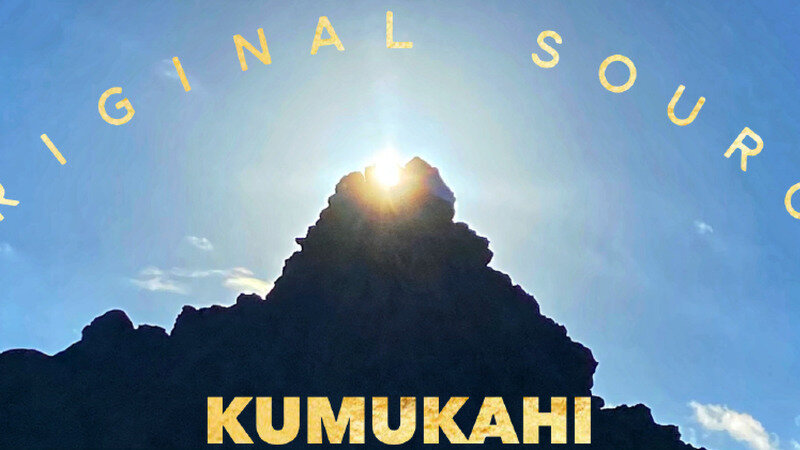
Please take a moment to send in your written comments to FEMA about plans to restore Kumukahi-Lighthouse Road. Cut and paste the below comments, or write your own. Click here to open a fresh email to FEMA, insert your comments, add your name at the end, and don't forget to add the subject line "Puna Road Repair and Water Line Installation" before clicking SEND!
PROTECT KUMUKAHI
The following public written comments are founded in a deep commitment to the protection of the wahi pana Kumukahi, and are oriented towards a goal of de-coupling the imminent Kumukahi-Lighthouse Road (K-LR) restoration from the other parts of the project. In no way are these comments to be taken as an attempt to block or delay the improvements along Pohoiki Road and Hwy 137. We are requesting that FEMA do everything in its remaining power to effect a re-designation of the K-LR work from Phase 1 to Phase 4, allowing time for a funded, professional Comprehensive Preservation Plan for Kumukahi to be finalized.
PURPOSE AND NEED — There is little need to open Kumukahi-Lighthouse Road
No residential properties have legal easement through K-LR, and since the properties lining this road are in the Conservation zone, development opportunities are limited and there is no need for property owners to recover from the disaster. Because of the absence of population, there is no need for emergency response services access, and because the nearest populations in Kapoho Farm and Beach lots will already gain multiple emergency evacuation routes from the Hwy 137 restoration, there is no need for K-LR to serve this role. Additionally, K-LR is a dead end with no previous or current designation as a coastal recreation area. The new beaches that exist there are unsafe, with strong currents, an undertow, and zero shade, as well as being habitat for endangered species such as the green sea turtle. Because of the soil classification of pahoehoe lava flows, 2 to 20 percent slopes, there are no agricultural lands in the area, and there has been no economic activity since 1960.
RANGE OF ALTERNATIVES — Re-designate Kumukahi-Lighthouse Road to Phase 4
There are a variety of compromises for K-LR which would honor the wishes of Section 106 consultation participants, while preserving the County’s ability to use FEMA funds for all, or most, of the K-LR restoration. For example:
Because of the possibility of exposing cultural properties and endangered species habitat to adverse effects in the indirect APE that surrounds the full length of Kumukahi-Lighthouse Road, and because of the requests from Section 106 consultation participants, FEMA recommends that the County (i) de-couple K-LR restoration from Phase 1, re-designating it to Phase 4, and (ii) prepare to gate the road, once restored. This would allow time for the Burial Treatment and Preservation Plan “being negotiated by third parties and outside of FEMA’s Section 106 consultation,” and the Comprehensive Preservation Plan, currently under professional development, to be finalized and implemented.
RESOURCES POTENTIALLY AFFECTED — Opening Kumukahi-Lighthouse Road would be “the straw that breaks the camel’s back”
Far more than a listing of numbered historic properties, Kumukahi in fact “is referenced in association with many other wahi pana along the neighboring shore, extending mauka across the ‘āina,” to “Four Corners” and beyond (Maly and Maly, 2021). ”Kumukahi is translated as the 'beginning/first source, chief, or teacher,' in reference to the “first source” of wisdom, knowledge or of knowing. This is because of its location in relation to the sun, Kānehoalani (an akua who is, in one story, Pele’s father) and what the sun represents, as the easternmost point of Hawaiʻi. It is the beginning of our collective consciousness as people of Hawaiʻi, which establishes Kumukahi as a wahi pana (living and celebrated place) and a wahi moʻolelo (a storied place).” (Hawai`i County website, 8/30/2023, https://recovery.hawaiicounty.gov/infrastructure/ocean-access
It is important that FEMA gave lineal descendants and NHOs the opportunity to articulate their views on the project's effects on historic properties and how to avoid adverse impacts. We would like to see their views given due consideration (i.e., taken seriously). Four of these views (reprinted in the draft EA) link the re-opening of Kumukahi-Lighthouse Road with requested avoidance, mitigation, and minimization measures, such as the institution of a Burial Treatment and Preservation Plan, the development of a stewardship and management plan, and the building of a protective wall.
This is because the restoration of Kumukahi-Lighthouse Road would, according to criteria developed by the National Preservation Institute for how to conduct an Environmental Assessment (https://www.npi.org/node/478 be “the straw that breaks the camel’s back, an individual action [that] may not have much effect, but it may be part of a pattern of actions whose effects are significant. For example, widening a bridge may not itself have much effect, but it may be the last piece of highway improvement that allows rampant development of a pristine valley.”
IMPACT ANALYSES — Historic Properties Affected, Adverse Effects Reasonably Foreseeable
We assert that FEMA was mistaken in its finding of No Historic Properties Affected, because of an unreasonably narrow interpretation of 36 800.16(i). Given the totality of the evidence that the opening of this particular road would at least indirectly, or secondarily, expose the historic properties to reasonably foreseeable alteration of their characteristics, the finding Historic Properties Affected should have followed.
This finding would have triggered an area of rich discovery for the preservation of cultural resources. The 36 800.5(a)(1) and 36 800.5(a)(2) criteria would have led to a determination that the Undertaking would enable reasonably foreseeable effects such as destruction or damage to burials, removal of `iwi from their historic location, change of the character of a property’s use (e.g., recreational, non-Hawaiian-cultural exploring on top of burial sites), and introduction of the visual insult of litter/trash/defecation on or near burial sites, that may occur over time and would accumulate, and that would certainly diminish the integrity of the sites’ locations, feelings and associations.
Indeed, Kumukai is rich in features that would qualify it as a National Historic Disctrict: the relatively undeveloped setting amidst multiple layers of raw lava flow, the easternmost location (“where the rays of the sun bloom forth, lighting Hawai’i”), the biocultural associations, and the feelings evoked both in native Hawaiian cultural practitioners and in the nonnative experiencer, are enough to qualify the site. Archaeological record of the materials, workmanship, and design of the platforms, cairns, pillars, and heiaus substantiate the historic integrity of the site; in a broader sense, the ebbs and flows of Pele’s hand reveal a spiritual architecture that traces to the literal origin of Hawai`i Island.
MITIGATION MEASURES/BEST MANAGEMENT PRACTICES THAT WOULD REDUCE IMPACTS
The bottom line is that this issue is all about restoration of the road. Delaying restoration of the road, and being prepared to gate it, once restored, would allow time for the Comprehensive Preservation Plan to be finalized and for the procurement of funding necessary for protective walls and other security. These would be the minimal outcomes required to safeguard cultural resources and lay the groundwork for local, community, and visitor access to be methodically returned.
SPECIFIC RECOMMENDATIONS FEMA CAN MAKE TO THE COUNTY OF HAWAI`I
• Although FEMA chose to forego joint historic preservation and environmental assessment studies with the State of Hawai`i (40 CFR 1506.2), as holder of the purse-strings FEMA should communicate to the County it’s anticipation of HRS 6E (Historic Preservation), HRS 343 (environmental review), 205A (Special Management Area), and HRS 183 (Conservation District) studies and permits before the project work is undertaken or, certainly, re-imbursed.
• FEMA should transmit to the County of Hawai`i, in its entirety, each and every public written comment on the draft EA that it receives.
Signed, _________________________________