The Invisible Lease: How Classism Invades Your Home Life

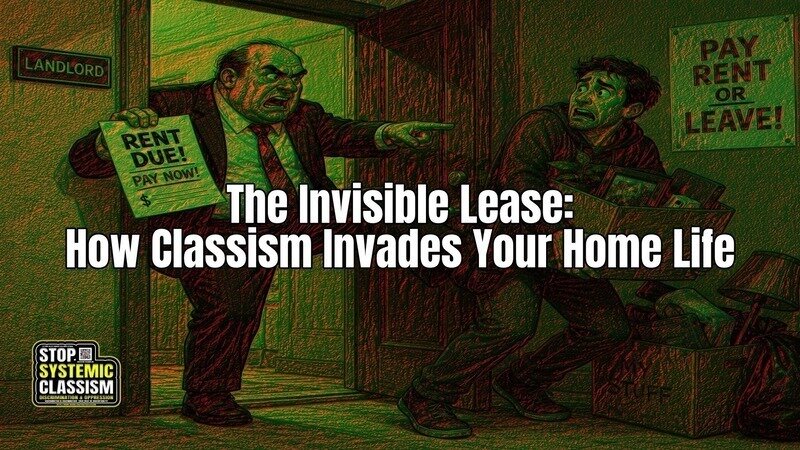
Home is supposed to be your sanctuary. It is the one place where we are meant to drop our guards, kick off our shoes, and exist without the weight of the world pressing down on us. However, for millions of tenants, the concept of home is complicated by an invisible, pervasive force: classism. When you rent your living space, the power dynamic inherent in the lease agreement often opens the door for classist behaviors that affect your mental health, your comfort, and your sense of dignity.
Classism in housing does not always look like a cartoonish villain twirling a mustache. It is often subtle, systemic, and woven into the mundane interactions between landlord and tenant. Here is how classism affects your home life as a renter.
The Power Imbalance and the Deprivation of Autonomy
The most immediate way classism manifests in the home is through a loss of autonomy. When you own a home, you are the master of your domain. When you rent, you are living in someone else’s investment.
This dynamic often leads to a distinct lack of privacy. Landlords or property managers may feel entitled to enter your space with minimal notice, viewing the unit not as your home but as their asset that needs monitoring. This behavior stems from a classist assumption that tenants are subordinates who do not deserve the same boundaries as homeowners. The anxiety of a landlord knocking on the door unannounced creates a state of hypervigilance. You never truly relax because you never truly feel in control of your environment.
The Disparity in Response Times
Classism is clearly visible in how maintenance requests are handled. In upscale buildings or neighborhoods, landlords often treat tenants as clients whose satisfaction is paramount. In working-class or lower-income areas, tenants are often treated as nuisances.
If a tenant in a luxury high-rise reports a leaky faucet, it is often fixed within 24 hours. A tenant in a working-class complex might wait weeks for the same repair. This disparity signals a troubling message: your time and comfort are less valuable because you pay less rent. This is not just an inconvenience; it is a health and safety issue. Ignoring repairs in low-income housing is a form of classism that suggests the quality of your living conditions should match the weight of your wallet.
The "Professionalism" Double Standard
Tenants are often held to rigorous standards regarding their conduct and the presentation of their homes. Lease agreements frequently contain clauses about lawn maintenance, trash disposal, and noise. However, landlords often exempt themselves from these same standards.
This double standard is a hallmark of classism. You may be threatened with eviction for having a messy patio, yet the landlord refuses to fix the broken gate in the common area. This creates a home life governed by fear rather than respect. You feel constantly monitored and judged, forced to live up to a "perfect tenant" ideal while your landlord fails to live up to the "perfect landlord" obligation.
The Weaponization of Stability
Perhaps the most damaging aspect of classism in tenancy is the weaponization of housing stability. For the working class, a home is survival. For many landlords, a home is a business transaction. This gap in perspective allows for predatory behaviors.
Rent increases that far outpace wage growth, fees for trivial infractions, and the threat of eviction are tools used to maintain control. When a tenant knows that one misstep could lead to homelessness, they are less likely to advocate for themselves. They might accept unsafe living conditions or endure rude behavior from management because they cannot afford the financial risk of speaking up. This power dynamic strips tenants of their voice, turning the home from a place of rest into a place of endurance.
Internalized Shame and the "Home" Identity
Over time, these external pressures become internal. Tenants may begin to feel that their living situation is a reflection of their personal worth. Society often equates homeownership with success and renting with transience or failure. This stigma creates a subtle shame that tenants carry into their private lives.
You might hesitate to invite friends over because you are embarrassed by the peeling paint that the landlord refuses to fix. You might avoid complaining about the noisy neighbors because you do not want to be labeled a "problem tenant." This erosion of confidence turns the home into a source of stress rather than a source of pride.
Moving Forward
Addressing classism in the home requires a shift in how we view housing. We must recognize that tenants have rights that extend beyond what is written in a lease. They have a right to dignity, privacy, and safe living conditions regardless of their income level.
For tenants, understanding that these frustrations are systemic rather than personal is the first step toward empowerment. Seeking out tenant unions, knowing local housing codes, and building community with neighbors can help restore a sense of agency. Your home should be your castle, regardless of whose name is on the deed.