✍️Before the Tomorrow's Superintendent Evaluation: Write Your Trustee Today!

Tomorrow, May 28, the MUSD Board is scheduled to hold the Superintendent’s evaluation in closed session.
The evaluation itself is confidential. But public concern before that evaluation is not confidential.
Trustees can and should hear from parents, staff, and community members before they evaluate district leadership.
This matters because the school-closure fight revealed a larger issue: leadership priorities.
For months, families were asked to accept the possibility of school closures, consolidation, transportation disruption, receiving-school impacts, and damage to rural communities. At the same time, the public still has not seen a complete explanation of why administrative structure, central-office spending, management alignment, enrollment recovery, attendance recovery, and other stabilization options were not publicly exhausted first.
Now parents have obtained and reviewed district comparative reports, including the 2024–25 CADIE and 2024–25 SABRE reports from School Services of California.
CADIE compares district income and expenditures using California Department of Education data and unaudited actual financial numbers, not projections.
One CADIE table shows MUSD ranked second among its comparison group for total site and district administrator salary expense, at $1,520.16 per ADA, compared with a comparative-group average of $978.25 per ADA.
On unrestricted site and district administrator salary expense, MUSD ranked first, at $1,230.44 per ADA, compared with a comparative-group average of $836.09 per ADA.
SABRE compares salary and benefit data against peer districts using official district-reported documents.
These reports raise a serious governance question:
Why was school closure pushed so heavily before administrative spending, central-office structure, leadership alignment, and non-closure stabilization options were fully explained to the public?
Board Policy 2140 says the Superintendent’s evaluation exists to assess effectiveness in leading the district toward established goals and provides a basis for Board decisions regarding contract extension and compensation. It also says evaluation criteria include district goals, educational, management, and community leadership skills.
That means this evaluation is exactly the right moment for trustees to ask hard questions.
This is about public accountability.
Families should not have to fight for months just to stop premature closure narratives. A superintendent’s office should not get ahead of a volunteer committee’s actual decision. The district should not place rural schools under closure pressure while administrative spending and central-office structure remain insufficiently explained.
Please Write Your Trustee Today!
Ask your trustee to include these issues in the May 28 Superintendent evaluation:
- handling of the school closure/consolidation process
- whether public messaging got ahead of the committee’s actual decision
- progress toward fiscal stabilization without school closures
- administrative spending and central-office structure
- whether leadership priorities match MUSD’s enrollment reality
- whether school closure remains a true last resort
- whether the Board will respect the committee’s no-closure outcome
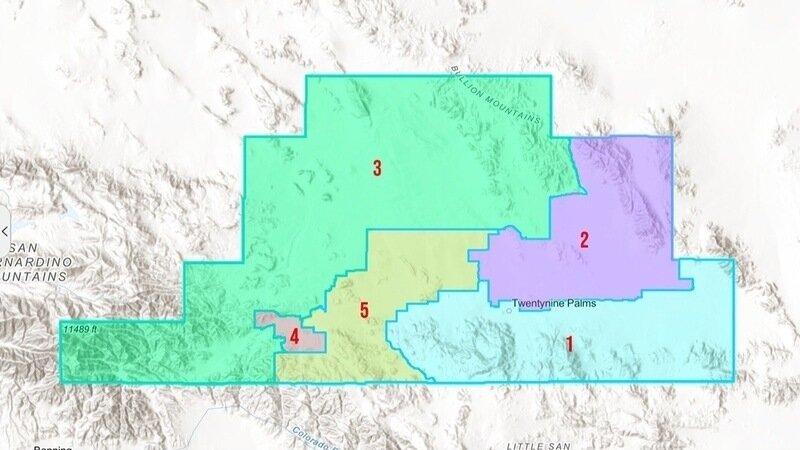
You can write all five trustees, because every Board member votes on districtwide decisions. You can also write your own trustee and say, “I live in your trustee area.”
San Bernardino County Registrar of Voters official Trustee Areas map
Simple e-mail template:
Subject: Please include community concerns in the May 28 evaluation
Dear Trustee [Name],
As you prepare for the May 28 Superintendent evaluation, I’m asking you to please include the recent school closure/consolidation process as part of that discussion.
The Enrollment Committee did not recommend school closures. Please respect that outcome.
Many families are concerned that closure scenarios were discussed before the public saw a complete alternatives analysis, transportation review, receiving-school capacity review, equity/community impact review, or full stabilization plan.
We are also concerned that district comparative reports raise questions about administrative spending, central-office structure, and whether leadership priorities match MUSD’s current enrollment and fiscal reality.
Please use this evaluation to ask hard questions about fiscal stabilization, administrative accountability, public communication, and whether school closure is truly being treated as a last resort.
This is about transparency, public trust, and protecting our school communities.
Thank you,
[Your Name]
[School / Community]
Trustee Emails:
Trustee Area 1 — Missy Bond
Email: mbond@morongousd.org
Area 1 generally covers Twentynine Palms.
Trustee Area 2 — Pete Wood
Email: pwood@morongousd.org
Area 2 has been described as including northern Twentynine Palms, Wonder Valley, and portions of the Marine base.
Trustee Area 3 — Bianca Stoker
Email: bstoker@morongousd.org
Area 3 is including unincorporated areas such as Landers and Morongo Valley.
Trustee Area 4 — Christopher Claire, Board President
Email: cclaire@morongousd.org
Area 4 is representing areas of Yucca Valley east of Kickapoo Trail and west of La Contenta.
Trustee Area 5 — Roberta Meyers, Board Clerk
Email: rmeyers@morongousd.org
Area 5 is covering Joshua Tree, parts of Yucca Valley, Desert Heights, and areas east of Airway Drive and north toward Giant Rock Road.
Keep the Record From Going Silent!
The evaluation is closed session. But trustees should not go into that room hearing only the internal district narrative.
Please write today!
The committee did not recommend closure.
The Board must respect that.
Stabilization first. Administrative accountability first. No closure before real alternatives.