The Importance of Context and History in Child Representation

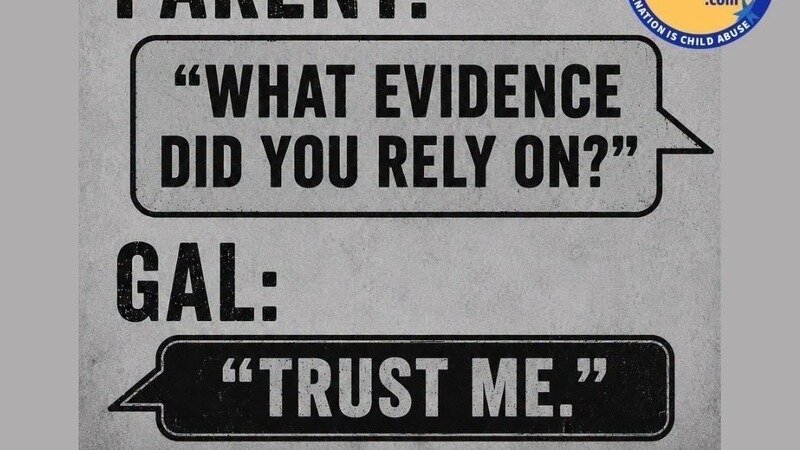
This image speaks to a serious gap in family court: a guardian ad litem or children’s representative may claim to determine a child’s best interests, but without proper training in coercive control, family violence, behavior dynamics, and the full history of the case, important context can be missed. In high-conflict cases, that can silence the child’s authentic voice and lead to recommendations that do not reflect reality.
This is not about attacking every GAL. It is about recognizing that these roles require far more than good intentions. They require informed, trauma-aware, non biased, or politically charged views, especially in cases involving parental alienation and family violence, where it is critical to look underneath the surface. A child's words, more often than not are nothing but amplified narratives by the alienating parent. A child acts more like a parrot, a puppet. Survival. Not authentic voice.
The problem is not that every GAL or child representative is biased, although it is dangerously common. The problem is that the system too often relies on individual judgment without enough specialized training in behavioral dynamics, coercive control, and family violence, even though these factors can be central to a child’s safety and well-being. When that happens, the child’s authentic voice may not be heard, and the outcome can be deeply harmful.
We need stronger education, better safeguards, and greater accountability in these roles. Children deserve decision-makers who look beyond surface-level statements and fully consider history, context, and the realities of coercion and alienation before making recommendations that can shape a child’s life.