Pakistan and the Climate Crisis
The Issue
A Nation on the Front Line of a Warming World
By: Akash Lakho
There are many ways that climate change is already affecting Pakistan. It is affecting Pakistan’s economy, and putting the public’s health and lives at risk.
Pakistan is experiencing many extreme weather events more frequently, including: floods, heat waves, and droughts. Many of these events are magnifying stress on water resources including melted glaciers. It is important to also consider that Pakistan is not a large emitter of greenhouse gasses. According to Pakistan’s most recent documents submitted to the UN, the average Pakistani produces about 2.3 tons of CO2 equivalent each year.
Developing countries such as Pakistan face a major challenge as they have very little control over historical greenhouse gas emissions, and yet have to cope with the negative impacts of climate change.
Crises and Displacements Caused by Climate Change
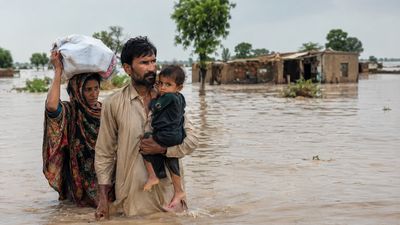
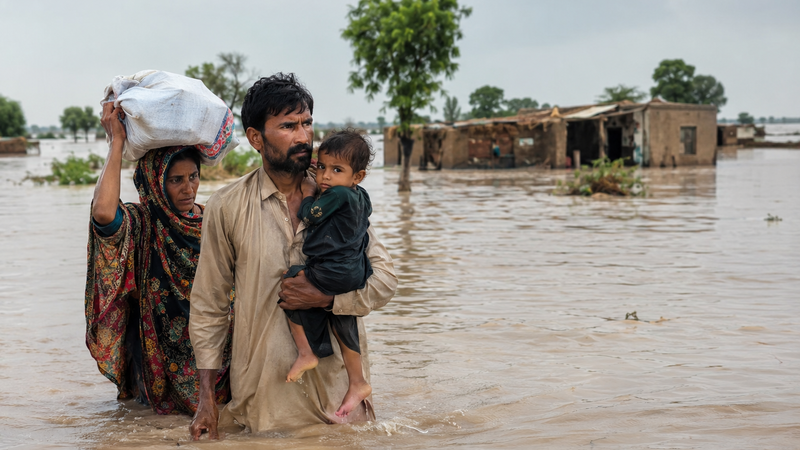
Climate change brings more frequent extreme weather events in Pakistan. 2022 was a turning point when, after years of drought, floods suddenly and unexpectedly devastated almost the entire country.
From 2025 onwards, further large-scale loss of life and severe damage to property occurred due to monsoon and flash floods.
The World Bank reported that Buner district of Khyber Pakhtunkhwa, Pakistan, received over 150 mm (nearly 6 inches) of rainfall in 1 hour in 2025. This caused a series of flash floods that devastated several areas of Khyber Pakhtunkhwa and killed 509 people. The World Bank also reported that 85% of the households in three of the most affected districts reported that they did not receive any flood warning.
The case studies shown above point towards a broader and more critical situation. Large embankment and dam building projects will not address this situation. The focus should be on the following: are early warning systems in place? are communities at risk provided actionable information in a timely manner?
The Water Challenge
Of all the challenges presented by climate change, Pakistan faces perhaps the greatest challenge with respect to water.
The Indus waters are the backbone of Pakistan’s agricultural and economic activities. However, changing climate and other stresses increase water related vulnerabilities.
In the north, rising temperatures and Melting Glaciers increase the risk of floods. The UNFCCC reports that Pakistan and other countries in the region face risks of landslides, flash floods, and glacial lake outburst floods (GLOFs) as a result of climate change.
Elsewhere in Pakistan, particularly in Sindh, reduced water flows cause the sea to advance inland and threaten delta ecosystems, and impact livelihoods.
Extreme climatic events lead to a loss of coastal and delta ecosystems, the shrinking of fisheries and farm lands. In many cases, the only viable option for people is to migrate to other areas.
Heat is Becoming a Public Health Emergency
As the world focuses on the floods that have devastated Pakistan, it should be aware that Pakistan also faces a growing threat from extreme heat.
Farmer and labor extremes from the heat are only expected to grow as the world continues to warm. Karachi and other large, urban areas in Pakistan face particularly grim conditions due to the heat, combined with other pollution and population extremes.
Heat waves exacerbate social and economic inequality. Extreme heat is as much of a public health crisis as a lack of clean water.
Pakistan’s Agricultural Sector
Almost 2/3 of Pakistan’s workforce is employed in the agricultural sector. Extremes in the weather negatively impact this already vulnerable sector of the economy.
From the extreme monsoon rains and flooding to the droughts, heat waves, and Hurricanes that follow, the agricultural infrastructure and livestock of Pakistan are devastated.
Pakistan is also faced with rising food prices and shrinking employment which in turn increases the poverty and extreme hardship of the people of Pakistan.
The Consequences Are unequal
The effects of climate change are not the same for all Pakistanis.
Wealth and income inequalities in Pakistan also mean poorer households are more vulnerable to extreme weather conditions and less able to recover from disasters.
Particularly in times of disaster, the needs of children, the elderly, women and persons with disabilities often go unmet.
The UN Development Programme (UNDP) notes that some of the impacts of climate change are exacerbating existing inequalities, and that to build the resilience of the most vulnerable to climate change in Pakistan, existing inequalities must be addressed.
Therefore, strengthening the resilience of the most vulnerable groups to climate change in Pakistan calls for reviewing and transforming policies related to the economy, health and social protection, agriculture, housing, education, disaster risk reduction and climate change.
A New Focus in Pakistan: Preparing for Climate Disasters
There is growing evidence that Pakistan is also seeking to shift its focus to taking climate action before a disaster occurs.
In 2026, the World Food Programme (WFP) welcomed the first National Anticipatory Action Policy of Pakistan, which outlines a range of policies based on the principles of using early warning systems and other available climate and disaster forecasts.
Anticipatory action for the 2025 Pakistani floods provided cash to flood-affected people of Khairpur to help them purchase food and services and to protect their livestock.
Climate change means the world needs early warning systems more than ever
In its investigation into the 2022 Khyber Pakhtunkhwa floods, the World Bank reported that notifications, if any, reached the affected households through informal means such as community members or phone calls.
There are lessons for policymakers in this experience.
Closed and unreliable systems of early warning will limit the potential benefits of investment in high-tech systems for advanced weather forecasting.
Pakistan will benefit from technologies that integrate community-based systems for early warning with improved national and regional climate and weather forecasting systems.
The Indus Delta: An Example from the South
The Indus Delta is one of Pakistan’s largest and most important ecosystems. A changing climate and related human activities are putting additional stress on this already-vulnerable system.
Rising sea levels and changing sea currents put coastal communities at additional risk, and in some cases, can increase coastal flooding. Loss of coastal vegetation, including mangroves, adds to this threat.
If mangrove forests are lost, not only do they no longer absorb the force of coastal storms, they also no longer act as a barrier to Coastal Flooding. Protecting Mangroves and other Coastal ecosystems of the Delta reduces Coastal Flooding and protects Human Security.
Climate Cooperation with Pakistan
Pakistan is not able to act on the climate crisis on its own. The country needs international cooperation. It needs to improve urban planning and design. It needs to construct climate-resilient infrastructure and improve the management of water resources. It needs to improve disaster management systems and mitigation infrastructure. Additionally, it needs to expand renewable energy and electrical infrastructure.
There are a number of ongoing efforts to address climate change and build climate resilient infrastructures. There is an immediate need to mobilize sufficient and predictable financial resources to support these efforts.
International Public Finance for Adaptation
The overwhelming burden of the response to climate change has been placed on Pakistan and other developing countries. The Impact of continued and unmitigated climate change will diminish the resources available for other development priorities. International climate finance can make a difference and provide leverage for developing countries to adopt transformational approaches in moving toward climate resilience.
Measures Taken to Date
There is a growing understanding of the threat of climate change in Pakistan, as evidenced by efforts to improve early warning systems. The UNDP reported that 284 early warning stations for glacial lake outburst floods benefited approximately 700,000 people in Gilgit-Baltistan and Khyber Pakhtunkhwa provinces in 2021. Resilience to climate change requires similar investments to promote safe and green jobs, and strengthen community resilience to climate change.
Climate change exacerbates poverty and conflict.
Pakistan is a case study. Climate change is not merely rising and falling global averages of temperature. It is the security and well-being of individuals and communities. It is the loss of a means of subsistence and a way of life.
Pakistan knows the future is deadly and certain. It is about time other nations also stop worrying about the future and instead think about how to ameliorate what is.
Akash Lakho
The writer is a journalist,
aakashlakho@gmail.com

9
The Issue
A Nation on the Front Line of a Warming World
By: Akash Lakho
There are many ways that climate change is already affecting Pakistan. It is affecting Pakistan’s economy, and putting the public’s health and lives at risk.
Pakistan is experiencing many extreme weather events more frequently, including: floods, heat waves, and droughts. Many of these events are magnifying stress on water resources including melted glaciers. It is important to also consider that Pakistan is not a large emitter of greenhouse gasses. According to Pakistan’s most recent documents submitted to the UN, the average Pakistani produces about 2.3 tons of CO2 equivalent each year.
Developing countries such as Pakistan face a major challenge as they have very little control over historical greenhouse gas emissions, and yet have to cope with the negative impacts of climate change.
Crises and Displacements Caused by Climate Change
Climate change brings more frequent extreme weather events in Pakistan. 2022 was a turning point when, after years of drought, floods suddenly and unexpectedly devastated almost the entire country.
From 2025 onwards, further large-scale loss of life and severe damage to property occurred due to monsoon and flash floods.
The World Bank reported that Buner district of Khyber Pakhtunkhwa, Pakistan, received over 150 mm (nearly 6 inches) of rainfall in 1 hour in 2025. This caused a series of flash floods that devastated several areas of Khyber Pakhtunkhwa and killed 509 people. The World Bank also reported that 85% of the households in three of the most affected districts reported that they did not receive any flood warning.
The case studies shown above point towards a broader and more critical situation. Large embankment and dam building projects will not address this situation. The focus should be on the following: are early warning systems in place? are communities at risk provided actionable information in a timely manner?
The Water Challenge
Of all the challenges presented by climate change, Pakistan faces perhaps the greatest challenge with respect to water.
The Indus waters are the backbone of Pakistan’s agricultural and economic activities. However, changing climate and other stresses increase water related vulnerabilities.
In the north, rising temperatures and Melting Glaciers increase the risk of floods. The UNFCCC reports that Pakistan and other countries in the region face risks of landslides, flash floods, and glacial lake outburst floods (GLOFs) as a result of climate change.
Elsewhere in Pakistan, particularly in Sindh, reduced water flows cause the sea to advance inland and threaten delta ecosystems, and impact livelihoods.
Extreme climatic events lead to a loss of coastal and delta ecosystems, the shrinking of fisheries and farm lands. In many cases, the only viable option for people is to migrate to other areas.
Heat is Becoming a Public Health Emergency
As the world focuses on the floods that have devastated Pakistan, it should be aware that Pakistan also faces a growing threat from extreme heat.
Farmer and labor extremes from the heat are only expected to grow as the world continues to warm. Karachi and other large, urban areas in Pakistan face particularly grim conditions due to the heat, combined with other pollution and population extremes.
Heat waves exacerbate social and economic inequality. Extreme heat is as much of a public health crisis as a lack of clean water.
Pakistan’s Agricultural Sector
Almost 2/3 of Pakistan’s workforce is employed in the agricultural sector. Extremes in the weather negatively impact this already vulnerable sector of the economy.
From the extreme monsoon rains and flooding to the droughts, heat waves, and Hurricanes that follow, the agricultural infrastructure and livestock of Pakistan are devastated.
Pakistan is also faced with rising food prices and shrinking employment which in turn increases the poverty and extreme hardship of the people of Pakistan.
The Consequences Are unequal
The effects of climate change are not the same for all Pakistanis.
Wealth and income inequalities in Pakistan also mean poorer households are more vulnerable to extreme weather conditions and less able to recover from disasters.
Particularly in times of disaster, the needs of children, the elderly, women and persons with disabilities often go unmet.
The UN Development Programme (UNDP) notes that some of the impacts of climate change are exacerbating existing inequalities, and that to build the resilience of the most vulnerable to climate change in Pakistan, existing inequalities must be addressed.
Therefore, strengthening the resilience of the most vulnerable groups to climate change in Pakistan calls for reviewing and transforming policies related to the economy, health and social protection, agriculture, housing, education, disaster risk reduction and climate change.
A New Focus in Pakistan: Preparing for Climate Disasters
There is growing evidence that Pakistan is also seeking to shift its focus to taking climate action before a disaster occurs.
In 2026, the World Food Programme (WFP) welcomed the first National Anticipatory Action Policy of Pakistan, which outlines a range of policies based on the principles of using early warning systems and other available climate and disaster forecasts.
Anticipatory action for the 2025 Pakistani floods provided cash to flood-affected people of Khairpur to help them purchase food and services and to protect their livestock.
Climate change means the world needs early warning systems more than ever
In its investigation into the 2022 Khyber Pakhtunkhwa floods, the World Bank reported that notifications, if any, reached the affected households through informal means such as community members or phone calls.
There are lessons for policymakers in this experience.
Closed and unreliable systems of early warning will limit the potential benefits of investment in high-tech systems for advanced weather forecasting.
Pakistan will benefit from technologies that integrate community-based systems for early warning with improved national and regional climate and weather forecasting systems.
The Indus Delta: An Example from the South
The Indus Delta is one of Pakistan’s largest and most important ecosystems. A changing climate and related human activities are putting additional stress on this already-vulnerable system.
Rising sea levels and changing sea currents put coastal communities at additional risk, and in some cases, can increase coastal flooding. Loss of coastal vegetation, including mangroves, adds to this threat.
If mangrove forests are lost, not only do they no longer absorb the force of coastal storms, they also no longer act as a barrier to Coastal Flooding. Protecting Mangroves and other Coastal ecosystems of the Delta reduces Coastal Flooding and protects Human Security.
Climate Cooperation with Pakistan
Pakistan is not able to act on the climate crisis on its own. The country needs international cooperation. It needs to improve urban planning and design. It needs to construct climate-resilient infrastructure and improve the management of water resources. It needs to improve disaster management systems and mitigation infrastructure. Additionally, it needs to expand renewable energy and electrical infrastructure.
There are a number of ongoing efforts to address climate change and build climate resilient infrastructures. There is an immediate need to mobilize sufficient and predictable financial resources to support these efforts.
International Public Finance for Adaptation
The overwhelming burden of the response to climate change has been placed on Pakistan and other developing countries. The Impact of continued and unmitigated climate change will diminish the resources available for other development priorities. International climate finance can make a difference and provide leverage for developing countries to adopt transformational approaches in moving toward climate resilience.
Measures Taken to Date
There is a growing understanding of the threat of climate change in Pakistan, as evidenced by efforts to improve early warning systems. The UNDP reported that 284 early warning stations for glacial lake outburst floods benefited approximately 700,000 people in Gilgit-Baltistan and Khyber Pakhtunkhwa provinces in 2021. Resilience to climate change requires similar investments to promote safe and green jobs, and strengthen community resilience to climate change.
Climate change exacerbates poverty and conflict.
Pakistan is a case study. Climate change is not merely rising and falling global averages of temperature. It is the security and well-being of individuals and communities. It is the loss of a means of subsistence and a way of life.
Pakistan knows the future is deadly and certain. It is about time other nations also stop worrying about the future and instead think about how to ameliorate what is.
Akash Lakho
The writer is a journalist,
aakashlakho@gmail.com
Petition Updates
Share this petition
Petition created on September 24, 2026