RE: Email to the Politicians

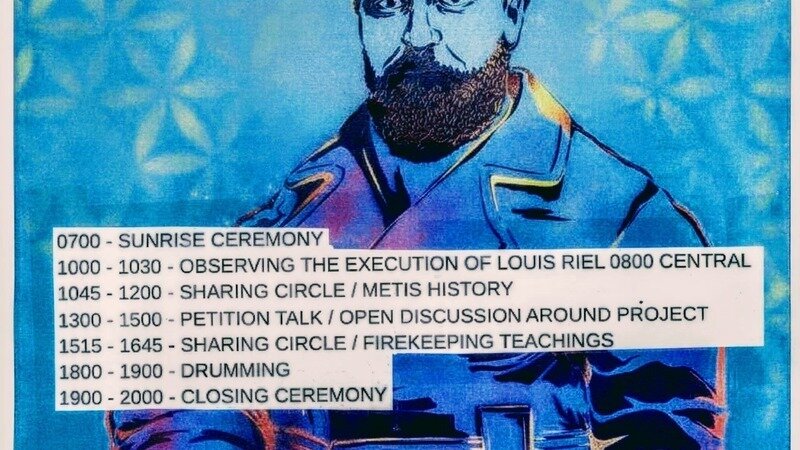
The following was emailed to the offices of these politicians at 0900 October 18, 2023:
TO:
Her Excellency the Right Honourable Mary Simon;
Lt. Gov. of Ontario, Her Honour the Honourable Elizabeth Dowdswell, OC, OOnt;
Doug Ford, MPP Etobicoke North and Premiere of Ontario;
Olivia Chow, Mayor of Toronto; Dan Carter, Mayor of Oshawa;
Olena Hankivsky, Mayor of Port Hope; Jeff Leal, Mayor of Peterborough;
Matthew Graham, Mayor of Cavan/Monaghan;
Taanishi : Aanii : Boozhoo : Wachay : Sago : Greetings,
I am writing to you in the spirit of moving forward through Truth and Reconciliation. I have spear-headed a coalition of Métis Citizens, First Nation Band Members, and local citizens of the GTA, who have an interest in seeing forward movements toward a brighter future. The resonating theme with everyone is education. Many of us who descend from the Historic Métis Nation and live in Ontario, and even further east, were given an education that saw a curriculum label us as criminals, and traitors.
The timeline that we will focus on, begins at the Red River Resistance and the formation of the province of Manitoba. Canada, as a blossoming nation in 1869, was highly ambitious and was looking to extend its reach into the western plains. As the Métis Nation defended its inherent land rights, there was an influx of settlers who began to take over the settlement leading to an uprising led by Louis David Riel (Oct. 4, 1844 - Nov. 16, 1885). This period in Métis history is known as “The Reign of Terror”, and resulted in Manitoba entering Confederacy. However, by 1880 the pressure from heavier European immigration and Protestants from Ontario, had forced several families to leave their homes in Manitoba, and head further west to find more suitable lands to establish land bases.
These families, in the spring of 1882, would head across the Plains in caravans of Red River Carts, pulled by horses and oxen. With their large families and earthly possessions in tow, they would land on the shores of the South Saskatchewan River among their Assiniboine, Cree, and Sioux cousins. Once again, the Métis Nation would begin to build, and establish trading posts and villages in Northern Saskatchewan.
For a time, the towns of St. Louis, Duck Lake, and Batoche flourished. Soon the inhabitants started to take notice of Orangemen from Ontario slowly encroaching on the lands upon which they started to rebuild their lives, far from the hustle and bustle of Canada.
This land at the time was all part of the North-West Territories, and known as Assiniboia. On the modern map, this area is the southern and central regions of Saskatchewan. By 1884, land surveyors had, once again, been dispatched by John A. MacDonald to ascertain what could be done about further western expansion. We share a quote by John A. MacDonald from Louis: The Heretic Poems by Gregory A. Scofield, on the Métis land claims:
“The impulsive half-breeds have got spoilt by this émeute [rioting] and must
be kept down by a strong hand until they are swamped by the influx of the settlers”
After the events of Red River, Louis Riel fled to Montana, where he lived in exile and became a naturalized citizen of the United States of America, and worked as a school teacher. He had left his beloved homeland and remained in exile for several years until June of 1884. A delegation was sent from Saskatchewan to Montana, on behalf of the Métis who settled at Batoche and the surrounding areas, asking Riel to return. Out of care and concern for his people, he acceded to their request, and a new provisional government, with Riel as the spiritual and political leader, was formed. Ultimately, as fate would decide, Riel was tried and hung for treason in Regina, Saskatchewan on November 16, 1885.
Over the next several months to a year, we will discuss in the form of a Committee/Task Force, the historical events leading up to the return of Riel, and the year leading up to the morning of March 26, 1885, at Duck Lake, Saskatchewan, and how to address the actions of The Queen’s Own Rifles, The Grenadier Guards, and Orangemen volunteers from Ontario. Men like Lt. Col Arthur Williams, a prominent Port Hope businessman who begged for an opportunity to kill for his country.
In response to The Truth and Reconciliation Commission’s Calls to Action 62, 63, and 93, we invite you on a journey of reconciliation that would see a delegation travel to the Batoche National Historic Site, to address the historical events and actions that led to the execution of Riel, and offer an acknowledgment/apology to the Métis Nation, in hopes of a better working relationship with the Nation. As the elected representatives of Toronto, Oshawa, Millbrook, Peterborough, and Port Hope, it would be a monumental step forward to have you help forge the pathway to a reform in education that would be a more accurate depiction of past events.
Craig St. Denis
craigsaintmc@gmail.com 905-391-7521
I acknowledge that I am a Métis Citizen, and reside on the traditional territory of the Wyandot, the Haudenosaunee, and the Anishinaabeg, including the Chippewas and the Mississaugas of the Credit. Today, Toronto is home to many First Nation, Métis, and Inuit peoples. Toronto is within the territory of the Dish with One Spoon Treaty, which requires the responsibility of those who use the land, to share it peaceably, and care for it.