

🚨 GLOBAL ALERT: DEMAND URGENT ACTION TO STOP FOREST FIRES IN INDONESIA
Masalahnya
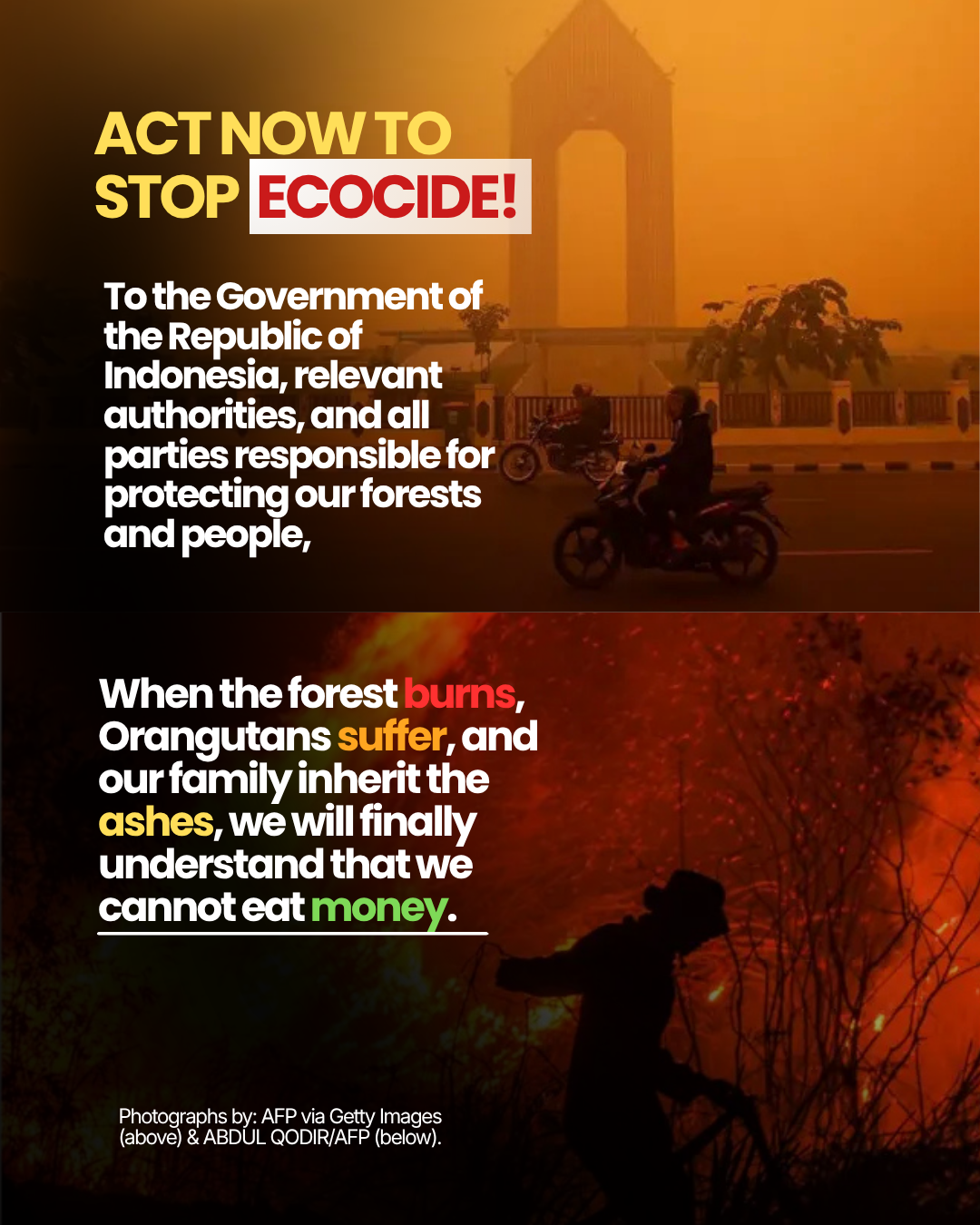
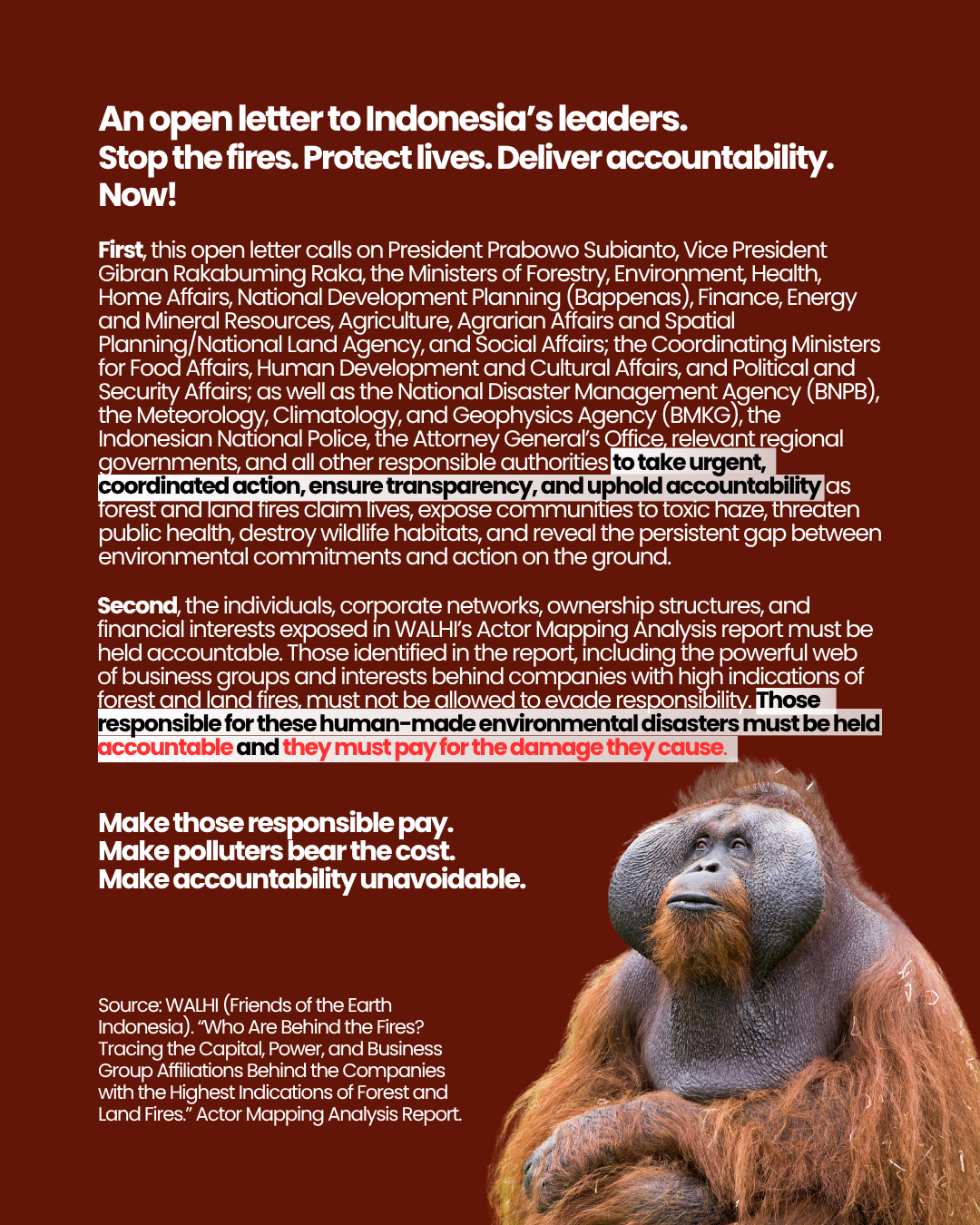
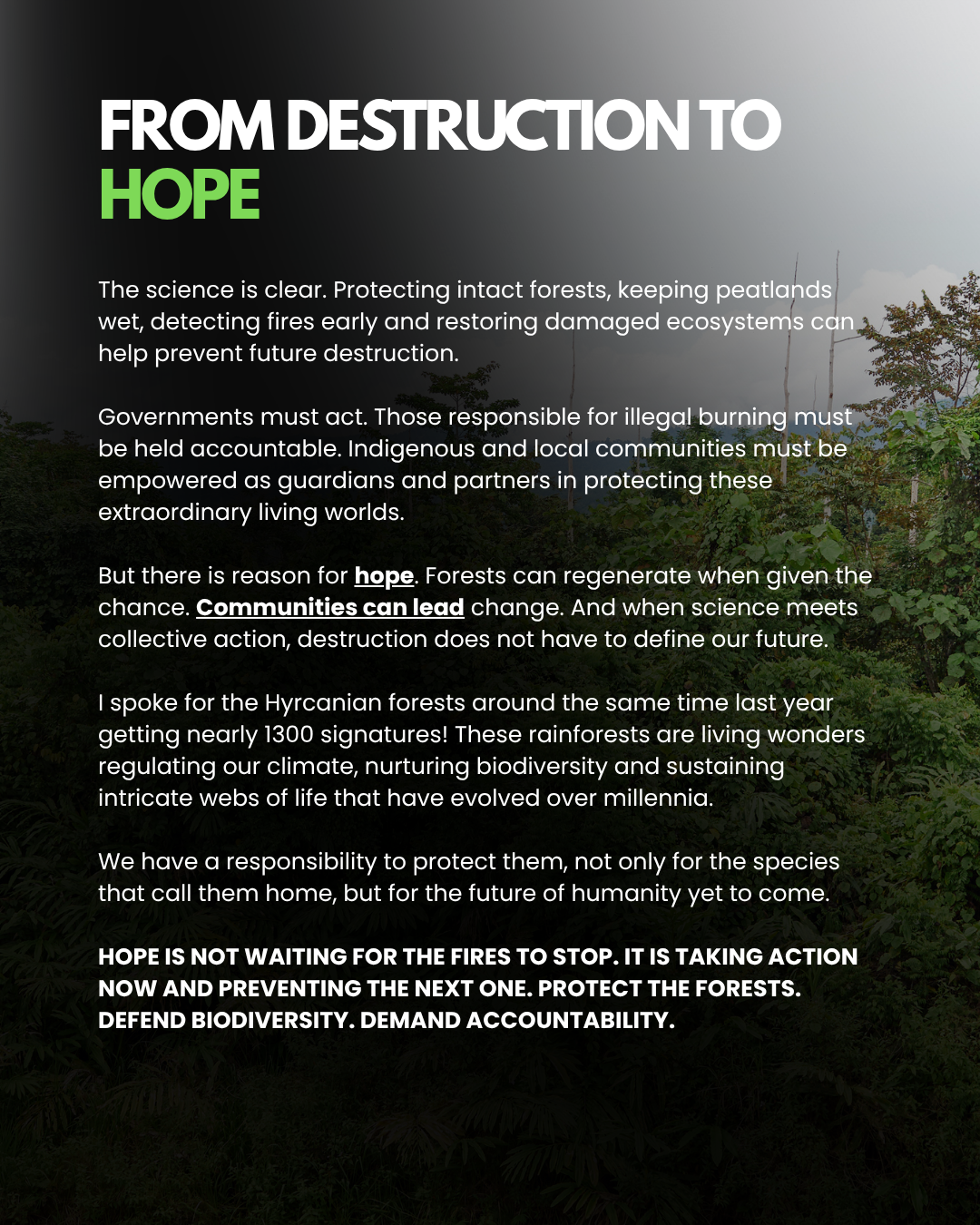
To the Government of the Republic of Indonesia, relevant authorities, and all parties responsible for protecting our forests and people: When the forest burns, Orangutans suffer, and our family inherit the ashes, we will finally understand that we cannot eat money!
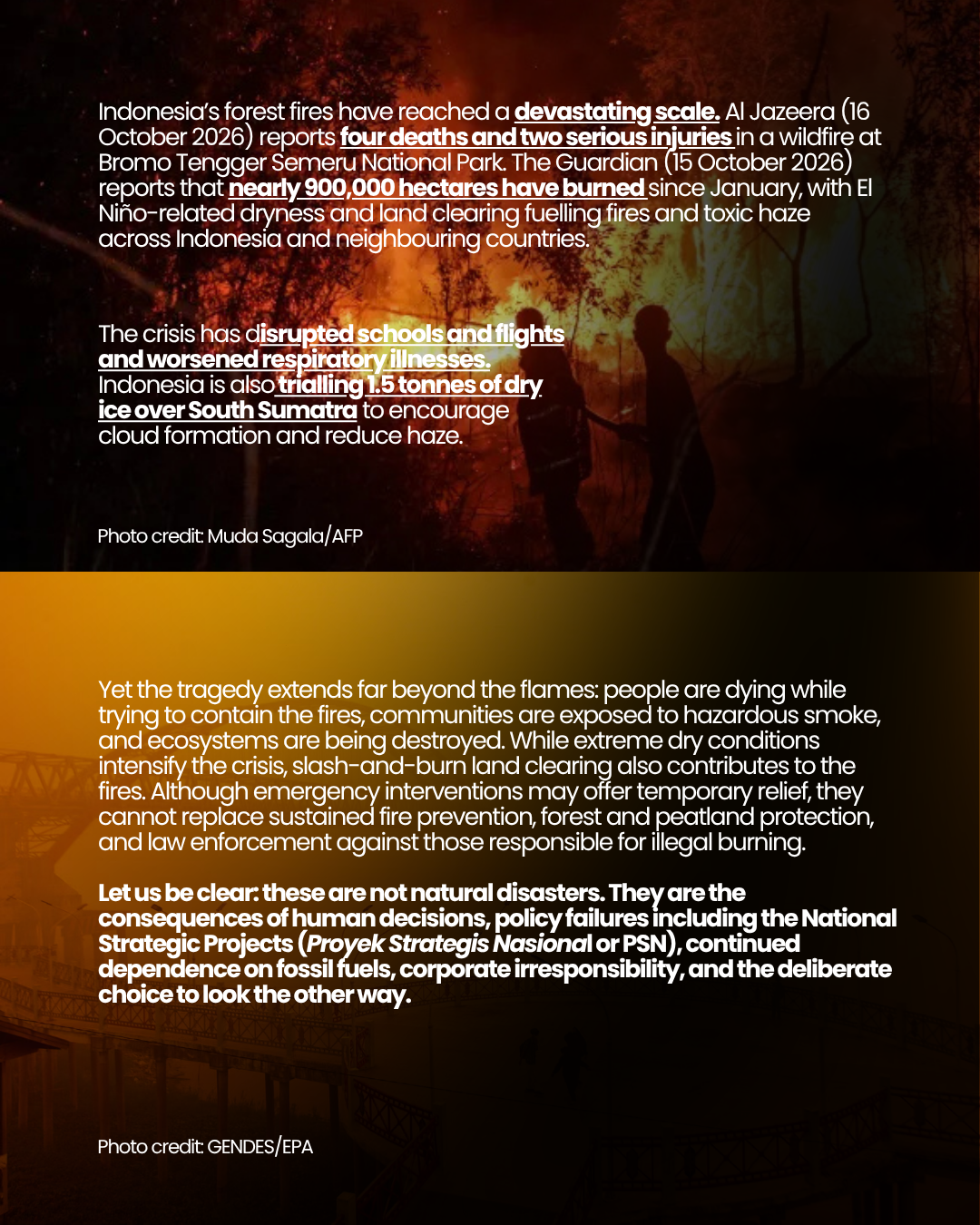
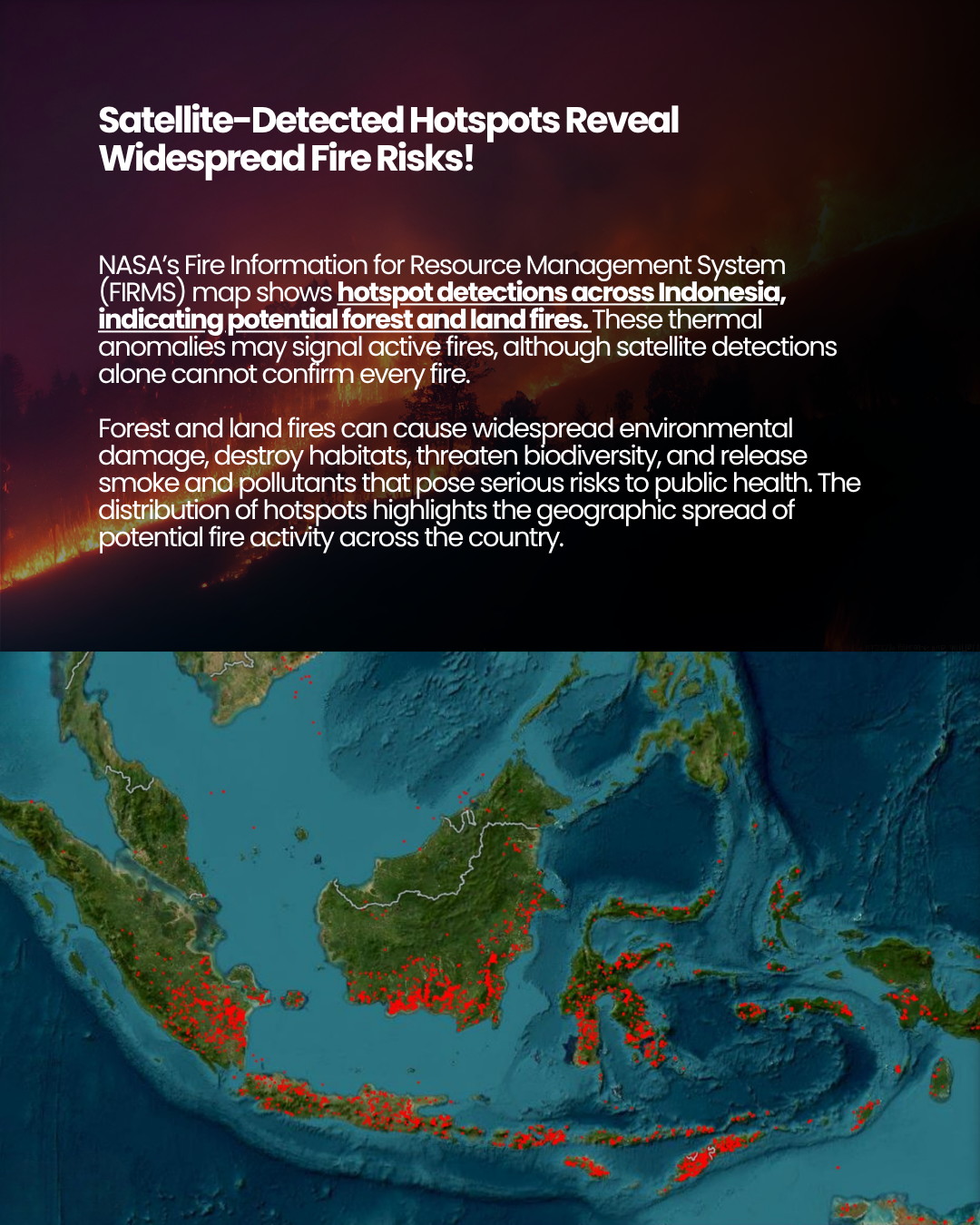
Indonesia’s forest fires have reached a devastating scale. Al Jazeera (16 October 2026) reports four deaths and two serious injuries in a wildfire at Bromo Tengger Semeru National Park. The Guardian (15 October 2026) reports that nearly 900,000 hectares have burned since January, with El Niño-related dryness and land clearing fuelling fires and toxic haze across Indonesia and neighbouring countries. The crisis has disrupted schools and flights and worsened respiratory illnesses. Indonesia is also trialling 1.5 tonnes of dry ice over South Sumatra to encourage cloud formation and reduce haze.
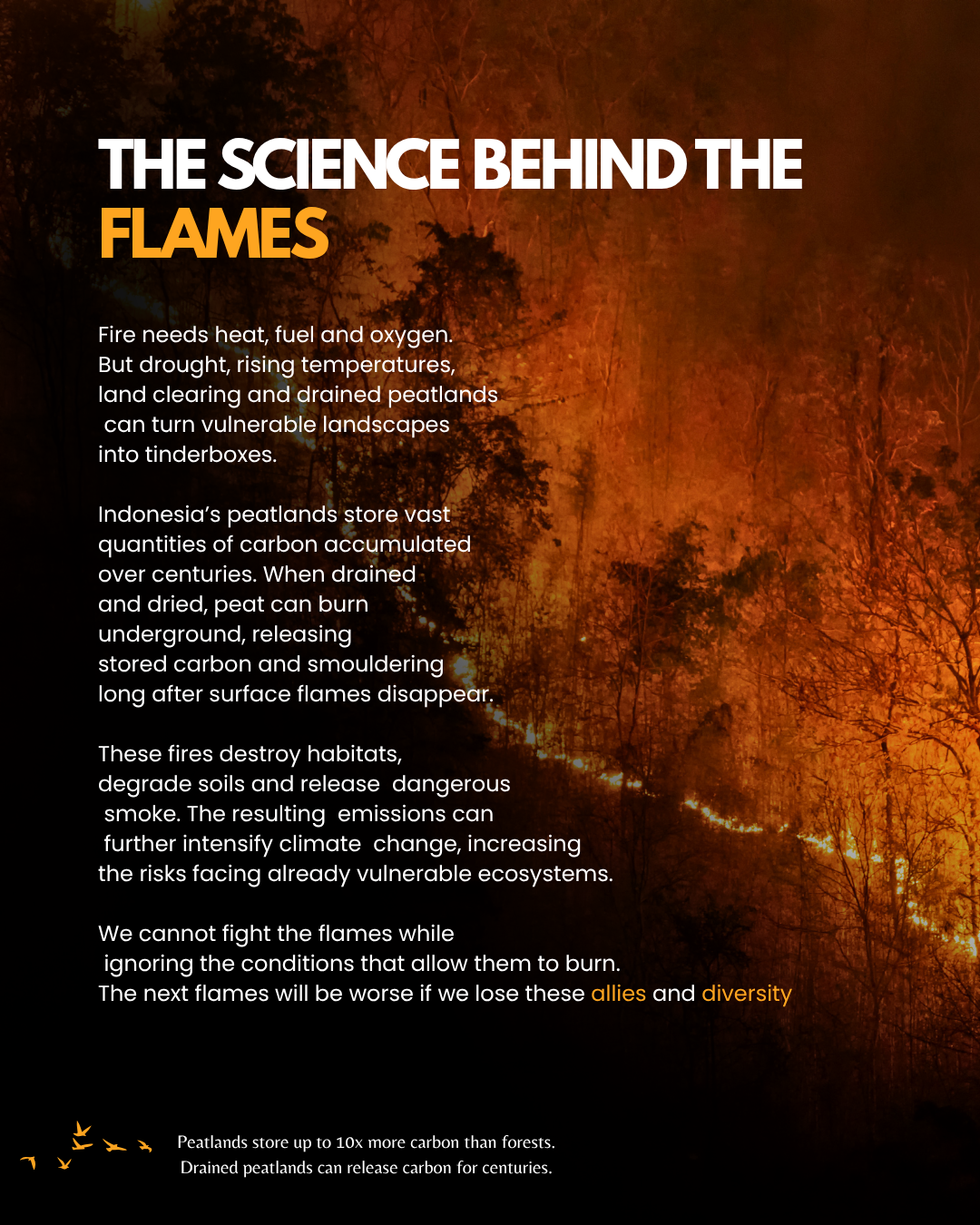
Yet the tragedy extends far beyond the flames: people are dying while trying to contain the fires, communities are exposed to hazardous smoke, and ecosystems are being destroyed. While extreme dry conditions intensify the crisis, slash-and-burn land clearing also contributes to the fires. Although emergency interventions may offer temporary relief, they cannot replace sustained fire prevention, forest and peatland protection, and law enforcement against those responsible for illegal burning.
Let us be clear: these are not natural disasters. They are the consequences of human decisions, policy failures including the National Strategic Projects (Proyek Strategis Nasional or PSN), continued dependence on fossil fuels, corporate irresponsibility, and the deliberate choice to look the other way.
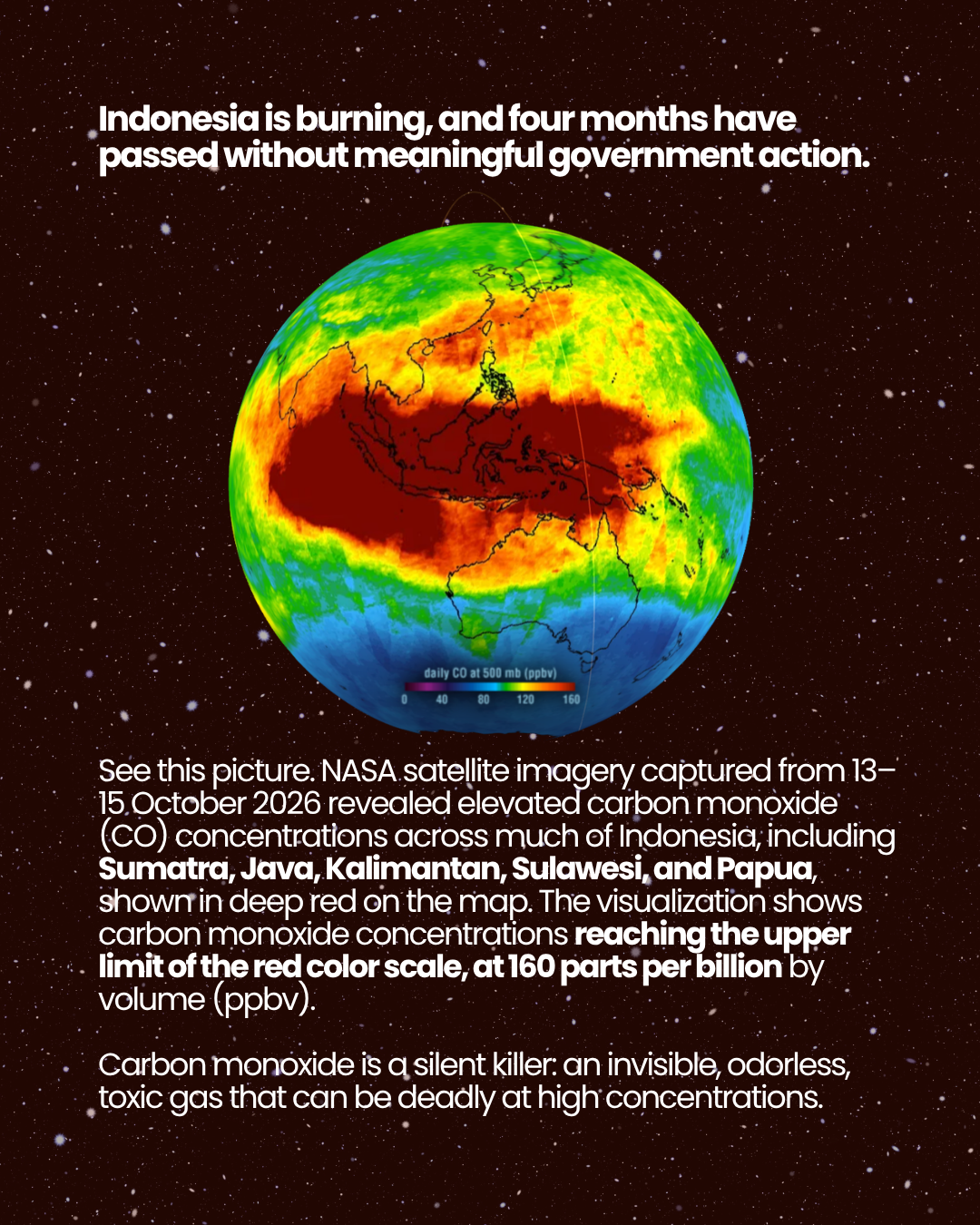
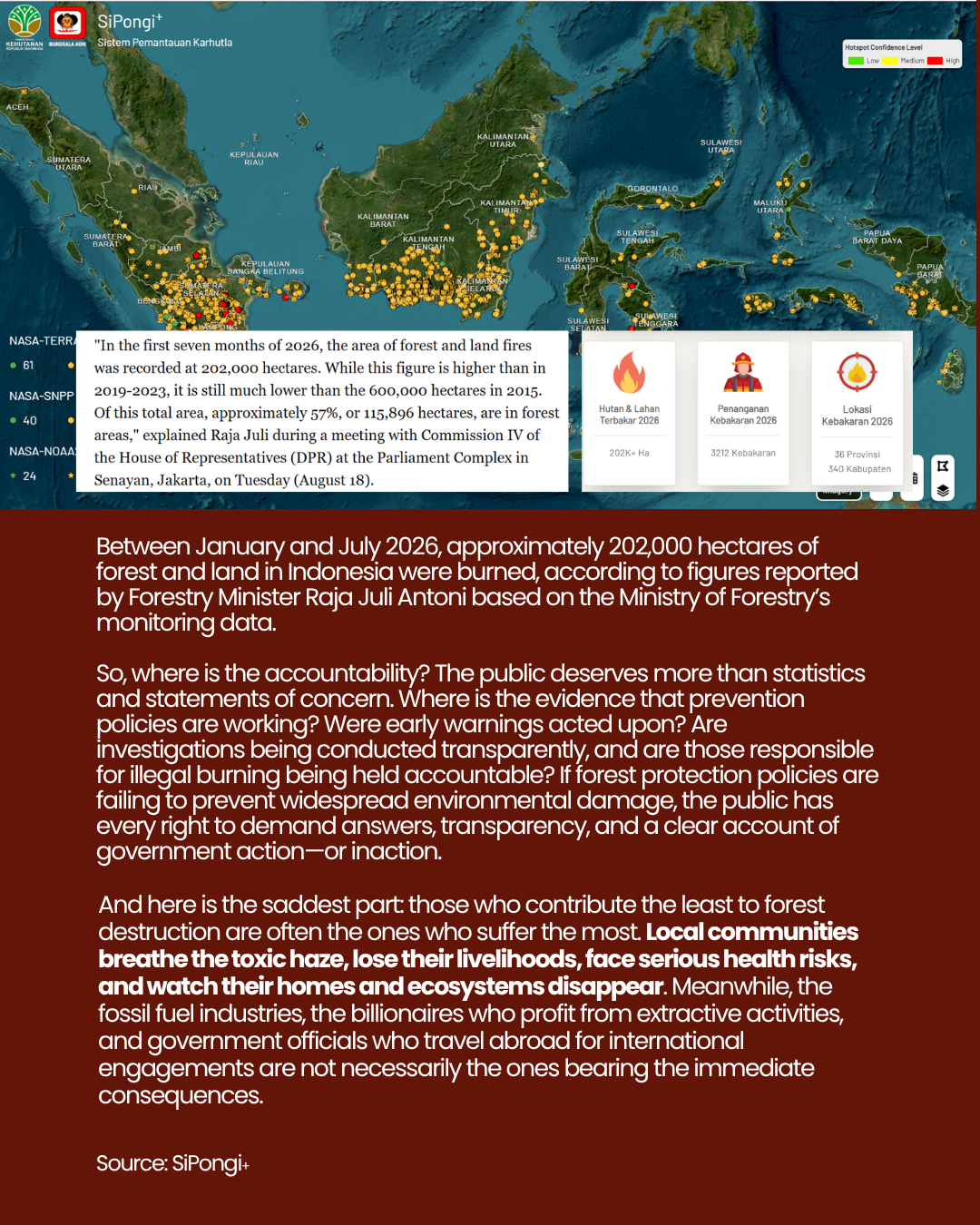
NASA satellite imagery captured from 13–15 October 2026 revealed elevated carbon monoxide (CO) concentrations across much of Indonesia, including Sumatra, Java, Kalimantan, Sulawesi, and Papua, shown in deep red on the map. The visualization shows carbon monoxide concentrations reaching the upper limit of the red color scale, at 160 parts per billion by volume (ppbv). Carbon monoxide is a silent killer: an invisible, odorless, toxic gas that can be deadly at high concentrations! Between January and July 2026, approximately 202,000 hectares of forest and land in Indonesia were burned, according to figures reported by Forestry Minister Raja Juli Antoni based on the Ministry of Forestry’s monitoring data. So, where is the accountability? The public deserves more than statistics and statements of concern. Where is the evidence that prevention policies are working? Were early warnings acted upon? Are investigations being conducted transparently, and are those responsible for illegal burning being held accountable? If forest protection policies are failing to prevent widespread environmental damage, the public has every right to demand answers, transparency, and a clear account of government action—or inaction.
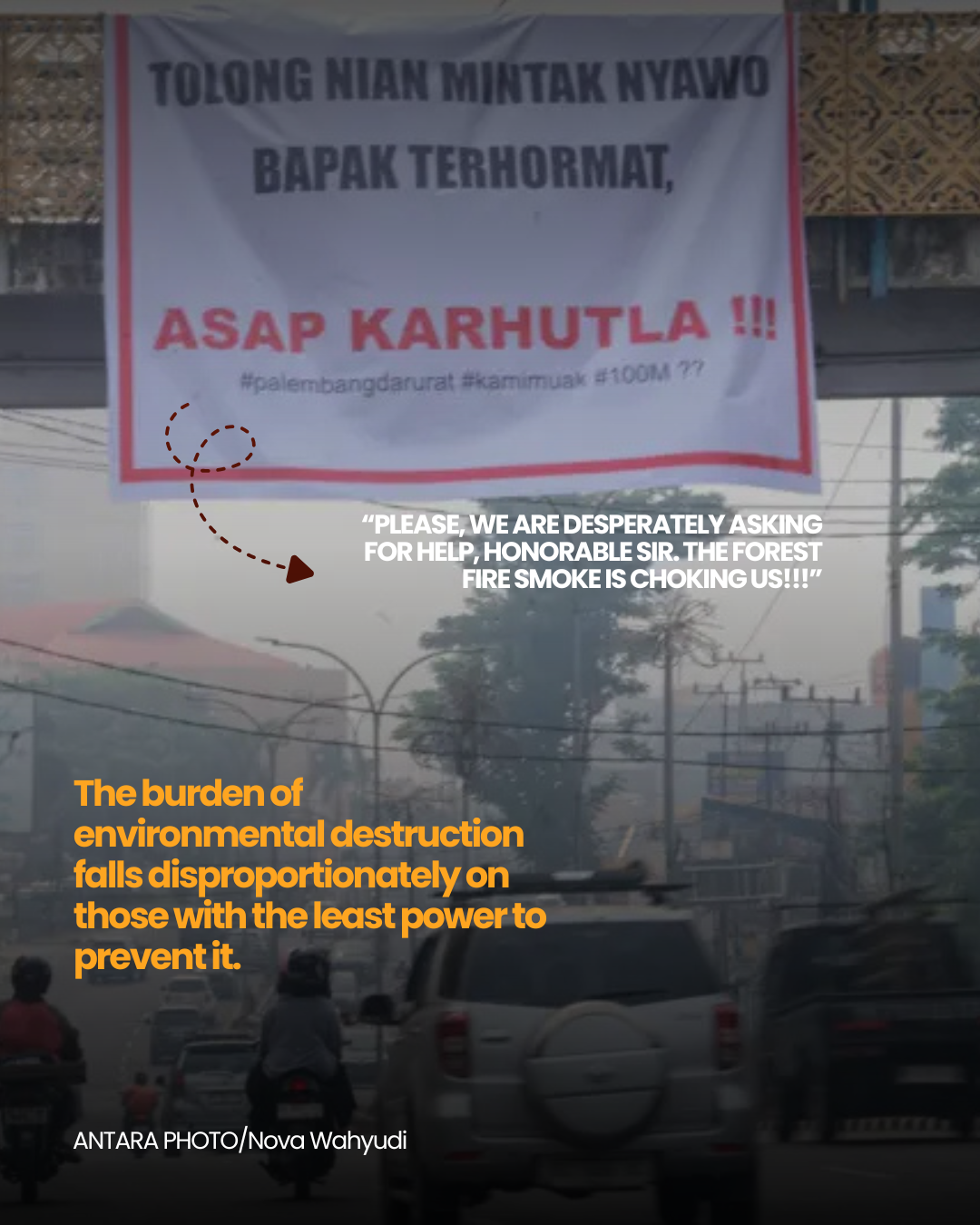
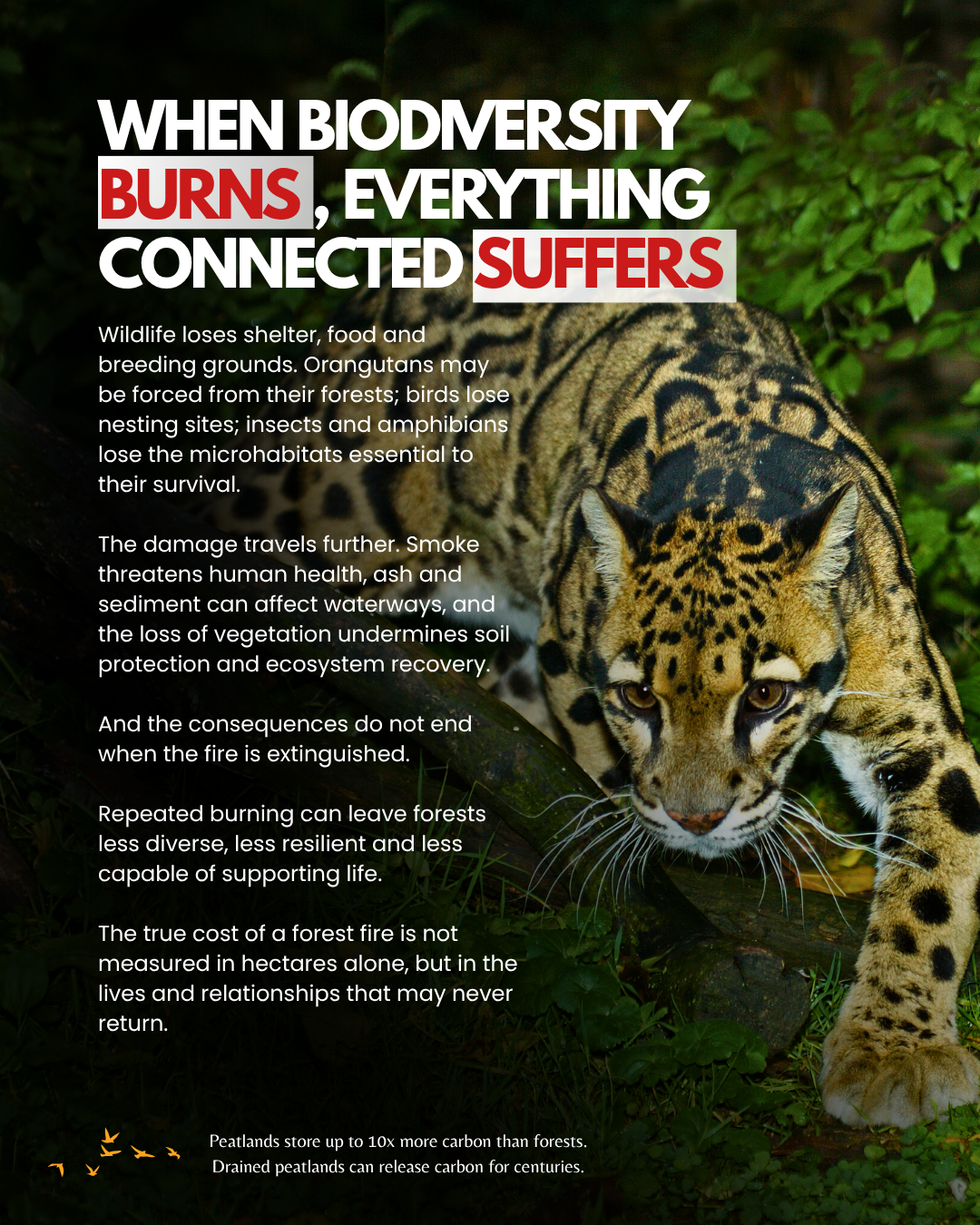
And here is the saddest part: those who contribute the least to forest destruction are often the ones who suffer the most. Local communities breathe the toxic haze, lose their livelihoods, face serious health risks, and watch their homes and ecosystems disappear. Meanwhile, the fossil fuel industries, the billionaires who profit from extractive activities, and government officials who travel abroad for international engagements are not necessarily the ones bearing the immediate consequences.
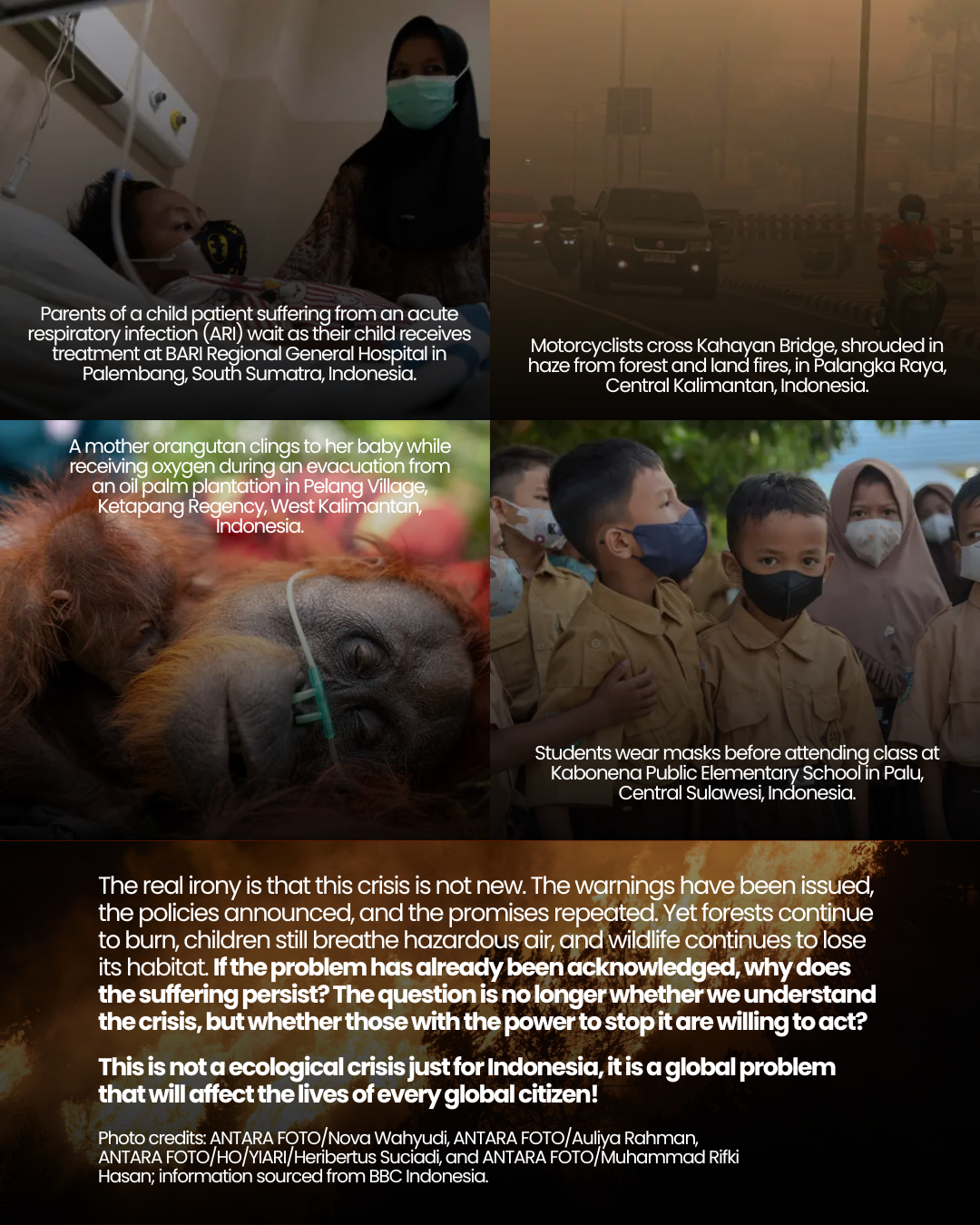
Parents wait as their child receives treatment for an acute respiratory infection (ARI) at BARI Regional General Hospital in Palembang, South Sumatra, while motorcyclists navigate the haze-shrouded Kahayan Bridge in Palangka Raya, Central Kalimantan. In West Kalimantan, a mother orangutan clings to her baby while receiving oxygen during an evacuation from an oil palm plantation in Pelang Village, Ketapang Regency. Meanwhile, students wear masks before attending classes at Kabonena Public Elementary School in Palu, Central Sulawesi. These scenes reveal the devastating human and ecological consequences of Indonesia’s forest and land fires, where children struggle to breathe, communities endure polluted air, and wildlife is forced to flee its burning habitat. The real irony is that this crisis is not new. Warnings have been issued, policies announced, and promises repeated. Yet forests continue to burn, children continue to breathe hazardous air, and wildlife continues to lose its habitat. If the problem has already been acknowledged, why does the suffering persist? The question is no longer simply whether we understand the crisis, but whether those with the power and responsibility to address it will take meaningful, urgent, and sustained action.
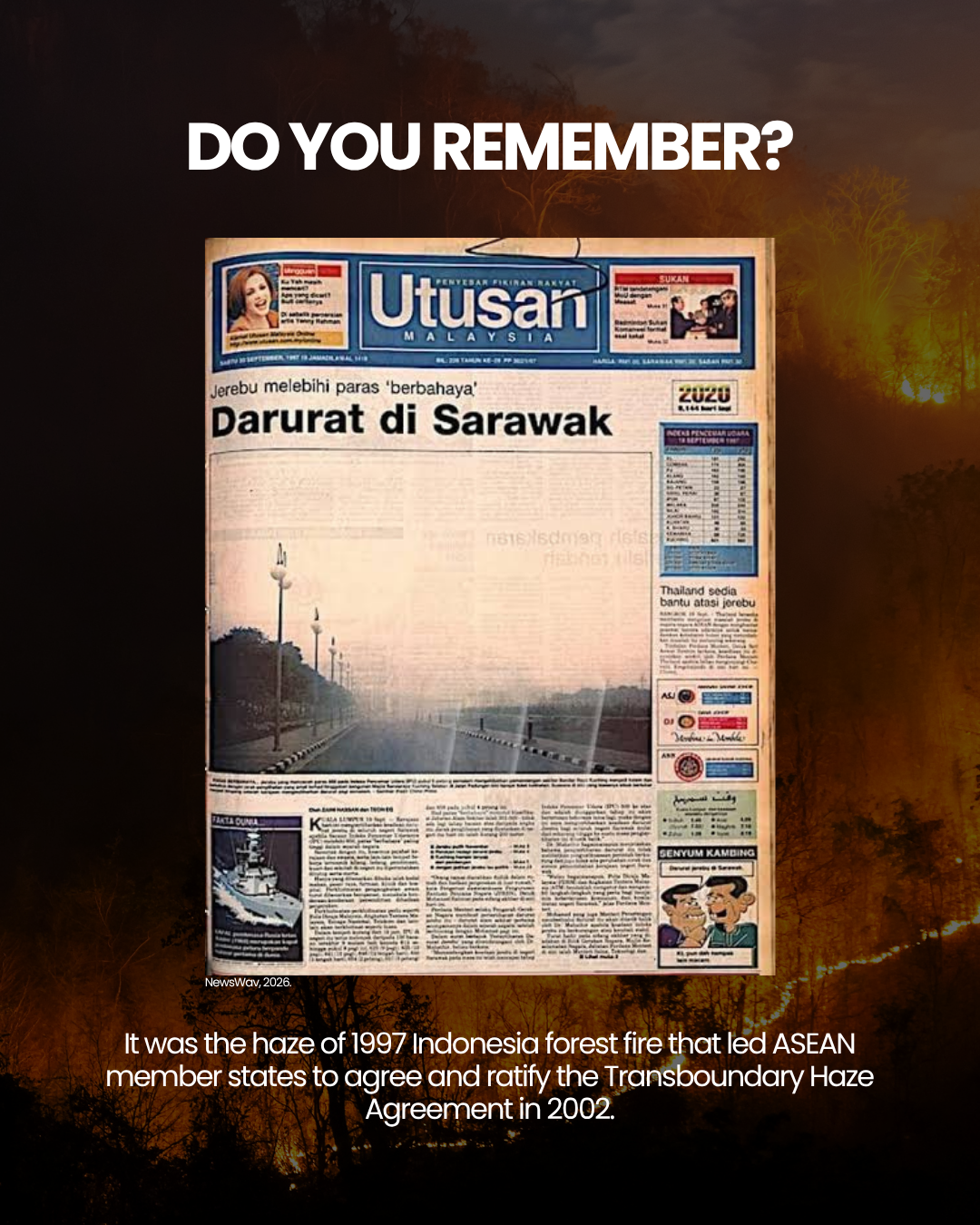
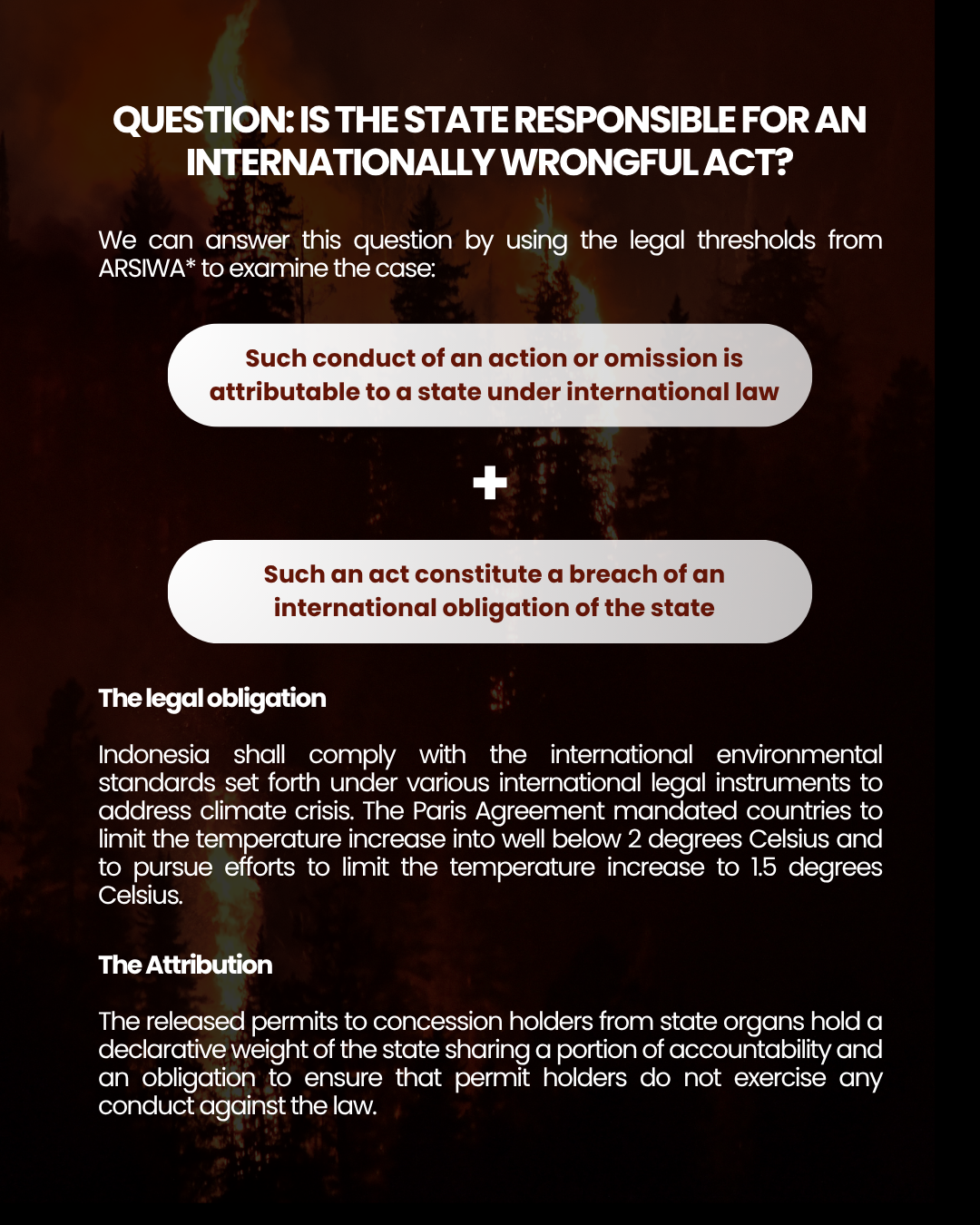
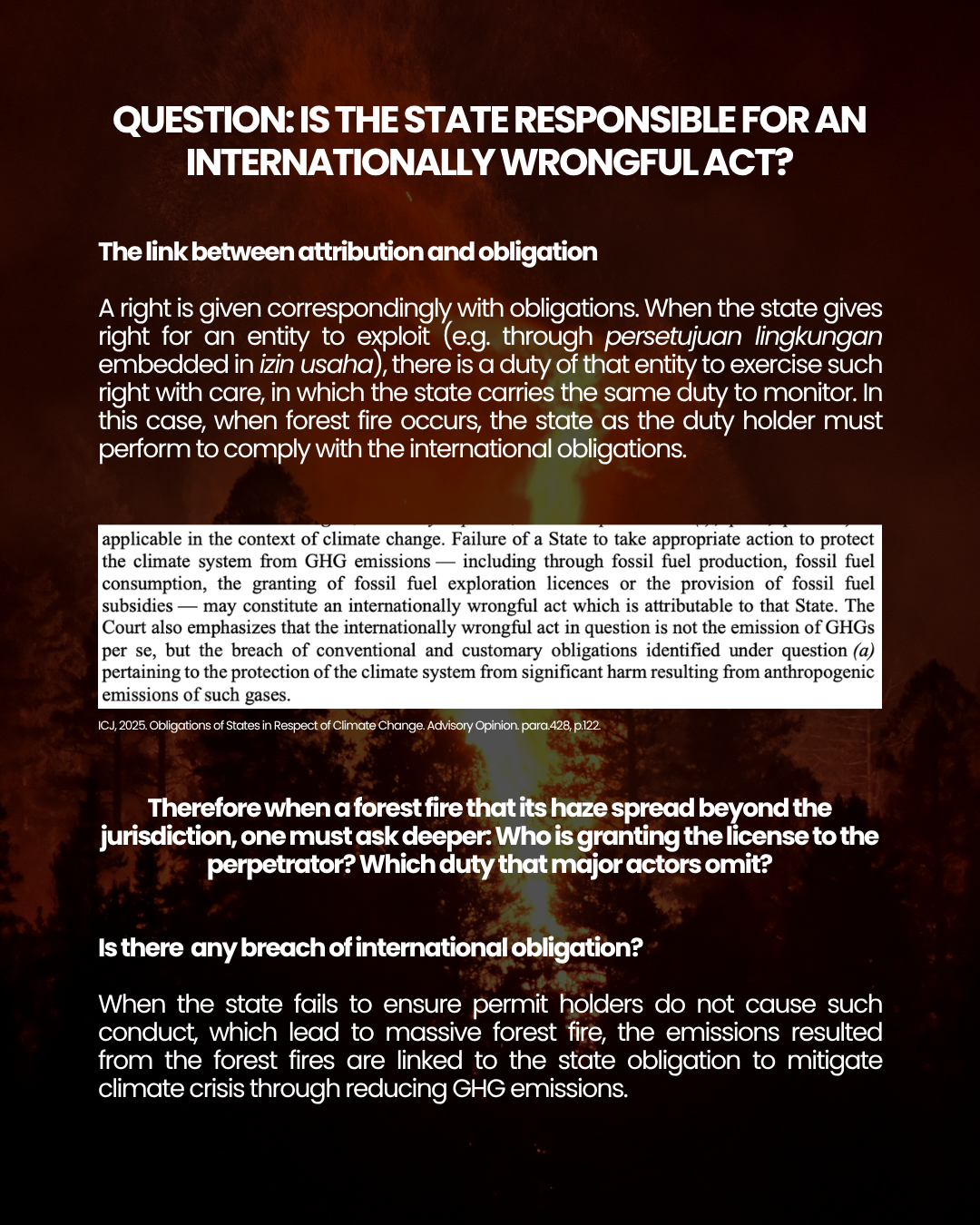
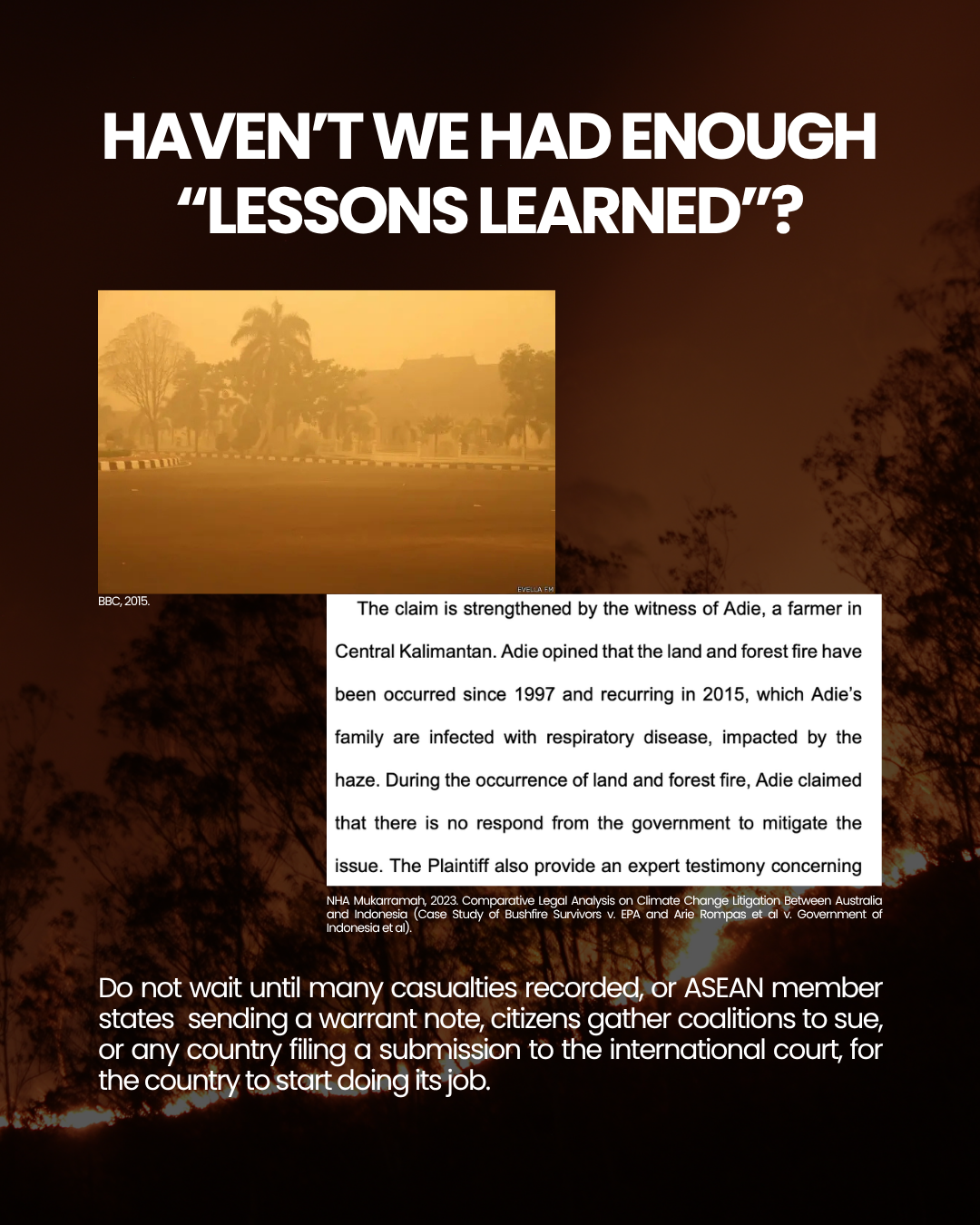
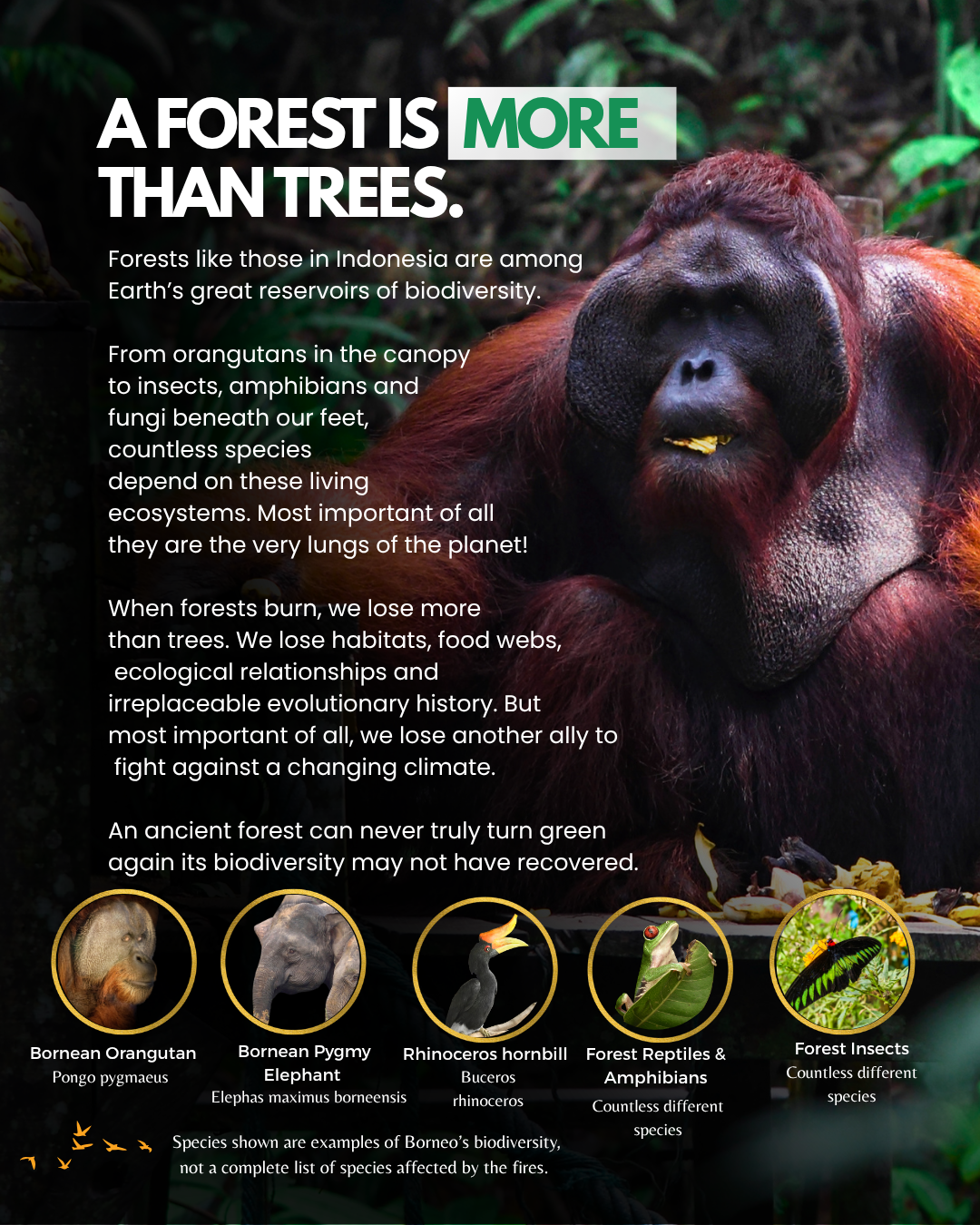
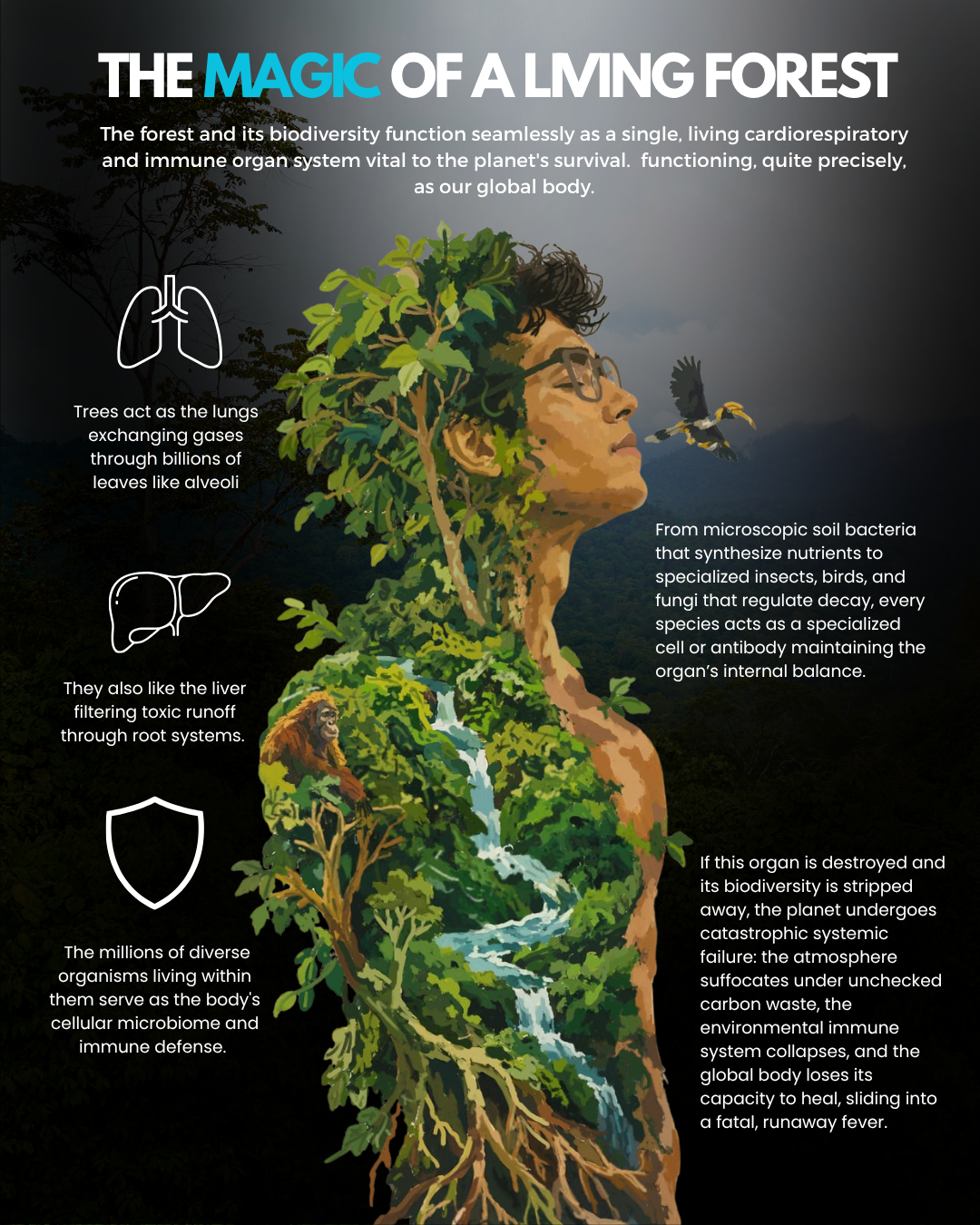
This is not merely an ecological crisis confined to Indonesia. Forest and land fires contribute to air pollution, biodiversity loss, and greenhouse gas emissions that cross borders and affect the global climate. Their consequences extend far beyond the burned landscapes, threatening public health, livelihoods, ecosystems, and the well-being of present and future generations worldwide. Protecting Indonesia’s forests is therefore not only a national responsibility; it is a shared global imperative.
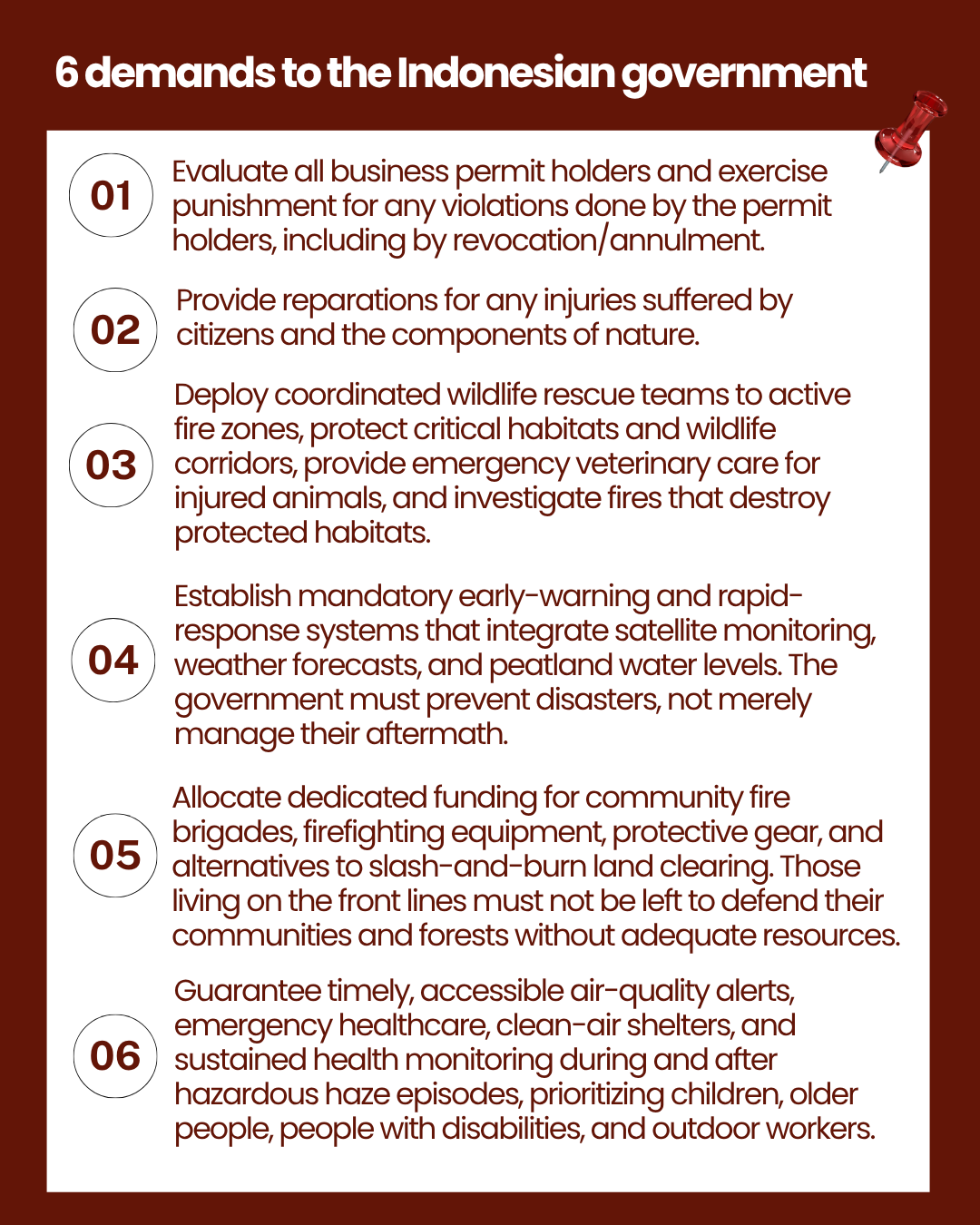
SIX (6) DEMANDS TO THE INDONESIAN GOVERNMENT
01. Enforce Accountability for Business Permit Holders
Conduct comprehensive audits of all business permit holders operating in fire-prone forest and peatland areas. Investigate suspected violations, impose proportionate and legally grounded sanctions, and revoke or annul permits where warranted by the evidence and applicable law.
02. Ensure Reparations and Environmental Restoration
Provide appropriate remedies for communities affected by forest and land fires, including access to healthcare, livelihood recovery, and compensation where liability is established. Restore damaged ecosystems and establish clear mechanisms to address environmental harm and support long-term recovery.
03. Protect Wildlife and Critical Habitats
Deploy coordinated wildlife rescue teams to active fire zones, safeguard critical habitats and wildlife corridors, and provide emergency veterinary care for injured and displaced animals. Investigate fires affecting protected areas and hold responsible parties accountable in accordance with the law.
04. Strengthen Early-Warning and Rapid-Response Systems
Establish mandatory, integrated early-warning and rapid-response systems that combine satellite monitoring, weather forecasts, ground-based observations, and peatland water-level data. Ensure timely coordination among national and regional authorities to detect emerging threats and prevent fires before they escalate into disasters.
05. Fund Community-Led Fire Prevention and Response
Allocate dedicated and sustained funding for community fire brigades, firefighting equipment, protective gear, training, and viable alternatives to slash-and-burn land clearing. Equip frontline communities with the resources and support they need to protect their lives, livelihoods, and surrounding ecosystems.
06. Guarantee Public Health Protection During Haze Emergencies
Provide timely and accessible air-quality alerts, emergency healthcare, clean-air shelters, and ongoing health monitoring during and after severe haze episodes. Prioritize children, older people, persons with disabilities, people with existing health vulnerabilities, and outdoor workers, ensuring that no community is left without the information and protection needed to stay safe.
This is a moment to turn concern into collective action.
We demand that the Government of Indonesia protect forests, safeguard public health, defend biodiversity, investigate environmental violations, and deliver measurable accountability.
We demand action now, within 30 days, and sustained commitment for the years ahead.
We demand that the next generation inherit living forests rather than landscapes of ashes.
We demand that nature's destruction no longer be met with silence.
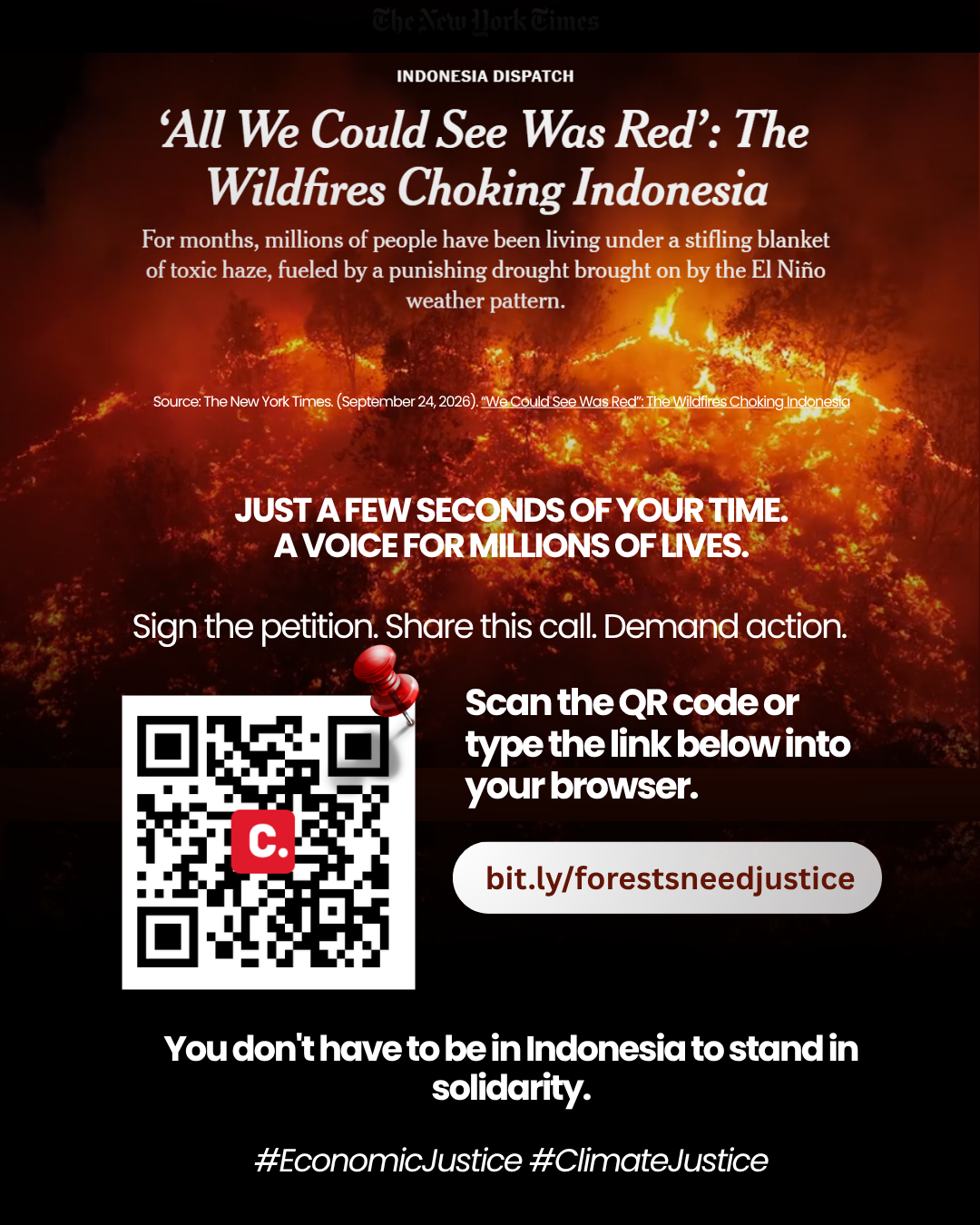
Sign the petition. Share this call. Demand action.
You do not have to live in Indonesia to stand in solidarity. Forests, biodiversity, climate stability, and clean air are shared concerns that extend beyond borders.
Every signature strengthens the public call for action. Every share brings the demand to a wider audience. Every voice helps challenge the idea that recurring environmental destruction must simply be accepted.
A few seconds of your time can help amplify a demand for millions of lives.
Protect the forests. Defend biodiversity. Demand environmental justice. Hold those responsible accountable.
STOP THE FIRES. PROTECT LIVES. DEFEND NATURE. MAKE ACCOUNTABILITY UNAVOIDABLE.
The Earth is our shared home. Protecting it is a responsibility we cannot afford to postpone.
Cover photo credit: GENDES/EPA

200
Masalahnya
To the Government of the Republic of Indonesia, relevant authorities, and all parties responsible for protecting our forests and people: When the forest burns, Orangutans suffer, and our family inherit the ashes, we will finally understand that we cannot eat money!
Indonesia’s forest fires have reached a devastating scale. Al Jazeera (16 October 2026) reports four deaths and two serious injuries in a wildfire at Bromo Tengger Semeru National Park. The Guardian (15 October 2026) reports that nearly 900,000 hectares have burned since January, with El Niño-related dryness and land clearing fuelling fires and toxic haze across Indonesia and neighbouring countries. The crisis has disrupted schools and flights and worsened respiratory illnesses. Indonesia is also trialling 1.5 tonnes of dry ice over South Sumatra to encourage cloud formation and reduce haze.
Yet the tragedy extends far beyond the flames: people are dying while trying to contain the fires, communities are exposed to hazardous smoke, and ecosystems are being destroyed. While extreme dry conditions intensify the crisis, slash-and-burn land clearing also contributes to the fires. Although emergency interventions may offer temporary relief, they cannot replace sustained fire prevention, forest and peatland protection, and law enforcement against those responsible for illegal burning.
Let us be clear: these are not natural disasters. They are the consequences of human decisions, policy failures including the National Strategic Projects (Proyek Strategis Nasional or PSN), continued dependence on fossil fuels, corporate irresponsibility, and the deliberate choice to look the other way.
NASA satellite imagery captured from 13–15 October 2026 revealed elevated carbon monoxide (CO) concentrations across much of Indonesia, including Sumatra, Java, Kalimantan, Sulawesi, and Papua, shown in deep red on the map. The visualization shows carbon monoxide concentrations reaching the upper limit of the red color scale, at 160 parts per billion by volume (ppbv). Carbon monoxide is a silent killer: an invisible, odorless, toxic gas that can be deadly at high concentrations! Between January and July 2026, approximately 202,000 hectares of forest and land in Indonesia were burned, according to figures reported by Forestry Minister Raja Juli Antoni based on the Ministry of Forestry’s monitoring data. So, where is the accountability? The public deserves more than statistics and statements of concern. Where is the evidence that prevention policies are working? Were early warnings acted upon? Are investigations being conducted transparently, and are those responsible for illegal burning being held accountable? If forest protection policies are failing to prevent widespread environmental damage, the public has every right to demand answers, transparency, and a clear account of government action—or inaction.
And here is the saddest part: those who contribute the least to forest destruction are often the ones who suffer the most. Local communities breathe the toxic haze, lose their livelihoods, face serious health risks, and watch their homes and ecosystems disappear. Meanwhile, the fossil fuel industries, the billionaires who profit from extractive activities, and government officials who travel abroad for international engagements are not necessarily the ones bearing the immediate consequences.
Parents wait as their child receives treatment for an acute respiratory infection (ARI) at BARI Regional General Hospital in Palembang, South Sumatra, while motorcyclists navigate the haze-shrouded Kahayan Bridge in Palangka Raya, Central Kalimantan. In West Kalimantan, a mother orangutan clings to her baby while receiving oxygen during an evacuation from an oil palm plantation in Pelang Village, Ketapang Regency. Meanwhile, students wear masks before attending classes at Kabonena Public Elementary School in Palu, Central Sulawesi. These scenes reveal the devastating human and ecological consequences of Indonesia’s forest and land fires, where children struggle to breathe, communities endure polluted air, and wildlife is forced to flee its burning habitat. The real irony is that this crisis is not new. Warnings have been issued, policies announced, and promises repeated. Yet forests continue to burn, children continue to breathe hazardous air, and wildlife continues to lose its habitat. If the problem has already been acknowledged, why does the suffering persist? The question is no longer simply whether we understand the crisis, but whether those with the power and responsibility to address it will take meaningful, urgent, and sustained action.
This is not merely an ecological crisis confined to Indonesia. Forest and land fires contribute to air pollution, biodiversity loss, and greenhouse gas emissions that cross borders and affect the global climate. Their consequences extend far beyond the burned landscapes, threatening public health, livelihoods, ecosystems, and the well-being of present and future generations worldwide. Protecting Indonesia’s forests is therefore not only a national responsibility; it is a shared global imperative.
SIX (6) DEMANDS TO THE INDONESIAN GOVERNMENT
01. Enforce Accountability for Business Permit Holders
Conduct comprehensive audits of all business permit holders operating in fire-prone forest and peatland areas. Investigate suspected violations, impose proportionate and legally grounded sanctions, and revoke or annul permits where warranted by the evidence and applicable law.
02. Ensure Reparations and Environmental Restoration
Provide appropriate remedies for communities affected by forest and land fires, including access to healthcare, livelihood recovery, and compensation where liability is established. Restore damaged ecosystems and establish clear mechanisms to address environmental harm and support long-term recovery.
03. Protect Wildlife and Critical Habitats
Deploy coordinated wildlife rescue teams to active fire zones, safeguard critical habitats and wildlife corridors, and provide emergency veterinary care for injured and displaced animals. Investigate fires affecting protected areas and hold responsible parties accountable in accordance with the law.
04. Strengthen Early-Warning and Rapid-Response Systems
Establish mandatory, integrated early-warning and rapid-response systems that combine satellite monitoring, weather forecasts, ground-based observations, and peatland water-level data. Ensure timely coordination among national and regional authorities to detect emerging threats and prevent fires before they escalate into disasters.
05. Fund Community-Led Fire Prevention and Response
Allocate dedicated and sustained funding for community fire brigades, firefighting equipment, protective gear, training, and viable alternatives to slash-and-burn land clearing. Equip frontline communities with the resources and support they need to protect their lives, livelihoods, and surrounding ecosystems.
06. Guarantee Public Health Protection During Haze Emergencies
Provide timely and accessible air-quality alerts, emergency healthcare, clean-air shelters, and ongoing health monitoring during and after severe haze episodes. Prioritize children, older people, persons with disabilities, people with existing health vulnerabilities, and outdoor workers, ensuring that no community is left without the information and protection needed to stay safe.
This is a moment to turn concern into collective action.
We demand that the Government of Indonesia protect forests, safeguard public health, defend biodiversity, investigate environmental violations, and deliver measurable accountability.
We demand action now, within 30 days, and sustained commitment for the years ahead.
We demand that the next generation inherit living forests rather than landscapes of ashes.
We demand that nature's destruction no longer be met with silence.
Sign the petition. Share this call. Demand action.
You do not have to live in Indonesia to stand in solidarity. Forests, biodiversity, climate stability, and clean air are shared concerns that extend beyond borders.
Every signature strengthens the public call for action. Every share brings the demand to a wider audience. Every voice helps challenge the idea that recurring environmental destruction must simply be accepted.
A few seconds of your time can help amplify a demand for millions of lives.
Protect the forests. Defend biodiversity. Demand environmental justice. Hold those responsible accountable.
STOP THE FIRES. PROTECT LIVES. DEFEND NATURE. MAKE ACCOUNTABILITY UNAVOIDABLE.
The Earth is our shared home. Protecting it is a responsibility we cannot afford to postpone.
Cover photo credit: GENDES/EPA
Suara Pendukung
Perkembangan Terakhir Petisi
Bagikan petisi ini
Petisi dibuat pada 17 Oktober 2026