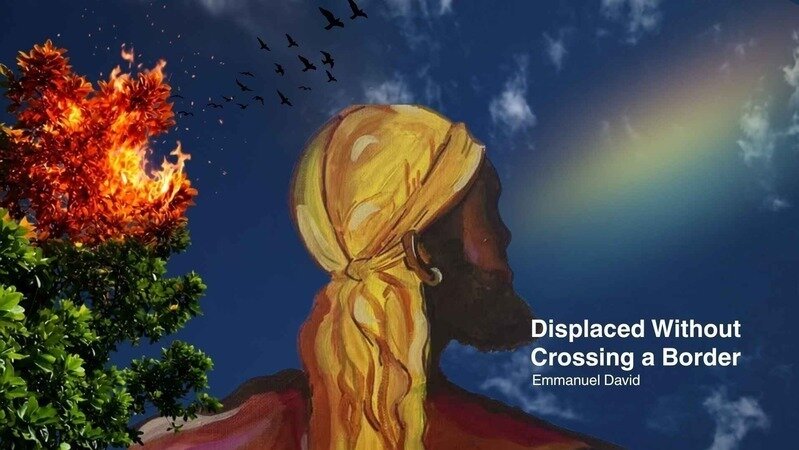
Displaced Without Crossing a Border
The Issue
A Petition for Protection, Housing, and Dignity for LGBTQIA+ People Forced to leave Their Homes in Nigeria
In 2025, Daniel was twenty-four years old and living what many would consider an ordinary life in Nigeria. He had a job. He contributed to household expenses. He was saving money. He was planning for the future.
Then, a family member discovered messages on his phone. Within a week, he was told to leave home. What followed was not a single act of rejection but a chain reaction. He lost his housing first. Then, stability. Then, access to the support system he had relied upon for years. Friends became cautious. Neighbours began asking questions. His mental health deteriorated. Employment became harder to maintain while navigating temporary accommodation and constant uncertainty.
Daniel lost everything. Everything.
Daniel never crossed a border. He never became a refugee.
His name never appeared in an international report.
Yet he lost almost everything that had made life possible.
There is a particular kind of displacement that rarely appears in refugee statistics. It does not begin at a border, it begins at a dining table.
A mother discovers a message on her child's phone.
A landlord hears a rumour.
A neighbour decides to talk.
A pastor points from a pulpit.
A photograph circulates.
A private life becomes public property.
No passport is stamped. No border is crossed. Yet, within hours, a person can lose their home, income, safety, community, healthcare, education, and future.
Most people think displacement begins when someone leaves a country.
We picture refugees crossing frontiers, families fleeing conflict, or communities escaping disaster.
But what language do we have for someone who remains in the same city and can no longer return home?
What do we call a university student forced to abandon their studies after their identity becomes known?
What do we call a young professional who loses housing, employment, community support, and access to healthcare because of who they are, or who they are perceived to be?
What do we call a person who must constantly relocate, conceal themselves, and calculate risk simply to survive?
The answer is simple: That person is displaced materially, economically, psychologically, socially and, increasingly, permanently.
Across Nigeria, LGBTQIA+ people continue to face family rejection, housing discrimination, extortion, blackmail, violence, social exclusion, healthcare stigma, and other forms of hostility that often trigger sudden displacement and long-term instability. Many are pushed into precarious living arrangements. Some rely on informal shelter networks.
Others navigate homelessness, exploitation, interrupted education, untreated trauma, or prolonged economic insecurity.
The consequences extend far beyond the loss of a roof.
When someone loses housing, they often lose access to employment, healthcare, education, documentation, financial stability, and community support at the same time. Displacement becomes a cascade. One act of rejection creates ten new vulnerabilities.
Yet despite the severity of this reality, LGBTQIA+ displacement remains largely absent from humanitarian responses, housing conversations, and public policy discussions. The people most affected are often rendered invisible precisely when they are most vulnerable.
This petition calls on policymakers, human rights institutions, philanthropic organisations, housing actors, and global allies to recognize LGBTQIA+ displacement as an urgent human rights issue.
We are calling for:
● Increased investment in emergency housing and shelter support for displaced LGBTQIA+ people.
● Greater access to psychosocial and mental health services for individuals affected by identity-based displacement.
● Stronger protections against housing discrimination, blackmail, extortion, and violence.
● Expanded support for community-led organisations already providing life-saving assistance.
● Greater visibility of LGBTQIA+ displacement within national and international human rights conversations.
At its heart, this campaign asks a simple question:
How many things should a person have to lose before we acknowledge they have been displaced?
A home?
A family?
An education?
A livelihood?
A community?
A sense of safety?
For far too many LGBTQIA+ Nigerians, the answer is all of the above.
The question before us is not whether LGBTQIA+ people exist. They do.
The question is actually whether existing should continue to carry the risk of losing everything.
Sign this petition.
Share it.
Speak about it.
Because displacement does not always begin at a border. Nowadays, it begins at home.

75
The Issue
A Petition for Protection, Housing, and Dignity for LGBTQIA+ People Forced to leave Their Homes in Nigeria
In 2025, Daniel was twenty-four years old and living what many would consider an ordinary life in Nigeria. He had a job. He contributed to household expenses. He was saving money. He was planning for the future.
Then, a family member discovered messages on his phone. Within a week, he was told to leave home. What followed was not a single act of rejection but a chain reaction. He lost his housing first. Then, stability. Then, access to the support system he had relied upon for years. Friends became cautious. Neighbours began asking questions. His mental health deteriorated. Employment became harder to maintain while navigating temporary accommodation and constant uncertainty.
Daniel lost everything. Everything.
Daniel never crossed a border. He never became a refugee.
His name never appeared in an international report.
Yet he lost almost everything that had made life possible.
There is a particular kind of displacement that rarely appears in refugee statistics. It does not begin at a border, it begins at a dining table.
A mother discovers a message on her child's phone.
A landlord hears a rumour.
A neighbour decides to talk.
A pastor points from a pulpit.
A photograph circulates.
A private life becomes public property.
No passport is stamped. No border is crossed. Yet, within hours, a person can lose their home, income, safety, community, healthcare, education, and future.
Most people think displacement begins when someone leaves a country.
We picture refugees crossing frontiers, families fleeing conflict, or communities escaping disaster.
But what language do we have for someone who remains in the same city and can no longer return home?
What do we call a university student forced to abandon their studies after their identity becomes known?
What do we call a young professional who loses housing, employment, community support, and access to healthcare because of who they are, or who they are perceived to be?
What do we call a person who must constantly relocate, conceal themselves, and calculate risk simply to survive?
The answer is simple: That person is displaced materially, economically, psychologically, socially and, increasingly, permanently.
Across Nigeria, LGBTQIA+ people continue to face family rejection, housing discrimination, extortion, blackmail, violence, social exclusion, healthcare stigma, and other forms of hostility that often trigger sudden displacement and long-term instability. Many are pushed into precarious living arrangements. Some rely on informal shelter networks.
Others navigate homelessness, exploitation, interrupted education, untreated trauma, or prolonged economic insecurity.
The consequences extend far beyond the loss of a roof.
When someone loses housing, they often lose access to employment, healthcare, education, documentation, financial stability, and community support at the same time. Displacement becomes a cascade. One act of rejection creates ten new vulnerabilities.
Yet despite the severity of this reality, LGBTQIA+ displacement remains largely absent from humanitarian responses, housing conversations, and public policy discussions. The people most affected are often rendered invisible precisely when they are most vulnerable.
This petition calls on policymakers, human rights institutions, philanthropic organisations, housing actors, and global allies to recognize LGBTQIA+ displacement as an urgent human rights issue.
We are calling for:
● Increased investment in emergency housing and shelter support for displaced LGBTQIA+ people.
● Greater access to psychosocial and mental health services for individuals affected by identity-based displacement.
● Stronger protections against housing discrimination, blackmail, extortion, and violence.
● Expanded support for community-led organisations already providing life-saving assistance.
● Greater visibility of LGBTQIA+ displacement within national and international human rights conversations.
At its heart, this campaign asks a simple question:
How many things should a person have to lose before we acknowledge they have been displaced?
A home?
A family?
An education?
A livelihood?
A community?
A sense of safety?
For far too many LGBTQIA+ Nigerians, the answer is all of the above.
The question before us is not whether LGBTQIA+ people exist. They do.
The question is actually whether existing should continue to carry the risk of losing everything.
Sign this petition.
Share it.
Speak about it.
Because displacement does not always begin at a border. Nowadays, it begins at home.
Petition Updates
Share this petition
Petition created on 19 August 2026