
Declassify Archaeological Records and Investigate Ancient Civilizations
Das Anliegen
Humanity Has the Right to Know Its Past
A Global Petition for the Disclosure of Archaeological Records and Independent Scientific Investigation of Ancient Civilizations
Addressed to: UNESCO, the United Nations, national governments, archaeological authorities, international research institutions, and the global scientific community.
Our Shared Human Heritage
The history of humanity belongs to all humanity.
Across our planet stand extraordinary ancient structures, underground complexes, megalithic monuments, and archaeological sites whose construction methods, original purposes, or unexplored features continue to raise important scientific questions.
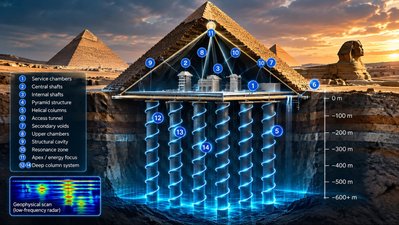
The Egyptian pyramids, their internal structures, possible underground chambers, and other ancient monuments deserve rigorous scientific investigation using the most advanced technologies available.
We believe that humanity should have access to verified knowledge about its own past.
Scientific discoveries of fundamental historical significance must not be unnecessarily withheld from the public.
At the same time, extraordinary claims must be evaluated through transparent, reproducible scientific methods rather than accepted without evidence.
Our Five Demands
1. Disclosure and Declassification of Archaeological Records
We call upon governments, archaeological authorities, museums, and research institutions to review restricted or unpublished archaeological records and release materials wherever legitimate restrictions no longer apply.
These materials may include:
Archaeological expedition reports and historical archives.
Geophysical surveys and underground scanning data.
Photographs, maps, technical drawings, and excavation records.
Scientific findings concerning ancient construction techniques and materials.
Documentation of unusual or previously unexplained archaeological discoveries.
Where access must remain restricted to protect cultural heritage, privacy, security, or sensitive archaeological locations, the reasons should be publicly explained.
2. Establishment of an Independent International Research Program
We call for the creation of a multinational scientific initiative involving archaeologists, historians, geophysicists, engineers, materials scientists, and other qualified experts.
This initiative should investigate significant unresolved archaeological questions through transparent and internationally recognized scientific procedures.
3. Scientific Investigation of Ancient Underground Structures
We request further scientific examination of reported, suspected, or unexplored underground structures associated with major archaeological sites, including the Egyptian pyramids.
Research should use appropriate non-destructive methods, including:
Muon tomography.
Ground-penetrating radar.
Three-dimensional geological and architectural mapping.
Remote sensing and advanced imaging.
Scientific analysis of construction materials.
All investigations must respect national sovereignty, archaeological regulations, and the protection of cultural heritage.
4. Public Access to Scientific Findings
We call for research findings, methodologies, technical measurements, and peer-reviewed conclusions to be made publicly accessible whenever possible.
Scientific information concerning humanity’s shared heritage should not be unnecessarily restricted by political, institutional, or commercial interests.
5. Independent Verification of Controversial Discoveries
We propose an international framework allowing qualified independent researchers to examine extraordinary archaeological claims and verify significant discoveries.
Scientific disagreement should be resolved through evidence, reproducibility, and open examination.
Why This Matters
What if important knowledge about ancient engineering, materials, or construction techniques has been lost over thousands of years?
What if unexplored archaeological sites contain information capable of expanding our understanding of human civilization?
These possibilities do not establish that unknown advanced civilizations existed. They establish the importance of continued investigation.
We are not demanding that governments or scientists accept unsupported theories.
We are demanding transparency, scientific independence, access to evidence, and the freedom to investigate legitimate historical questions.
The deliberate concealment of verified discoveries of major historical significance, if established, would represent a serious breach of scientific transparency and public trust.
Our Call to the World
We ask UNESCO, the United Nations, national governments, and scientific institutions to support an international dialogue leading to a transparent research and archival-access initiative.
The heritage of humanity should be studied for the benefit of all people, not only individual institutions or nations.
Our past belongs to all of us.
Knowledge must be investigated, verified, preserved, and shared.
Humanity has the right to know its own history.

1
Das Anliegen
Humanity Has the Right to Know Its Past
A Global Petition for the Disclosure of Archaeological Records and Independent Scientific Investigation of Ancient Civilizations
Addressed to: UNESCO, the United Nations, national governments, archaeological authorities, international research institutions, and the global scientific community.
Our Shared Human Heritage
The history of humanity belongs to all humanity.
Across our planet stand extraordinary ancient structures, underground complexes, megalithic monuments, and archaeological sites whose construction methods, original purposes, or unexplored features continue to raise important scientific questions.
The Egyptian pyramids, their internal structures, possible underground chambers, and other ancient monuments deserve rigorous scientific investigation using the most advanced technologies available.
We believe that humanity should have access to verified knowledge about its own past.
Scientific discoveries of fundamental historical significance must not be unnecessarily withheld from the public.
At the same time, extraordinary claims must be evaluated through transparent, reproducible scientific methods rather than accepted without evidence.
Our Five Demands
1. Disclosure and Declassification of Archaeological Records
We call upon governments, archaeological authorities, museums, and research institutions to review restricted or unpublished archaeological records and release materials wherever legitimate restrictions no longer apply.
These materials may include:
Archaeological expedition reports and historical archives.
Geophysical surveys and underground scanning data.
Photographs, maps, technical drawings, and excavation records.
Scientific findings concerning ancient construction techniques and materials.
Documentation of unusual or previously unexplained archaeological discoveries.
Where access must remain restricted to protect cultural heritage, privacy, security, or sensitive archaeological locations, the reasons should be publicly explained.
2. Establishment of an Independent International Research Program
We call for the creation of a multinational scientific initiative involving archaeologists, historians, geophysicists, engineers, materials scientists, and other qualified experts.
This initiative should investigate significant unresolved archaeological questions through transparent and internationally recognized scientific procedures.
3. Scientific Investigation of Ancient Underground Structures
We request further scientific examination of reported, suspected, or unexplored underground structures associated with major archaeological sites, including the Egyptian pyramids.
Research should use appropriate non-destructive methods, including:
Muon tomography.
Ground-penetrating radar.
Three-dimensional geological and architectural mapping.
Remote sensing and advanced imaging.
Scientific analysis of construction materials.
All investigations must respect national sovereignty, archaeological regulations, and the protection of cultural heritage.
4. Public Access to Scientific Findings
We call for research findings, methodologies, technical measurements, and peer-reviewed conclusions to be made publicly accessible whenever possible.
Scientific information concerning humanity’s shared heritage should not be unnecessarily restricted by political, institutional, or commercial interests.
5. Independent Verification of Controversial Discoveries
We propose an international framework allowing qualified independent researchers to examine extraordinary archaeological claims and verify significant discoveries.
Scientific disagreement should be resolved through evidence, reproducibility, and open examination.
Why This Matters
What if important knowledge about ancient engineering, materials, or construction techniques has been lost over thousands of years?
What if unexplored archaeological sites contain information capable of expanding our understanding of human civilization?
These possibilities do not establish that unknown advanced civilizations existed. They establish the importance of continued investigation.
We are not demanding that governments or scientists accept unsupported theories.
We are demanding transparency, scientific independence, access to evidence, and the freedom to investigate legitimate historical questions.
The deliberate concealment of verified discoveries of major historical significance, if established, would represent a serious breach of scientific transparency and public trust.
Our Call to the World
We ask UNESCO, the United Nations, national governments, and scientific institutions to support an international dialogue leading to a transparent research and archival-access initiative.
The heritage of humanity should be studied for the benefit of all people, not only individual institutions or nations.
Our past belongs to all of us.
Knowledge must be investigated, verified, preserved, and shared.
Humanity has the right to know its own history.
Updates zur Petition
Diese Petition teilen
Petition am 17. November 2026 erstellt