Pulling apart the Auckland Polka dot findings - The basis of the Yarraville sites

Maribyrnong council "Your city, your voice" project consultation portal, in the Polka dot FAQ sections attempts to provide their evidence basis for the project here: https://www.yourcityyourvoice.com.au/polka-dot-road-safety-project/widgets/321122/faqs
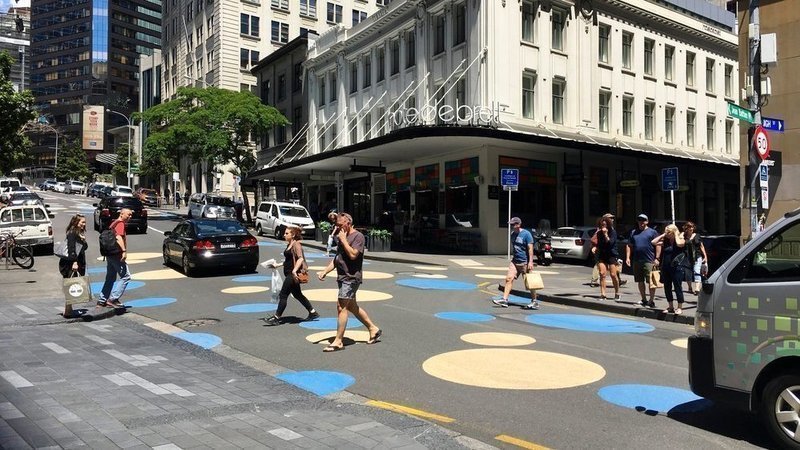
In further responding on a factual basis to Maribyrnong councils' position "that these Polka dots have been a success in other locations", we can dissect and pull apart key findings from the Auckland polka dot installations which clearly highlight that this evidence base and outcomes have more holes in it than Swiss cheese:
- The reduction in driver speed outcomes were negligible (especially against the risks to public safety)
- There were similar themes of issues with the Polka dots, being highly polarising and controversial
- Both pedestrians and drivers were extremely confused about right of way and concerns about incidents between pedestrians and cars
- Overall highlighting that the Auckland site was a VERY different setting than the Yarraville site, and still presented the core problem causing key factors.
================================
Let's continue to address some of the points of the Maribyrnong city councils' project FAQ section and add the Auckland findings to add real factual basis and evidence to why the Yarraville Polka dot sites must go immediately:
================================
1. Maribyrnong council say: Do the polka dots mean road rules no longer apply at these locations? "As a pedestrian, you should treat the area as a normal crossing approaching the intersection with caution, looking both ways to assess oncoming traffic and crossing the road when it is safe to do so. Pedestrians give way to vehicular traffic. As a driver, you are encouraged to slow the speed of your vehicle, drive gently and approach the intersection with caution.."
Maribyrnong council say: What information is Council providing drivers, pedestrians and cyclists about the polka dots to ensure their safety while using the shared space? "To reinforce the boundary between the footpath and the road, we’re installing planter boxes at Canterbury Street. Signage is also being erected near each of the locations to provide residents with more information about what the polka dots are and why they’ve been installed."
Our findings:
Page 33. Painted dots on the road. Auckland council attempts to address the concern: "Dots are confusing to motorists and to pedestrians - Who has right of way? - They distract people from important signs like stop and give way signs". Auckland council responds by stating, "Normal right-of-way road rules apply. In this case, people driving have right-of-way. If there is confusion over this, then this will mean that people slow down and look out a bit more"
Page 34. Auckland council attempts to address the concern: "The dots give pedestrians a false sense of security when crossing the road." Auckland council responds by stating, "Normal right-of-way road rules apply. In this case, people driving have right-of-way. If there is confusion over this, then this will mean that people slow down and look out a bit more"
The Auckland council feedback report highlights that members of the community were very confused about the right of way guidance at these Polka dot settings - and Auckland council confirms that cars have right of way, contrary to the appearance that the setting alludes to. This is also the case here in Maribyrnong councils installations (Cars have right of way at this setting, in keeping with Victorian road rules).
YET, Maribyrnong councils' information signs put up in the village only says "The dots are there to encourage drivers to slow down and give more visibility to pedestrians and cyclists" and add "the dots are not there to play on and road rules still apply - remember to stop, look, listen and think before crossing the road."
In addition to the reoccurring core issues around children thinking the dots are a play area, pedestrians are now interpreting the polka dots as being a form of zebra crossing - where cars yield (stop) to pedestrians and people have right of way. This is reflected in the recent situations of members of the community interpreting the dots in this manner and drivers expecting that they actually still have right of way, which ends up in near misses and close calls due to this confusion/conflict between parties. People are immediately and confidently walking out onto the road expecting cars to yield to them, thinking they have right of way - as reflected in new reports by locals of near misses of mature aged members of the Yarraville community.
The signs simply say that "road rules still apply" yet for a pedestrian they would need to read the sign to see this guidance and even if they do read it, this statement is so ambiguous as it doesn't provide clear guidance at all. It doesn't provide clarity to address the question "what are the actual road rules around this polka dot installation?". To understand more context of this setting people would have to go onto the council project webpage to realise that cars still have right of way in these dotted areas - yet because of its appearance it provides a mis-assertion that pedestrians have right of way (because of the polka dots).
The Auckland situation highlights that the confusion about right of way between pedestrians and motorists is left ambiguous to someone who is approaching the polka dots for the first time. and its outcomes were so ineffective, as we explain in the next point, one of the Auckland polka dot sites had to be converted into a Zebra crossing because of the extend of confusion about right of way. That's not a success by any means.
--------------------------------------------------
2. Maribyrnong council say: What was the process for selecting the shapes and colours of the polka dot design and why were they chosen? "Council was inspired by similar trials undertaken overseas, including a polka dot trial undertaken in Auckland, New Zealand with results from the study indicating their success."
Our findings:
According to the Shortland street / High Street - Auckland project page by Auckland council - https://www.activateakl.work/tui#/shortland-street-stage-one/
Vehicle speed results only showed a "5.4% slowing of the 85th percentile speed from 33.2kph to 31.4kph". Followed by "informal observations 12 months later". Is a 5.4% reduction in speed worth the ongoing near misses of people and children which is occurring in Yarraville village? Definitely not!
The report continues: "The results showed a level of confusion as to the purpose of the dots and uncertainty over who has right of way. Consequently, the large majority of people still checked for oncoming traffic when crossing the street." Again the dots intentionally create confusion about right of way, as highlighted above - which is leading to individuals interpreting the dots as they please and both pedestrians and Drivers and confused about right of way.
The report further continues "Two years on, work is now underway to progress the polka dots at High Street to an interim zebra crossing to further reinforce pedestrian priority until funding for the raised table is secured." This reflects that the Auckland polka dots were so problematic that one of the sites had to be converted to a temporary Zebra crossing to address the ongoing confusion about who has right of way - with then the site set for a raised road section.
The above outcomes and facts DO NOT reflect a "successful" project - and add to that in the already complex Yarraville Village setting the one lane right of way, level crossing, pop up parks and higher density urbanised spaces. Its a recipe for disaster - which has now become apparent and experienced by locals first hand.
--------------------------------------------------
3. Maribyrnong council say: Where have these polka dots been trialled previously? How did the community responded to them? "This is the first time the polka dots have been trialled in Victoria, but they have previously been trialled internationally including in Auckland, New Zealand."
Our findings:
Referring to the document titled: "Federal Street walking and
cycling improvements" by Auckland transport (An Auckland council organisation) - https://at.govt.nz/media/1980229/public-feedback-report-federal-st-walking-and-cycling_june19-2.pdf
This document is part of the Auckland project page here - https://at.govt.nz/projects-roadworks/federal-street-walking-and-cycling-improvements/
On page 3 the report explains:
"We also identified the following key themes in your feedback. People found the bold and colourful look of the upgrades polarising, as similar liked and disliked each element. Lots of people found the painted dots and painted kerb build-outs confusing"
On page 18 they evaluate the public sentiment:
41% - Were positive
59% - Either felt neutral or negative
and explain that "the painted dots were the most controversial aspect of the Federal St walking and cycling improvements."
Page 19 the report highlights that the Auckland community also had the key theme of confusion show very prominently:
Confusing and distracting - The biggest complaint about the painted dots, was that they would be confusing and distracting to people wanting to move through the areas that feature the dots. Almost every person who found the dots confusing or distracting also disliked the painted dots generally.
The above highlighted extracts from the report, show that the Auckland polka dot settings were also extremely polarising and problematic, and that was without the apparent child safety issues which is showing very prominently in the Yarraville setting.
--------------------------------------------------
In Summary:
In matching the Auckland polka dot findings to the FAQ sections of Maribyrnong city councils project page, it is very clear that even though through the FAQ section council are attempting to curb criticism of the project, the business and evidence case for this project does not hold up at all. The project is extremely flawed and to the extend that the key tensions about right of way between pedestrians and motorists is left ambiguous and each person is left to interpret the confusing polka dot sites in their own manner - even though cars are meant to have right of way according to the law.
The project in both Yarraville and Auckland settings never resolves the mass confusion of the dots being incorrectly interpreted by pedestrians as being like a Zebra crossing - and this highlights how these settings continues to evolve into new realms of public hazard and danger.
The dots must go immediately - for all the reasons explained above, and for all the reasons in previous updates and as per the petition text. Make your voice heard on this matter!
The Yarraville community's health and wellbeing is on trial - and council is still persisting in a project which clearly does not deliver on its key objectives of maintaining public safety.