Cape Town Must Preserve Three Anchor Bay ERF for Recreational Use
The Issue
We, residents of Cape Town, including from the areas around Three Anchor Bay, Green Point, Sea Point, and surrounds, strongly reject and object to the City of Cape Town’s proposed development on ERF 2187 – Three Anchor Bay, Green Point.
We hereby submit our objections to the proposed rezoning and developer-led development in Three Anchor Bay/Greenpoint, request authorities to investigate the perpetual ceding of public land in Cape Town to private entities, request the City to not only retain the ERF for recreational use for which it was vested in perpetuity, but also to further develop recreational facilities to improve this strategic area and its value to all who live in Cape Town, as well as its value to residents, and recreation in Cape Town.
Our objections are based on very many legal, public, heritage, ethical, and urban planning grounds, only some of which are summarized below:
VESTING OF THE LAND
First and foremost, this land was vested to the City of Cape Town (CoCT) in perpetuity for recreational use. We object to the city's attempts to rezone this land, and their relentlessness with this in the face of public objection.
Additionally, administrative rezoning or physical sub-division does not equate to the legal cancellation of a restrictive title condition.
HERITAGE INTERESTS AND LAW
In addition to the fact that the site is protected by Sections 34 and 38 of the NHRA, we question the fact that the assessments being used to push through these projects are done by consultants whose objectivity can be questioned, particularly when they rely on employment by the CoCT and developers for their hiring; Why, for example, has the City not halted the Oude Molen project when the HRW rejected that proposal's HIA?
The City has also done little to meaningfully honor the indigenous history of the Khoisan people or respect any heritage aspects of the site. For example, because the city has recently instructed planners to MAXIMIZE the build in the civic corner, the city planners are now proposing building on TOP of the library, behind it and all around it, and are even suggesting the public library would now become a tenant in a new high-rise developer-building. At every stage of this project, it is clear that developer-centric financial interests only are paramount, and heritage law and considerations are pushed aside.
DEVELOPER-CAPTURE AND LACK OF TRANSPARENCY
We also are disappointed and alarmed to see the increasing rate at which the CoCT is both prioritizing the interests of developers, and also trying to limit avenues of objection for residents. From the political capture of the municipal planning tribunal (see https://www.dailymaverick.co.za/article/2026-06-07-members-for-life-the-capture-of-cape-towns-planning-tribunal-/ to the City’s loss of its clean audit status, to the Tafelberg Constitutional Court ruling which also criticized the City’s failure to conduct meaningful public participation prior to sale, the unfortunate pattern by the CoCT in such proposals is lip-service to public participation, tick-boxing and/or ignoring statutory processes, and ceding public land to private interests, with a lack of accountability as a feature.
We note our concerns that public participation and land release processes appear to lack genuine transparency, manifesting in a common public perception of ‘municipal capture’ by the development industry, and/or tender mismanagement, and the processes being held simply as formalities to meet/ check-box the requirements, without truly onboarding the inputs of residents and participants.
LAND GRAB, APARTHEID AND LOSS OF PUBLIC LAND AND SPACE
In a country that is still working to resolve spatial Apartheid and address land injustice, the CoCT’s perpetual ceding of public land to private entities is perpetuating land injustice, and needs to be urgently stopped. Land that currently belongs to the people of South Africa is being given to developers, and often at way undervalued cost. News reports state that the City has recently auctioned 53 land parcels (totaling roughly 282,000 square meters) to private developers in locations spread across the metro, with major sites in areas like Mitchells Plain, Atlantis, Parow, Goodwood, and the CBD, including the controversial and now stalled sale of the iconic Good Hope Centre precinct. This Green Point/Three Anchor Bay ERF is an exceptionally strategic piece of land from the point of view of tourism, and urban planning – as the gateway between the CBD/ Green Point Stadium and the promenade, offering exceptional public space/ location for the city, yet the city is trying to quickly “dispose” of it to developers. We note the current pattern of the current municipal government ceding public land to developers with alarm, and ask that this be investigated. We further note that such an important and high-public-value stretch of land not be removed from public ownership.
AFFORDABLE HOUSING ARGUMENT BEING USED TO BENEFIT DEVELOPERS
We question the motivation of the city around its claims that developments like these are about building affordable housing, when the biggest winners in many of its projects are actually developers. Not only has the city in its planning failed to inform us what percentage of housing in this proposed development would be “affordable”, they have not told us what “affordable” means exactly, whether these units would be rented out or sold, or how these units would REMAIN “affordable” when they are being sold on prime sea front/central land, next to luxury units – there is no clarity on how these units would actually go to people who truly require lower-cost and affordable housing, rather than those best equipped to game the system, or flip the units. Furthermore, we find it problematic that the City is shirking its responsibilities around housing to developers, when it should rather be building state/city run (and important to note - not only “affordable”, but also “low-income”) rented out housing, with strict annual income verification. Instead, the City appears to be exploiting this issue to ultimately move more and more land into the hands of private developers. It is worthwhile to note that even in the United States, a law has just been passed to restrict private equity from buying single household homes, but here in Cape Town, we as residents are forced again and again to try to get our city to put public interests above that of developers.
It is critical to also note that while claiming there is no money available, and that to build affordable and low-income housing, the CoCT has to let the developers build it, the Western Cape Province in fact recently forfeited R 821.5m in funding specifically allocated for housing due to not being willing or able to spend it. That is MORE than the current cost that the CoCT has valued the entire Three Anchor Bay ERF as being worth.
This is about political will and priorities, and the Western Cape Government and CoCT must be taken to task on its approach and failures with regards to housing, and must pursue solutions that purely benefit the public, and do not foremost benefit private equity and developers.
FLAWED PUBLIC ENGAGEMENT
The public participation process has NOT been well publicized at all. The only reason many of us have found out about it is through private sharing through our own social media networks. During the first phone call, we could not hear the stakeholders and technology was flawed. Furthermore, the entire framing of this from the start has been that this is a “done deal”. “This is happening – citizens can’t stop it, the most we can do is comment to influence the minor details. The City Council has preapproved the rezoning etc.” We reject this approach.
The people running this process – including the supposed independent consultants are all working for the city and seem to be helping the city PUSH THIS THROUGH, asking at most HOW SHOULD WE DO THIS?, not at all entertaining the question SHOULD WE DO THIS? When questions are asked about heritage concerns, they are often pushed aside. The full assessments are not ready/available at the time we are expected to comment. The heritage expert said she didn’t get enough information from the CoCT to comment on the city’s latest proposal to build ON TOP of the library building. The traffic assessment was not completed at the time of the public engagement meeting on June 24th. There appears to be no environmental assessment available to the public. The summaries of the various impact assessments suggest small problems and small remedies, but generally green-light the city plans and do not appear to robustly challenge the city in any way. Each iteration of the CoCT's proposal has been increasingly deaf to the inputs of residents, and the engagement feels like a tick-box exercise, rather than meaning engagement.
When challenged as to how the city can think it’s okay to propose additions on TOP OF A HERITAGE BUILDING, one that the city has said through this process would be preserved, the city officials say simply that they have been tasked by their higher-ups (they won't say who) to maximize the monetization of the civic corner, and that building on top of heritage buildings has been done before. Besides the fact that this completely ignores heritage demarcations, it is aesthetically awful and destroys the current character of the buildings and their historic significance. In addition, by digging to build UNDERGROUND parking adjacent to the library and civic center, there is the possibility of critically undermining the structure of the heritage library, civic center and senior housing facility. Deep excavations reduce lateral soil support, which can cause the neighboring building's foundation to shift, settle unevenly, or crack. Furthermore, vibrations from heavy construction equipment can cause structural damage or soil compaction. Where are the seismic studies as part of this proposal?
Furthermore, the designs are deceptive, using at times hard-to-notice dotted lines to obscure true plans. Ratespayer associations were not even aware of the proposed additions on top of the library, the eating up the entire civic center parking lot with more build, and building a connection between what was supposed to remain a government-owned building (library) and what is proposed as a new developer high rise behind the library – This lack of awareness is not only because of the dotted lines /seemingly purposefully unclear way of presenting this, but even at the public participation meeting on June 24th, many of the plans printed did not even show these new proposed additions to the civic node – even though they showed these buildings. The CoCT wrongly presented different designs at the same event, and there remains confusion amongst the public about what the city is proposing in the civic corner.
How are we supposed to publicly participate without complete impact assessments, without clear answers about affordable housing, without clear or consistent plans/proposals? Basically, the City seems to be trying to both push through this development, and simultaneously saying these are just ideas, and “anything” is possible – we might preserve the civic corner, or we might build on top of the library, connect it to a new mega high rise, eat up the parking lot and completely destroy the block … how can we comment when the city is saying moving forward on this can mean anything can happen?
Comments are also minimized in the City's summary presentation of them, and some are wrongly represented. The city is maximizing monetary values for developers and ignoring inputs by residents, and the latest plans for the civic node that the CoCT originally said would be preserved now looks like an ugly brick-against-brick concrete jungle. Regular citizens do not have the capacity to keep fighting the city as it pushes development after development, amendment to bylaws after amendment, all in ways that serve developers and city power over the public or public interest and that sideline and weaken the voice of the people.
LOSS OF PROPERTY VALUES
Many current property owners’ values will decrease significantly if the city is allowed to build skyscrapers on the greenbelt. While the city planners are quick to tell us we don’t have a right to a view, many of us purchased our properties, and chose these particular locations as investments, knowing that the greenbelt was protected from development because of it being vested as recreational land. We expected the CoCT to follow the law, not go against the vesting of the land. We will lose our views, and our property values and investments will suffer, while the developers will be able to sell new luxury developers to new owners at high premiums. Our loss would become their gain. This penalizes ratespayers and EXISTING RESIDENTS who have contributed for decades to the city coffers and rewards developers.
LOSS OF PRIME RECREATIONAL, TOURISM AND URBAN PLANNING STRATEGIC LAND FOR PERPETUITY
The City should have engaged the public PRIOR to drawing up these developer-centric plans. It should have given us options. Besides the fact that developing outdoor exhibits to recognize the Khoisan who originally inhabited this area, or a potential air-to-city-to-sea skytrain would be much more significant, creative and strategic avenues to pursue, there are also incredible and exciting ways in which this land could and should be developed within its zoning and the use for which it was vested to the City of Cape Town in 1923 – explicitly as public commonage for recreational and sporting purposes. Such development would benefit all who live in and visit Cape Town, and also boost tourism, which already contributes significantly to Cape Town and South Africa’s GDP.
There are so many exciting ways the City could develop this land recreationally, yet because the CoCT seems so focused on ceding public land to developers – the city is copying New York as an example of skyscrapers and high density living. Instead, the City should see what New York City has done for urban spaces – such as Chelsea Piers, Hudson River piers, Central Park, Rockefeller Square, Bryant Park, Little Island, etc. We could have ice skating, soccer /rugby/cricket fields, tennis courts, skateboarding, outdoor movie nights, urban playable fountains with playgrounds, a walking Khoisan exhibit, bike lanes, and continue to have the end of the famous Cape Town Cycle Tour, and the very many races that are currently run on weekends in this space, but instead the City seems to be exploiting the housing crisis and homelessness crisis as a way to buy political leverage and push ahead with towering, horizon-blocking, developer-friendly, high rises when it could and should be thinking about its responsibilities towards supporting green urban public spaces, honoring heritage concerns, and considering the value of land owned and run by the people for the people.
Strategic investments in public spaces yield concrete benefits for leading tourist destinations. People do not visit Cape Town for skyscrapers. Nature is central to our brand, and this piece of land is a critical gateway between the city/CBD and the ocean – the city should be thinking and acting more creatively, and not run purely on financial and developer interests.
Dynamic parks and recreation public spaces typically bring in far more revenue to a city over time than a once-off land sale, and this proposal is incredibly short -sighted for what is widely considered a world-class tourism city. To be considering selling off such a strategically-located piece of land, is bad for Cape Town. Once gone, the opportunities for a natural, green, recreational/sporting, and tourism-attracting, even globally iconic public space on the site are lost for perpetuity.
FALSE AGENDA SETTING
By starting at the point – “here are our plans, and here’s what we are going to do”, rather than starting by looking at the land, and what should best be done to maximize it for the public interest (within the law and its original vesting) - in conversation with the public, the city has framed the process wrongly. Furthermore, we believe city representatives are false agenda setting by proposing incredible dense development, so that they can say they listened to us by scaling back. This is NOT public participation, it is inauthentic optics. We reject the entire proposal, not just the density.
OUR TAX FUNDS ARE USED AGAINST US
The City is working against the people by using taxpayer money to hire consultants to push a developer, not a public interest, vision. Furthermore, because the city continues to shortcut and steamroll these processes, even pushing ahead without succeeding through the required statutory processes, the City is then again using taxpayer money to fight taxpayers who challenge the City in court. How much did taxpayers pay (on both sides) to have the Tafelberg site sale pushed through, and then challenged and defeated in court? Taxpayers are paying on every side.
DENSITY, OVERCROWDING, INFRASTRUCTURE LIMITATIONS
Because Cape Town gives the greenlight to developers again and again, the Atlantic Seaboard is already overcrowded. Without sufficient infrastructure, traffic, sewerage, electricity, and water systems are already under pressure. We are a city that is drought-vulnerable, CoCT discharges millions of liters of untreated sewage into the Atlantic seabodard daily, including through the outfall located in Sea Point, affecting water quality for bathers (which also has impacts on tourism when the water quality is low), we have had years of electricity crises, yet before solving these challenges, the city is pushing more and more people into neighborhoods, and pushing for high-density and high-rise developments.
The city needs to both address the infrastructure limitations, alongside the housing crises, and consider the dozens of new medium-to-large developments that have already been built in this area during the last decade, as well as the pressures this densification has added to the infrastructure demands and traffic in the area. The ceding of remaining green spaces to developers does not serve the area or its residents.
PROPOSED DEVELOPMENT OUT OF CHARACTER TO THE AREA
Even the CoCT officials have admitted that the proposed development, with its many mega high rises would irrevocably alter the character of the existing area.
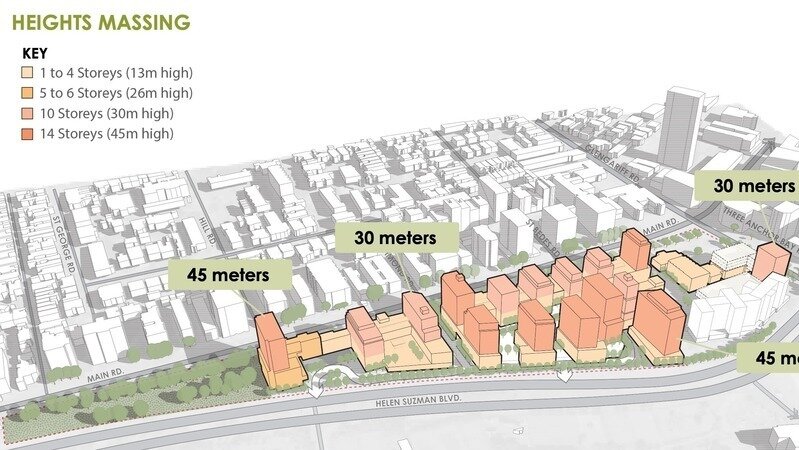
The scale of the proposed buildings - many four to five times higher than even the building across from it - would set a damaging precedent, negatively impact upon heritage buildings, and drastically reduce the visual aesthetic of the area.
TRAFFIC CONGESTION AND PARKING
The traffic impact assessment was not completed for us in time for this objection period. This is unacceptable. Furthermore, one parking space per apartment is an insufficient allowance per new unit, particularly since the bulk of new apartments in the CoCT’s proposal would be ‘luxury apartments’, which households increasingly require two parking bays.
The proposed development would also deplete significant street adjacent parking currently available to residents in the area, while a lack of parking is already creating pressure.
The addition of multiple mega high rise residential blocks, with the addition of hundreds more households, and/or office workers, will likely cause intense traffic congestion, and exacerbate the area's shortfall in public parking.
Furthermore, the 2024 Global Traffic Scorecard, shows Cape Town was ranked the ninth most congested city in the world, with motorists losing an average of 94 hours per year to delays, and the Atlantic Seaboard (M6/Victoria Road) and the CBD already posing major traffic bottlenecks; by adding to the overcrowding in the area, the city is creating undue pressure on motorists and driving in the area.
Also, the CoCT has failed to consider how the development of these mega high rises would impact game days at the Cape Town Stadium. The shortage of parking – including from the destruction of the public parking lots to build these mega high rises - and the additional cars on the road from these developments would be disastrous.
The CoCT suggests that there would be underground parking for new residents, but does not say how much parking would be freely and easily available to other people who visit or live in the area. With street adjacent public parking removed, there would be insufficient parking available on game-days, and the pressures also for the MyCity Bus and minivan taxis in the added congestion would be severe.
Additionally, we wholly reject the potential new builds in the public parking lot of the civic center and library. Besides the aesthetic ugliness of this, the lack of space between buildings, including building right up against the Senior Center, the destruction of the civic node, the removal of parking for civic buildings and placing them underground which will certainly make public parking more difficult and more limited, is another unacceptable expected outcome of this proposal.
We also note that the city has not developed bike lanes and sufficient public transportation (operational gaps especially during peak hours lead many commuters and tourists to rely instead on vehicular transportation), and that is another critical failure in the City's approach.
NOISE AND OTHER DISTURBANCE
In addition to all of these negative implications on existing residents and ratepayers, a development of this scope, with 12 or more high and mega high rises going up simultaneously or consecutively, including with deep excavation for underground parking, will place excessive noise, dirt, traffic, and other pressure and disturbance for a long time. Considering that the area is also home to many senior citizens, including at the CPOA/Sea Point Place, and in many buildings immediately across from the site, this will likely also have many mental and physical health and well-being consequences that require fair and unbiased consideration. In addition, the City has been pushing for residents to work from home, but gives no consideration to the impact that such a massive development and the noise, dust, disturbance and congestion would have on businesses and those working from home.
PROCESS INTEGRITY AND THE DILUTION OF THE PUBLIC'S VOICE AND INFLUENCE
We note inadequate public participation, with recent public meetings typically defined by vagueries and contradictory plans and demonstrations, leaving attendees none the wiser as to the exact intentions for the land and its development. We also note attempts to dilute and sideline the voice of the people as seems evident in attempts to amend the municipal planning bylaws, and the fact that the CoCT continues to push through with its plans regardless of what the public says or flawed heritage and other assessments, even when rejected by HRW.
We also reject any further attempts by the CoCT to dilute the power and the voice of the people and to give itself and the various authorities more power to act unilaterally, particularly in the ceding of public land (land that they are responsible to protect on behalf of the people) to private entities.

769
The Issue
We, residents of Cape Town, including from the areas around Three Anchor Bay, Green Point, Sea Point, and surrounds, strongly reject and object to the City of Cape Town’s proposed development on ERF 2187 – Three Anchor Bay, Green Point.
We hereby submit our objections to the proposed rezoning and developer-led development in Three Anchor Bay/Greenpoint, request authorities to investigate the perpetual ceding of public land in Cape Town to private entities, request the City to not only retain the ERF for recreational use for which it was vested in perpetuity, but also to further develop recreational facilities to improve this strategic area and its value to all who live in Cape Town, as well as its value to residents, and recreation in Cape Town.
Our objections are based on very many legal, public, heritage, ethical, and urban planning grounds, only some of which are summarized below:
VESTING OF THE LAND
First and foremost, this land was vested to the City of Cape Town (CoCT) in perpetuity for recreational use. We object to the city's attempts to rezone this land, and their relentlessness with this in the face of public objection.
Additionally, administrative rezoning or physical sub-division does not equate to the legal cancellation of a restrictive title condition.
HERITAGE INTERESTS AND LAW
In addition to the fact that the site is protected by Sections 34 and 38 of the NHRA, we question the fact that the assessments being used to push through these projects are done by consultants whose objectivity can be questioned, particularly when they rely on employment by the CoCT and developers for their hiring; Why, for example, has the City not halted the Oude Molen project when the HRW rejected that proposal's HIA?
The City has also done little to meaningfully honor the indigenous history of the Khoisan people or respect any heritage aspects of the site. For example, because the city has recently instructed planners to MAXIMIZE the build in the civic corner, the city planners are now proposing building on TOP of the library, behind it and all around it, and are even suggesting the public library would now become a tenant in a new high-rise developer-building. At every stage of this project, it is clear that developer-centric financial interests only are paramount, and heritage law and considerations are pushed aside.
DEVELOPER-CAPTURE AND LACK OF TRANSPARENCY
We also are disappointed and alarmed to see the increasing rate at which the CoCT is both prioritizing the interests of developers, and also trying to limit avenues of objection for residents. From the political capture of the municipal planning tribunal (see https://www.dailymaverick.co.za/article/2026-06-07-members-for-life-the-capture-of-cape-towns-planning-tribunal-/ to the City’s loss of its clean audit status, to the Tafelberg Constitutional Court ruling which also criticized the City’s failure to conduct meaningful public participation prior to sale, the unfortunate pattern by the CoCT in such proposals is lip-service to public participation, tick-boxing and/or ignoring statutory processes, and ceding public land to private interests, with a lack of accountability as a feature.
We note our concerns that public participation and land release processes appear to lack genuine transparency, manifesting in a common public perception of ‘municipal capture’ by the development industry, and/or tender mismanagement, and the processes being held simply as formalities to meet/ check-box the requirements, without truly onboarding the inputs of residents and participants.
LAND GRAB, APARTHEID AND LOSS OF PUBLIC LAND AND SPACE
In a country that is still working to resolve spatial Apartheid and address land injustice, the CoCT’s perpetual ceding of public land to private entities is perpetuating land injustice, and needs to be urgently stopped. Land that currently belongs to the people of South Africa is being given to developers, and often at way undervalued cost. News reports state that the City has recently auctioned 53 land parcels (totaling roughly 282,000 square meters) to private developers in locations spread across the metro, with major sites in areas like Mitchells Plain, Atlantis, Parow, Goodwood, and the CBD, including the controversial and now stalled sale of the iconic Good Hope Centre precinct. This Green Point/Three Anchor Bay ERF is an exceptionally strategic piece of land from the point of view of tourism, and urban planning – as the gateway between the CBD/ Green Point Stadium and the promenade, offering exceptional public space/ location for the city, yet the city is trying to quickly “dispose” of it to developers. We note the current pattern of the current municipal government ceding public land to developers with alarm, and ask that this be investigated. We further note that such an important and high-public-value stretch of land not be removed from public ownership.
AFFORDABLE HOUSING ARGUMENT BEING USED TO BENEFIT DEVELOPERS
We question the motivation of the city around its claims that developments like these are about building affordable housing, when the biggest winners in many of its projects are actually developers. Not only has the city in its planning failed to inform us what percentage of housing in this proposed development would be “affordable”, they have not told us what “affordable” means exactly, whether these units would be rented out or sold, or how these units would REMAIN “affordable” when they are being sold on prime sea front/central land, next to luxury units – there is no clarity on how these units would actually go to people who truly require lower-cost and affordable housing, rather than those best equipped to game the system, or flip the units. Furthermore, we find it problematic that the City is shirking its responsibilities around housing to developers, when it should rather be building state/city run (and important to note - not only “affordable”, but also “low-income”) rented out housing, with strict annual income verification. Instead, the City appears to be exploiting this issue to ultimately move more and more land into the hands of private developers. It is worthwhile to note that even in the United States, a law has just been passed to restrict private equity from buying single household homes, but here in Cape Town, we as residents are forced again and again to try to get our city to put public interests above that of developers.
It is critical to also note that while claiming there is no money available, and that to build affordable and low-income housing, the CoCT has to let the developers build it, the Western Cape Province in fact recently forfeited R 821.5m in funding specifically allocated for housing due to not being willing or able to spend it. That is MORE than the current cost that the CoCT has valued the entire Three Anchor Bay ERF as being worth.
This is about political will and priorities, and the Western Cape Government and CoCT must be taken to task on its approach and failures with regards to housing, and must pursue solutions that purely benefit the public, and do not foremost benefit private equity and developers.
FLAWED PUBLIC ENGAGEMENT
The public participation process has NOT been well publicized at all. The only reason many of us have found out about it is through private sharing through our own social media networks. During the first phone call, we could not hear the stakeholders and technology was flawed. Furthermore, the entire framing of this from the start has been that this is a “done deal”. “This is happening – citizens can’t stop it, the most we can do is comment to influence the minor details. The City Council has preapproved the rezoning etc.” We reject this approach.
The people running this process – including the supposed independent consultants are all working for the city and seem to be helping the city PUSH THIS THROUGH, asking at most HOW SHOULD WE DO THIS?, not at all entertaining the question SHOULD WE DO THIS? When questions are asked about heritage concerns, they are often pushed aside. The full assessments are not ready/available at the time we are expected to comment. The heritage expert said she didn’t get enough information from the CoCT to comment on the city’s latest proposal to build ON TOP of the library building. The traffic assessment was not completed at the time of the public engagement meeting on June 24th. There appears to be no environmental assessment available to the public. The summaries of the various impact assessments suggest small problems and small remedies, but generally green-light the city plans and do not appear to robustly challenge the city in any way. Each iteration of the CoCT's proposal has been increasingly deaf to the inputs of residents, and the engagement feels like a tick-box exercise, rather than meaning engagement.
When challenged as to how the city can think it’s okay to propose additions on TOP OF A HERITAGE BUILDING, one that the city has said through this process would be preserved, the city officials say simply that they have been tasked by their higher-ups (they won't say who) to maximize the monetization of the civic corner, and that building on top of heritage buildings has been done before. Besides the fact that this completely ignores heritage demarcations, it is aesthetically awful and destroys the current character of the buildings and their historic significance. In addition, by digging to build UNDERGROUND parking adjacent to the library and civic center, there is the possibility of critically undermining the structure of the heritage library, civic center and senior housing facility. Deep excavations reduce lateral soil support, which can cause the neighboring building's foundation to shift, settle unevenly, or crack. Furthermore, vibrations from heavy construction equipment can cause structural damage or soil compaction. Where are the seismic studies as part of this proposal?
Furthermore, the designs are deceptive, using at times hard-to-notice dotted lines to obscure true plans. Ratespayer associations were not even aware of the proposed additions on top of the library, the eating up the entire civic center parking lot with more build, and building a connection between what was supposed to remain a government-owned building (library) and what is proposed as a new developer high rise behind the library – This lack of awareness is not only because of the dotted lines /seemingly purposefully unclear way of presenting this, but even at the public participation meeting on June 24th, many of the plans printed did not even show these new proposed additions to the civic node – even though they showed these buildings. The CoCT wrongly presented different designs at the same event, and there remains confusion amongst the public about what the city is proposing in the civic corner.
How are we supposed to publicly participate without complete impact assessments, without clear answers about affordable housing, without clear or consistent plans/proposals? Basically, the City seems to be trying to both push through this development, and simultaneously saying these are just ideas, and “anything” is possible – we might preserve the civic corner, or we might build on top of the library, connect it to a new mega high rise, eat up the parking lot and completely destroy the block … how can we comment when the city is saying moving forward on this can mean anything can happen?
Comments are also minimized in the City's summary presentation of them, and some are wrongly represented. The city is maximizing monetary values for developers and ignoring inputs by residents, and the latest plans for the civic node that the CoCT originally said would be preserved now looks like an ugly brick-against-brick concrete jungle. Regular citizens do not have the capacity to keep fighting the city as it pushes development after development, amendment to bylaws after amendment, all in ways that serve developers and city power over the public or public interest and that sideline and weaken the voice of the people.
LOSS OF PROPERTY VALUES
Many current property owners’ values will decrease significantly if the city is allowed to build skyscrapers on the greenbelt. While the city planners are quick to tell us we don’t have a right to a view, many of us purchased our properties, and chose these particular locations as investments, knowing that the greenbelt was protected from development because of it being vested as recreational land. We expected the CoCT to follow the law, not go against the vesting of the land. We will lose our views, and our property values and investments will suffer, while the developers will be able to sell new luxury developers to new owners at high premiums. Our loss would become their gain. This penalizes ratespayers and EXISTING RESIDENTS who have contributed for decades to the city coffers and rewards developers.
LOSS OF PRIME RECREATIONAL, TOURISM AND URBAN PLANNING STRATEGIC LAND FOR PERPETUITY
The City should have engaged the public PRIOR to drawing up these developer-centric plans. It should have given us options. Besides the fact that developing outdoor exhibits to recognize the Khoisan who originally inhabited this area, or a potential air-to-city-to-sea skytrain would be much more significant, creative and strategic avenues to pursue, there are also incredible and exciting ways in which this land could and should be developed within its zoning and the use for which it was vested to the City of Cape Town in 1923 – explicitly as public commonage for recreational and sporting purposes. Such development would benefit all who live in and visit Cape Town, and also boost tourism, which already contributes significantly to Cape Town and South Africa’s GDP.
There are so many exciting ways the City could develop this land recreationally, yet because the CoCT seems so focused on ceding public land to developers – the city is copying New York as an example of skyscrapers and high density living. Instead, the City should see what New York City has done for urban spaces – such as Chelsea Piers, Hudson River piers, Central Park, Rockefeller Square, Bryant Park, Little Island, etc. We could have ice skating, soccer /rugby/cricket fields, tennis courts, skateboarding, outdoor movie nights, urban playable fountains with playgrounds, a walking Khoisan exhibit, bike lanes, and continue to have the end of the famous Cape Town Cycle Tour, and the very many races that are currently run on weekends in this space, but instead the City seems to be exploiting the housing crisis and homelessness crisis as a way to buy political leverage and push ahead with towering, horizon-blocking, developer-friendly, high rises when it could and should be thinking about its responsibilities towards supporting green urban public spaces, honoring heritage concerns, and considering the value of land owned and run by the people for the people.
Strategic investments in public spaces yield concrete benefits for leading tourist destinations. People do not visit Cape Town for skyscrapers. Nature is central to our brand, and this piece of land is a critical gateway between the city/CBD and the ocean – the city should be thinking and acting more creatively, and not run purely on financial and developer interests.
Dynamic parks and recreation public spaces typically bring in far more revenue to a city over time than a once-off land sale, and this proposal is incredibly short -sighted for what is widely considered a world-class tourism city. To be considering selling off such a strategically-located piece of land, is bad for Cape Town. Once gone, the opportunities for a natural, green, recreational/sporting, and tourism-attracting, even globally iconic public space on the site are lost for perpetuity.
FALSE AGENDA SETTING
By starting at the point – “here are our plans, and here’s what we are going to do”, rather than starting by looking at the land, and what should best be done to maximize it for the public interest (within the law and its original vesting) - in conversation with the public, the city has framed the process wrongly. Furthermore, we believe city representatives are false agenda setting by proposing incredible dense development, so that they can say they listened to us by scaling back. This is NOT public participation, it is inauthentic optics. We reject the entire proposal, not just the density.
OUR TAX FUNDS ARE USED AGAINST US
The City is working against the people by using taxpayer money to hire consultants to push a developer, not a public interest, vision. Furthermore, because the city continues to shortcut and steamroll these processes, even pushing ahead without succeeding through the required statutory processes, the City is then again using taxpayer money to fight taxpayers who challenge the City in court. How much did taxpayers pay (on both sides) to have the Tafelberg site sale pushed through, and then challenged and defeated in court? Taxpayers are paying on every side.
DENSITY, OVERCROWDING, INFRASTRUCTURE LIMITATIONS
Because Cape Town gives the greenlight to developers again and again, the Atlantic Seaboard is already overcrowded. Without sufficient infrastructure, traffic, sewerage, electricity, and water systems are already under pressure. We are a city that is drought-vulnerable, CoCT discharges millions of liters of untreated sewage into the Atlantic seabodard daily, including through the outfall located in Sea Point, affecting water quality for bathers (which also has impacts on tourism when the water quality is low), we have had years of electricity crises, yet before solving these challenges, the city is pushing more and more people into neighborhoods, and pushing for high-density and high-rise developments.
The city needs to both address the infrastructure limitations, alongside the housing crises, and consider the dozens of new medium-to-large developments that have already been built in this area during the last decade, as well as the pressures this densification has added to the infrastructure demands and traffic in the area. The ceding of remaining green spaces to developers does not serve the area or its residents.
PROPOSED DEVELOPMENT OUT OF CHARACTER TO THE AREA
Even the CoCT officials have admitted that the proposed development, with its many mega high rises would irrevocably alter the character of the existing area.
The scale of the proposed buildings - many four to five times higher than even the building across from it - would set a damaging precedent, negatively impact upon heritage buildings, and drastically reduce the visual aesthetic of the area.
TRAFFIC CONGESTION AND PARKING
The traffic impact assessment was not completed for us in time for this objection period. This is unacceptable. Furthermore, one parking space per apartment is an insufficient allowance per new unit, particularly since the bulk of new apartments in the CoCT’s proposal would be ‘luxury apartments’, which households increasingly require two parking bays.
The proposed development would also deplete significant street adjacent parking currently available to residents in the area, while a lack of parking is already creating pressure.
The addition of multiple mega high rise residential blocks, with the addition of hundreds more households, and/or office workers, will likely cause intense traffic congestion, and exacerbate the area's shortfall in public parking.
Furthermore, the 2024 Global Traffic Scorecard, shows Cape Town was ranked the ninth most congested city in the world, with motorists losing an average of 94 hours per year to delays, and the Atlantic Seaboard (M6/Victoria Road) and the CBD already posing major traffic bottlenecks; by adding to the overcrowding in the area, the city is creating undue pressure on motorists and driving in the area.
Also, the CoCT has failed to consider how the development of these mega high rises would impact game days at the Cape Town Stadium. The shortage of parking – including from the destruction of the public parking lots to build these mega high rises - and the additional cars on the road from these developments would be disastrous.
The CoCT suggests that there would be underground parking for new residents, but does not say how much parking would be freely and easily available to other people who visit or live in the area. With street adjacent public parking removed, there would be insufficient parking available on game-days, and the pressures also for the MyCity Bus and minivan taxis in the added congestion would be severe.
Additionally, we wholly reject the potential new builds in the public parking lot of the civic center and library. Besides the aesthetic ugliness of this, the lack of space between buildings, including building right up against the Senior Center, the destruction of the civic node, the removal of parking for civic buildings and placing them underground which will certainly make public parking more difficult and more limited, is another unacceptable expected outcome of this proposal.
We also note that the city has not developed bike lanes and sufficient public transportation (operational gaps especially during peak hours lead many commuters and tourists to rely instead on vehicular transportation), and that is another critical failure in the City's approach.
NOISE AND OTHER DISTURBANCE
In addition to all of these negative implications on existing residents and ratepayers, a development of this scope, with 12 or more high and mega high rises going up simultaneously or consecutively, including with deep excavation for underground parking, will place excessive noise, dirt, traffic, and other pressure and disturbance for a long time. Considering that the area is also home to many senior citizens, including at the CPOA/Sea Point Place, and in many buildings immediately across from the site, this will likely also have many mental and physical health and well-being consequences that require fair and unbiased consideration. In addition, the City has been pushing for residents to work from home, but gives no consideration to the impact that such a massive development and the noise, dust, disturbance and congestion would have on businesses and those working from home.
PROCESS INTEGRITY AND THE DILUTION OF THE PUBLIC'S VOICE AND INFLUENCE
We note inadequate public participation, with recent public meetings typically defined by vagueries and contradictory plans and demonstrations, leaving attendees none the wiser as to the exact intentions for the land and its development. We also note attempts to dilute and sideline the voice of the people as seems evident in attempts to amend the municipal planning bylaws, and the fact that the CoCT continues to push through with its plans regardless of what the public says or flawed heritage and other assessments, even when rejected by HRW.
We also reject any further attempts by the CoCT to dilute the power and the voice of the people and to give itself and the various authorities more power to act unilaterally, particularly in the ceding of public land (land that they are responsible to protect on behalf of the people) to private entities.
Supporter Voices
Petition Updates
Share this petition
Petition created on 16 July 2026