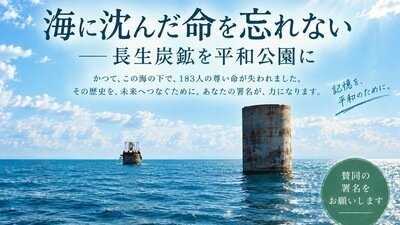

海に沈んだ命を忘れない ーー長生炭鉱を平和公園に
署名活動の主旨
山口県宇部市の床波海岸には、2 本の巨大な煙突のような「ピーヤ」と呼ばれる構造物が、海の墓標のようにそびえ立っています。1942 年 2 月、アジア・太平洋戦争中に石炭を国策として無闇に掘り進めた結果、坑道内が崩落し水非常(水没事故)が起こり、183 人もの尊い命が失われました。
犠牲者の 7 割以上は朝鮮人労働者で、植民地政策のためにやむなく生活の糧を求めて日本に渡ってきたり、労務動員計画などにより動員された人々でした。日本各地からの労働者も 47 人いました。事故から 80年以上が経った今も、海底には遺骨が眠ったままです。
私たちはこの悲しい事実と歴史を忘れないために、2013 年に追悼碑を建て、2024 年には炭鉱の入り口「坑口」を発掘し、2025 年には一部の遺骨収容を実現しました。今も朝鮮半島と日本のご遺族の声に寄り添いながら活動を続けています。
〈平和公園化を求める理由〉
(1) 当時の姿をとどめる海底炭鉱の遺構を守る
長生炭鉱は海底炭鉱であり、海には2本のピーヤ(排気・排水筒)が立っています 。82 年ぶりに掘り出した坑口も、松の木で造られ当時の姿をとどめています。これらは海底炭鉱の唯一の遺構であり、歴史的遺産として保存して国内外の人々に永く伝えていくことには大きな価値があります。
(2) 炭鉱のまち宇部市にとって、 光と影の歴史を学ぶ
山口県宇部市ときわ公園の石炭記念館は宇部を豊かにした「光」の部分を紹介しています 。一方、長生炭鉱は過酷で危険な労働によって一度の事故で朝鮮人 136 人と日本人 47 人もの命を失った「影」の部分です。この両面を学ぶことが大切だと私たちは考えています。
(3) 追悼と祈りの交流の場 ― 海に沈んだ命を忘れない
報道や SNS によって長生炭鉱の知名度は確実に高まっており、国内外から多くの人々が訪れています。平和公園として追悼と祈りの場をつくることは、海に沈んだ命を忘れず未来に伝えていくことです。それは「未来を彫刻するまち」を掲げる宇部市にとっても、重要な財産となるでしょう。
宇部市長 篠﨑 圭二 様
長生炭鉱「ピーヤ」・坑口周辺一帯を、「平和公園」として整備することを要望します。
----------
바다에 잠긴 생명을 잊지 않기 위해 ―― 장생탄광을 평화공원으로 ――
야마구치현 우베시 도코나미 해안에는 두 개의 거대한 굴뚝처럼 보이는 ‘피아’라 불리는 구조물이 바다의 묘표처럼 우뚝 서 있습니다. 1942년 2월, 아시아·태평양전쟁 중 석탄을 국책으로 무분별하게 채굴한 결과 갱도 내부가 붕괴하여 수몰 사고가 발생했고, 183명의 소중한 생명이 희생되었습니다.
희생자의 70% 이상은 조선인 노동자였으며, 식민지 정책으로 인해 생계를 위해 일본으로 건너오거나 노동력 동원 계획 등에 의해 강제로 동원된 사람들이었습니다. 일본 각지에서 온 노동자도 47명 있었습니다. 사고가 발생한 지 80년이 넘은 지금도 바닷속에는 유골이 그대로 잠들어 있습니다. 우리는 이 슬픈 사실과 역사를 잊지 않기 위해 2013년에 추모비를 세웠습니다. 2024년에는 탄광의 입구인 ‘갱구’를 발굴했고, 2025년에는 일부 유골을 수습하는 데 성공했습니다. 지금도 한반도와 일본의 유가족들의 목소리에 귀 기울이며 활동을 이어가고 있습니다.
〈평화공원 조성을 요구하는 이유〉
(1) 당시 모습을 간직한 해저 탄광의 유구를 보존하기 위해
장생탄광은 해저 탄광으로, 바다에는 두 개의 피아(배기·배수 통)가 서 있습니다. 82년 만에 발굴한 갱구도 소나무로 만들어져 당시의 모습을 그대로 간직하고 있습니다. 이것들은 해저 탄광의 유일한 유구이며, 역사적 유산으로서 보존하여 국내외 사람들에게 오래도록 전해 나가는 데 큰 가치가 있습니다.
(2) 탄광 도시 우베시가 ‘빛’과 ‘그늘’의 역사를 함께 배우기 위해
도키와공원의 석탄기념관은 우베를 풍요롭게 만든 ‘빛’의 역사를 소개하고 있습니다. 반면 장생탄광은 혹독하고 위험한 노동으로 인해 한 번의 사고로 조선인 136명과 일본인 47명의 생명이 희생된 ‘그늘’의 역사입니다. 우리는 이 양면을 함께 배우는 것이 중요하다고 생각합니다.
(3) 추모와 기도의 교류의 장 ― 바다에 잠긴 생명을 잊지 않기 위해
보도와 SNS를 통해 장생탄광의 인지도는 확실히 높아졌고, 국내외에서 많은 사람들이 찾아오고 있습니다. 평화공원으로서 추모와 기도의 공간을 조성하는 것은 바다에 잠긴 생명을 잊지 않고 미래에 전해 나가는 일이 됩니다. 이는 ‘미래를 조각하는 도시’를 내세우는 우베시에 중요한 자산이 될 것입니다.
우베시장 시노자키 게이지 님
장생탄광 ‘피아’ 및 갱구 주변 일대를 ‘평화공원’으로 정비해 주실 것을 요청드립니다.
----------
Never Forget the Lives Lost Beneath the Sea — Toward Making the Chōsei Coal Mine a Peace Park —
Along the Tokonami Coast in Ube City, Yamaguchi Prefecture, two massive structures called Pīya, resembling giant chimneys, stand tall like grave markers in the sea. In February 1942, during the Asia-Pacific War, reckless coal extraction driven by national policy caused the mine tunnels to collapse, resulting in a catastrophic flooding accident that claimed 183 precious lives.
More than 70 percent of the victims were Korean laborers who had come to Japan seeking a means of livelihood under colonial rule or had been mobilized through labor conscription programs. There were also 47 Japanese workers from various regions of Japan. Even now, more than 80 years after the accident, the remains of the victims still lie beneath the seabed. To ensure that this tragic truth and history are never forgotten, we erected a memorial monument in 2013. In 2024, we excavated the mine entrance (kōguchi), and in 2025, we succeeded in recovering a portion of the remains. We continue our activities today, listening closely to the voices of bereaved families in both Korea and Japan.
〈Reasons for Requesting the Area to Become a Peace Park〉
(1) To preserve the remaining structures of the underwater coal mine
The Chōsei Coal Mine was an underwater coal mine, and two Pīya (ventilation and drainage shafts) still stand in the sea. The mine entrance excavated for the first time in 82 years was constructed from pine wood and retains its original form. These are the only remaining structures of an underwater coal mine, and preserving them as historical heritage and passing them on to people in Japan and abroad holds great significance.
(2) For Ube City, a coal-mining town, to learn both the “light” and “shadow” of its history
The Coal Museum in Tokiwa Park introduces the “light” side of history—the prosperity coal brought to Ube. In contrast, the Chōsei Coal Mine represents the “shadow,” where harsh and dangerous labor led to a single accident that took the lives of 136 Koreans and 47 Japanese. We believe it is important to learn from both sides of this history.
(3) A place for remembrance and prayer — Never forget the lives lost beneath the sea
Through media coverage and social networks, awareness of the Chōsei Coal Mine has steadily grown, and many visitors now come from Japan and abroad. Creating a space for remembrance and prayer as a Peace Park will ensure that the lives lost beneath the sea are not forgotten and are conveyed to future generations. This will become an important asset for Ube City, which upholds the vision of being “a city that sculpts the future.”
To Mayor Shinozaki Keiji of Ube City
We respectfully request that the area surrounding the Chōsei Coal Mine Pīya structures and the mine entrance be developed as a “Peace Park.”
2,448
署名活動の主旨
山口県宇部市の床波海岸には、2 本の巨大な煙突のような「ピーヤ」と呼ばれる構造物が、海の墓標のようにそびえ立っています。1942 年 2 月、アジア・太平洋戦争中に石炭を国策として無闇に掘り進めた結果、坑道内が崩落し水非常(水没事故)が起こり、183 人もの尊い命が失われました。
犠牲者の 7 割以上は朝鮮人労働者で、植民地政策のためにやむなく生活の糧を求めて日本に渡ってきたり、労務動員計画などにより動員された人々でした。日本各地からの労働者も 47 人いました。事故から 80年以上が経った今も、海底には遺骨が眠ったままです。
私たちはこの悲しい事実と歴史を忘れないために、2013 年に追悼碑を建て、2024 年には炭鉱の入り口「坑口」を発掘し、2025 年には一部の遺骨収容を実現しました。今も朝鮮半島と日本のご遺族の声に寄り添いながら活動を続けています。
〈平和公園化を求める理由〉
(1) 当時の姿をとどめる海底炭鉱の遺構を守る
長生炭鉱は海底炭鉱であり、海には2本のピーヤ(排気・排水筒)が立っています 。82 年ぶりに掘り出した坑口も、松の木で造られ当時の姿をとどめています。これらは海底炭鉱の唯一の遺構であり、歴史的遺産として保存して国内外の人々に永く伝えていくことには大きな価値があります。
(2) 炭鉱のまち宇部市にとって、 光と影の歴史を学ぶ
山口県宇部市ときわ公園の石炭記念館は宇部を豊かにした「光」の部分を紹介しています 。一方、長生炭鉱は過酷で危険な労働によって一度の事故で朝鮮人 136 人と日本人 47 人もの命を失った「影」の部分です。この両面を学ぶことが大切だと私たちは考えています。
(3) 追悼と祈りの交流の場 ― 海に沈んだ命を忘れない
報道や SNS によって長生炭鉱の知名度は確実に高まっており、国内外から多くの人々が訪れています。平和公園として追悼と祈りの場をつくることは、海に沈んだ命を忘れず未来に伝えていくことです。それは「未来を彫刻するまち」を掲げる宇部市にとっても、重要な財産となるでしょう。
宇部市長 篠﨑 圭二 様
長生炭鉱「ピーヤ」・坑口周辺一帯を、「平和公園」として整備することを要望します。
----------
바다에 잠긴 생명을 잊지 않기 위해 ―― 장생탄광을 평화공원으로 ――
야마구치현 우베시 도코나미 해안에는 두 개의 거대한 굴뚝처럼 보이는 ‘피아’라 불리는 구조물이 바다의 묘표처럼 우뚝 서 있습니다. 1942년 2월, 아시아·태평양전쟁 중 석탄을 국책으로 무분별하게 채굴한 결과 갱도 내부가 붕괴하여 수몰 사고가 발생했고, 183명의 소중한 생명이 희생되었습니다.
희생자의 70% 이상은 조선인 노동자였으며, 식민지 정책으로 인해 생계를 위해 일본으로 건너오거나 노동력 동원 계획 등에 의해 강제로 동원된 사람들이었습니다. 일본 각지에서 온 노동자도 47명 있었습니다. 사고가 발생한 지 80년이 넘은 지금도 바닷속에는 유골이 그대로 잠들어 있습니다. 우리는 이 슬픈 사실과 역사를 잊지 않기 위해 2013년에 추모비를 세웠습니다. 2024년에는 탄광의 입구인 ‘갱구’를 발굴했고, 2025년에는 일부 유골을 수습하는 데 성공했습니다. 지금도 한반도와 일본의 유가족들의 목소리에 귀 기울이며 활동을 이어가고 있습니다.
〈평화공원 조성을 요구하는 이유〉
(1) 당시 모습을 간직한 해저 탄광의 유구를 보존하기 위해
장생탄광은 해저 탄광으로, 바다에는 두 개의 피아(배기·배수 통)가 서 있습니다. 82년 만에 발굴한 갱구도 소나무로 만들어져 당시의 모습을 그대로 간직하고 있습니다. 이것들은 해저 탄광의 유일한 유구이며, 역사적 유산으로서 보존하여 국내외 사람들에게 오래도록 전해 나가는 데 큰 가치가 있습니다.
(2) 탄광 도시 우베시가 ‘빛’과 ‘그늘’의 역사를 함께 배우기 위해
도키와공원의 석탄기념관은 우베를 풍요롭게 만든 ‘빛’의 역사를 소개하고 있습니다. 반면 장생탄광은 혹독하고 위험한 노동으로 인해 한 번의 사고로 조선인 136명과 일본인 47명의 생명이 희생된 ‘그늘’의 역사입니다. 우리는 이 양면을 함께 배우는 것이 중요하다고 생각합니다.
(3) 추모와 기도의 교류의 장 ― 바다에 잠긴 생명을 잊지 않기 위해
보도와 SNS를 통해 장생탄광의 인지도는 확실히 높아졌고, 국내외에서 많은 사람들이 찾아오고 있습니다. 평화공원으로서 추모와 기도의 공간을 조성하는 것은 바다에 잠긴 생명을 잊지 않고 미래에 전해 나가는 일이 됩니다. 이는 ‘미래를 조각하는 도시’를 내세우는 우베시에 중요한 자산이 될 것입니다.
우베시장 시노자키 게이지 님
장생탄광 ‘피아’ 및 갱구 주변 일대를 ‘평화공원’으로 정비해 주실 것을 요청드립니다.
----------
Never Forget the Lives Lost Beneath the Sea — Toward Making the Chōsei Coal Mine a Peace Park —
Along the Tokonami Coast in Ube City, Yamaguchi Prefecture, two massive structures called Pīya, resembling giant chimneys, stand tall like grave markers in the sea. In February 1942, during the Asia-Pacific War, reckless coal extraction driven by national policy caused the mine tunnels to collapse, resulting in a catastrophic flooding accident that claimed 183 precious lives.
More than 70 percent of the victims were Korean laborers who had come to Japan seeking a means of livelihood under colonial rule or had been mobilized through labor conscription programs. There were also 47 Japanese workers from various regions of Japan. Even now, more than 80 years after the accident, the remains of the victims still lie beneath the seabed. To ensure that this tragic truth and history are never forgotten, we erected a memorial monument in 2013. In 2024, we excavated the mine entrance (kōguchi), and in 2025, we succeeded in recovering a portion of the remains. We continue our activities today, listening closely to the voices of bereaved families in both Korea and Japan.
〈Reasons for Requesting the Area to Become a Peace Park〉
(1) To preserve the remaining structures of the underwater coal mine
The Chōsei Coal Mine was an underwater coal mine, and two Pīya (ventilation and drainage shafts) still stand in the sea. The mine entrance excavated for the first time in 82 years was constructed from pine wood and retains its original form. These are the only remaining structures of an underwater coal mine, and preserving them as historical heritage and passing them on to people in Japan and abroad holds great significance.
(2) For Ube City, a coal-mining town, to learn both the “light” and “shadow” of its history
The Coal Museum in Tokiwa Park introduces the “light” side of history—the prosperity coal brought to Ube. In contrast, the Chōsei Coal Mine represents the “shadow,” where harsh and dangerous labor led to a single accident that took the lives of 136 Koreans and 47 Japanese. We believe it is important to learn from both sides of this history.
(3) A place for remembrance and prayer — Never forget the lives lost beneath the sea
Through media coverage and social networks, awareness of the Chōsei Coal Mine has steadily grown, and many visitors now come from Japan and abroad. Creating a space for remembrance and prayer as a Peace Park will ensure that the lives lost beneath the sea are not forgotten and are conveyed to future generations. This will become an important asset for Ube City, which upholds the vision of being “a city that sculpts the future.”
To Mayor Shinozaki Keiji of Ube City
We respectfully request that the area surrounding the Chōsei Coal Mine Pīya structures and the mine entrance be developed as a “Peace Park.”
賛同者からのコメント
オンライン署名の最新情報
このオンライン署名をシェアする
2026年9月16日に作成されたオンライン署名