
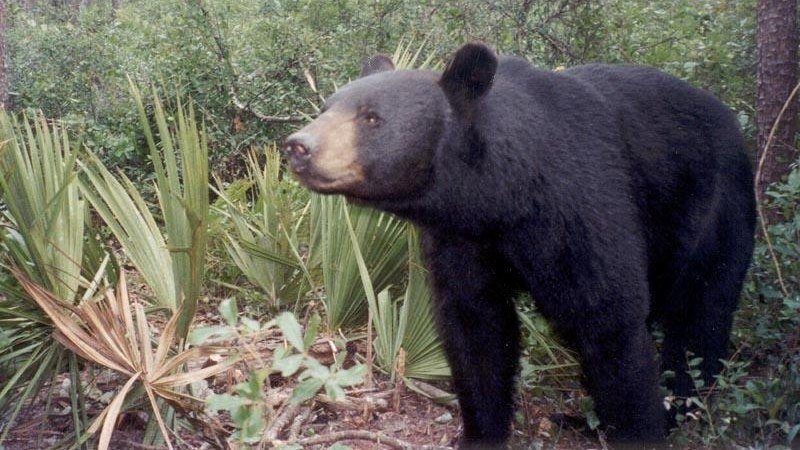
Protect Bears! Conservation not Recreation! Close Barr Hammock Trail!
The Issue
* What you can do to help! Please send a quick note to the County To Alachua County Commission at bocc@alachuacounty.us thank you!
AND! Please submit a letter (<150 words) to the Gainesville Sun ASAP (keep sending them now until October 28).
http://www.gainesville.com/article/99999999/MULTIMEDIA/69514377?template=art_plain
Dear Alachua County Commission:
We were alerted to the fact that there have been an unusually high number of potentially dangerous bear incidences in the neighborhood that borders Barr Hammock Preserve. Full-grown bears have been sited in garages, bird feeders have been demolished, garbage cans have been ransacked, and bear scat has been found. As you may not know, this poses numerous serious risks for both humans and bears.
These dangerous problems are likely caused by the recent change in land use at Barr Hammock. Previous to the change, this ecosystem was not used for human recreational purposes. But now, after opening it for recreational activities, this preserve currently experiences dramatically higher human traffic (with daily frequency). This is an extremely disruptive change to the ecosystem and threatens the habitat of many species, including the Florida black bear.
The dangers are twofold: first is the real possibility of human injury or death from bear attacks (like the ongoing problems and recent mauling in Longwood, FL). Second is the possibility of bear casualties caused from human-bear interactions – or from the sanctioned euthanizing programs that may be instigated because of increased bear incidences in the area.
There are numerous factors at play to understand: the first is that the bear habitat has been fragmented by the new human recreational access to Barr Hammock. This causes considerable stress to the bears and compromises the suitable foraging habitat patches to meet a minimum daily area requirement (M.D.A.R.). Further, these human recreational activities disrupt the bears’ social systems and generally destabilize the ecosystem of the corridor.
According to the Florida Fish and Wildlife Conservation Commission Technical Report (2001) “Black Bear Habitat Management Guidelines for Florida,” black bears need “freedom from constant human access.” But, sadly, the opposite is happening in Barr Hammock – and this is a real problem if conservation (vs. recreation) is the true goal of Alachua County.
This constant human access and contact creates a documented phenomenon summed up with, “A fed bear is a dead bear.” The issue is not just people getting hurt by bears, but bears getting hurt by people – because with increased human presence, the bears become overly conditioned to human contact. Those that have lost their fear and respect for humans develop a condition known as ‘habituation.’ And thus the bears are more likely to enter human populated areas looking for food. A U.S. Fish and Wildlife Report stated, “Habituation of brown / grizzly bears to areas of high or consistent human use … creates the potential for chronic bear mortality problems and possible long-term effects on bear populations.” In short, the bears get desensitized, so they come too close to people’s homes, and subsequently the bears get euthanized because the tenants get scared. It is a vicious and deadly cycle that usually ends in either human or bear fatalities (or both).
I was curious to see how Alachua County had prepared itself for disruption to bear habitat with this land use change, and so I referenced the Barr Hammock Management Plan. Much to my shock, there was not one single mention of bears in Alachua County’s research or preparation. They discussed plans for accommodating several other sorts of plants and smaller animals, but there was no mention what so ever of bears. I am baffled how this could have been overlooked?
What was even more shocking is what I found in an appendix to the Management Plan. According to its policy requirements, Alachua County did – in fact – hold public hearings to seek input from the residents. But the county obviously did not actually listen to the public feedback. Alachua County itself documented, in the public meeting notes of 3/27/2012, “Several local residents discussed bear sightings in the area.” Yet, in spite of it being brought to their attention by several neighbors, Alachua County still did not even mention bears in the Management Plan’s “Table 3: Listed Animal Species of Barr Hammock.” It is one thing for Alachua County to just forget to include black bears (that would have been, in itself, a terrible oversight) – but when “several local residents discussed bear sightings in the area” how on earth could Alachua County have ignored this after it was brought to its attention? Either Alachua County was not listening to the public – or they intentionally chose to ignore the warnings of the residents.
This is a sad day for the Florida black bear and suggests that recreation takes priority over conservation in Alachua County.
A true conservation effort takes into consideration the nuances of the ecosystem for all species. To ignore the Florida black bear in a comprehensive report is nothing short of shameful. I urge the county to take corrective measures ASAP.
Unless steps are taken immediately to limit the recreational disruption to Barr Hammock, I fear that there may be human casualties – and there will almost definitely be fatalities for the bear population in the short and long term. If Alachua County truly values its natural resources, it needs to fix the problems in Barr Hammock. If it continues to value recreation over conservation, then the environment is going to endure abuse – and the black bears will suffer greatly.
It is my recommendation that all recreational access to Barr Hammock be immediately prohibited. It should only be reopened for recreation after an expert and independent study is conducted on the impact of human recreation on the bear population. Often, quite innocently, recreational visitors feed bears because they believe they are doing the animal a favor. And in the short term, its true: the animal gets an easy meal. But in the long term, it can prove fatal for future recreational visitors or for homeowners nearby.
Perhaps, after evaluating the conclusions of this expert and independent study, then the preserve can be reopened to limited human recreation. Much like access has been limited in other preserves around the state and nation, the public can still have certain recreational areas, but it may not be in the best interest of conservation to give the public unrestricted recreational access to the entire preserve (which inevitably causes disruption to the ecosystem). This is a responsible way to both conserve natural resources while still allowing for some recreational opportunities. To do anything less is a slap in the face of conservation efforts.
Please contact me if you have any questions.
Sincerely,
Christin Burford
C.A.R.E. Foundation
http://www.thecarefoundation.org/
christin@thecarefoundation.org
407-247-8948
The CARE Foundation was established to provide non-domestic, non-releasable animals with a safe and permanent home, and to educate the public on conservation and current environmental issues concerning endangered and threatened species, as well as local wildlife and their habitat. We work closely with Florida Fish and Wildlife, USDA, and Orange County Animal Services by assisting with Rescues and Confiscations.

Petition Closed
The Issue
* What you can do to help! Please send a quick note to the County To Alachua County Commission at bocc@alachuacounty.us thank you!
AND! Please submit a letter (<150 words) to the Gainesville Sun ASAP (keep sending them now until October 28).
http://www.gainesville.com/article/99999999/MULTIMEDIA/69514377?template=art_plain
Dear Alachua County Commission:
We were alerted to the fact that there have been an unusually high number of potentially dangerous bear incidences in the neighborhood that borders Barr Hammock Preserve. Full-grown bears have been sited in garages, bird feeders have been demolished, garbage cans have been ransacked, and bear scat has been found. As you may not know, this poses numerous serious risks for both humans and bears.
These dangerous problems are likely caused by the recent change in land use at Barr Hammock. Previous to the change, this ecosystem was not used for human recreational purposes. But now, after opening it for recreational activities, this preserve currently experiences dramatically higher human traffic (with daily frequency). This is an extremely disruptive change to the ecosystem and threatens the habitat of many species, including the Florida black bear.
The dangers are twofold: first is the real possibility of human injury or death from bear attacks (like the ongoing problems and recent mauling in Longwood, FL). Second is the possibility of bear casualties caused from human-bear interactions – or from the sanctioned euthanizing programs that may be instigated because of increased bear incidences in the area.
There are numerous factors at play to understand: the first is that the bear habitat has been fragmented by the new human recreational access to Barr Hammock. This causes considerable stress to the bears and compromises the suitable foraging habitat patches to meet a minimum daily area requirement (M.D.A.R.). Further, these human recreational activities disrupt the bears’ social systems and generally destabilize the ecosystem of the corridor.
According to the Florida Fish and Wildlife Conservation Commission Technical Report (2001) “Black Bear Habitat Management Guidelines for Florida,” black bears need “freedom from constant human access.” But, sadly, the opposite is happening in Barr Hammock – and this is a real problem if conservation (vs. recreation) is the true goal of Alachua County.
This constant human access and contact creates a documented phenomenon summed up with, “A fed bear is a dead bear.” The issue is not just people getting hurt by bears, but bears getting hurt by people – because with increased human presence, the bears become overly conditioned to human contact. Those that have lost their fear and respect for humans develop a condition known as ‘habituation.’ And thus the bears are more likely to enter human populated areas looking for food. A U.S. Fish and Wildlife Report stated, “Habituation of brown / grizzly bears to areas of high or consistent human use … creates the potential for chronic bear mortality problems and possible long-term effects on bear populations.” In short, the bears get desensitized, so they come too close to people’s homes, and subsequently the bears get euthanized because the tenants get scared. It is a vicious and deadly cycle that usually ends in either human or bear fatalities (or both).
I was curious to see how Alachua County had prepared itself for disruption to bear habitat with this land use change, and so I referenced the Barr Hammock Management Plan. Much to my shock, there was not one single mention of bears in Alachua County’s research or preparation. They discussed plans for accommodating several other sorts of plants and smaller animals, but there was no mention what so ever of bears. I am baffled how this could have been overlooked?
What was even more shocking is what I found in an appendix to the Management Plan. According to its policy requirements, Alachua County did – in fact – hold public hearings to seek input from the residents. But the county obviously did not actually listen to the public feedback. Alachua County itself documented, in the public meeting notes of 3/27/2012, “Several local residents discussed bear sightings in the area.” Yet, in spite of it being brought to their attention by several neighbors, Alachua County still did not even mention bears in the Management Plan’s “Table 3: Listed Animal Species of Barr Hammock.” It is one thing for Alachua County to just forget to include black bears (that would have been, in itself, a terrible oversight) – but when “several local residents discussed bear sightings in the area” how on earth could Alachua County have ignored this after it was brought to its attention? Either Alachua County was not listening to the public – or they intentionally chose to ignore the warnings of the residents.
This is a sad day for the Florida black bear and suggests that recreation takes priority over conservation in Alachua County.
A true conservation effort takes into consideration the nuances of the ecosystem for all species. To ignore the Florida black bear in a comprehensive report is nothing short of shameful. I urge the county to take corrective measures ASAP.
Unless steps are taken immediately to limit the recreational disruption to Barr Hammock, I fear that there may be human casualties – and there will almost definitely be fatalities for the bear population in the short and long term. If Alachua County truly values its natural resources, it needs to fix the problems in Barr Hammock. If it continues to value recreation over conservation, then the environment is going to endure abuse – and the black bears will suffer greatly.
It is my recommendation that all recreational access to Barr Hammock be immediately prohibited. It should only be reopened for recreation after an expert and independent study is conducted on the impact of human recreation on the bear population. Often, quite innocently, recreational visitors feed bears because they believe they are doing the animal a favor. And in the short term, its true: the animal gets an easy meal. But in the long term, it can prove fatal for future recreational visitors or for homeowners nearby.
Perhaps, after evaluating the conclusions of this expert and independent study, then the preserve can be reopened to limited human recreation. Much like access has been limited in other preserves around the state and nation, the public can still have certain recreational areas, but it may not be in the best interest of conservation to give the public unrestricted recreational access to the entire preserve (which inevitably causes disruption to the ecosystem). This is a responsible way to both conserve natural resources while still allowing for some recreational opportunities. To do anything less is a slap in the face of conservation efforts.
Please contact me if you have any questions.
Sincerely,
Christin Burford
C.A.R.E. Foundation
http://www.thecarefoundation.org/
christin@thecarefoundation.org
407-247-8948
The CARE Foundation was established to provide non-domestic, non-releasable animals with a safe and permanent home, and to educate the public on conservation and current environmental issues concerning endangered and threatened species, as well as local wildlife and their habitat. We work closely with Florida Fish and Wildlife, USDA, and Orange County Animal Services by assisting with Rescues and Confiscations.
The Decision Makers
Petition Updates
Share this petition
Petition created on June 30, 2014