Study and Implement Experiments on Vertical Farming
Study and Implement Experiments on Vertical Farming
The Issue
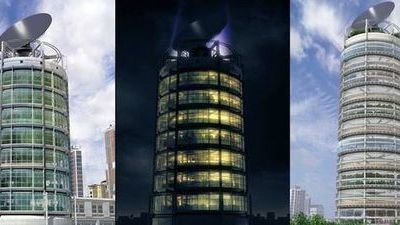
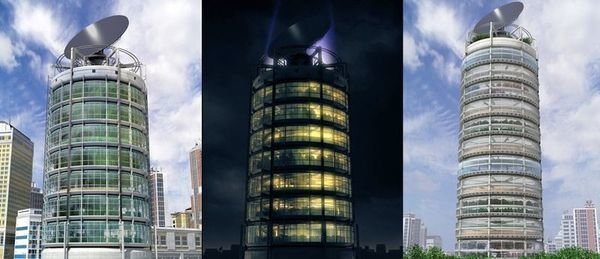
Vertical farming is a proposed agricultural technique involving large-scale agriculture in urban high-rises or "farmscrapers". Using recycled resources and greenhouse methods such as hydroponics, these buildings would produce fruit, vegetables, edible mushrooms and algae year-round. Their proponents argue that, by allowing traditional outdoor farms to revert to a natural state and reducing the energy costs needed to transport foods to consumers, vertical farms could significantly alleviate climate change produced by excess atmospheric carbon. Critics have noted that the costs of the additional energy needed for artificial lighting and other vertical farming operations might outweigh the benefit of the building's close proximity to the areas of consumption.
Unlike traditional farming, indoor farming can produce crops year-round. All-season farming multiplies the productivity of the farmed surface by a factor of 4 to 6 depending on the crop. With some crops, such as strawberries, the factor may be as high as 30.
Furthermore, as the crops would be sold in the same infrastructures in which they are grown, they will not need to be transported or refrigerated between production and sale, resulting in far less spoilages and infestations than conventional farming encounters. Research has shown that 30% of harvested crops are wasted due to spoilage and infestations.
Dr. Despommier, the developer of the idea, suggests that, if dwarf versions of certain crops are used (e.g. dwarf wheat developed by NASA, which is smaller in size but richer in nutrients), year-round crops, and "stacker" plant holders are accounted for, a 30-story building with a base of a building block (5 acres) would yield a yearly crop analogous to that of 2,400 acres of traditional farming.
- From the Wikipedia article.

The Issue
Vertical farming is a proposed agricultural technique involving large-scale agriculture in urban high-rises or "farmscrapers". Using recycled resources and greenhouse methods such as hydroponics, these buildings would produce fruit, vegetables, edible mushrooms and algae year-round. Their proponents argue that, by allowing traditional outdoor farms to revert to a natural state and reducing the energy costs needed to transport foods to consumers, vertical farms could significantly alleviate climate change produced by excess atmospheric carbon. Critics have noted that the costs of the additional energy needed for artificial lighting and other vertical farming operations might outweigh the benefit of the building's close proximity to the areas of consumption.
Unlike traditional farming, indoor farming can produce crops year-round. All-season farming multiplies the productivity of the farmed surface by a factor of 4 to 6 depending on the crop. With some crops, such as strawberries, the factor may be as high as 30.
Furthermore, as the crops would be sold in the same infrastructures in which they are grown, they will not need to be transported or refrigerated between production and sale, resulting in far less spoilages and infestations than conventional farming encounters. Research has shown that 30% of harvested crops are wasted due to spoilage and infestations.
Dr. Despommier, the developer of the idea, suggests that, if dwarf versions of certain crops are used (e.g. dwarf wheat developed by NASA, which is smaller in size but richer in nutrients), year-round crops, and "stacker" plant holders are accounted for, a 30-story building with a base of a building block (5 acres) would yield a yearly crop analogous to that of 2,400 acres of traditional farming.
- From the Wikipedia article.
Petition Closed
Share this petition


Petition Updates
Share this petition
Petition created on January 28, 2010