
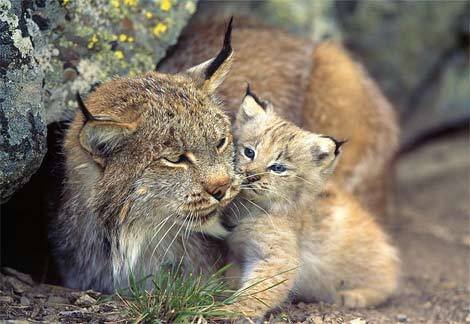
Help Save the Lynx
The Issue
Big cats such as the Lynx Canadensis have been listed as a threatened species under the Endangered Species Act, however, unfortunately no one knows how many of the cats remain in the United States. Confirmed populations exist only in Maine, Minnesota, Montana, Washington and Wyoming, and the cat was recently re-introduced into Colorado.
Research indicates that the Lynx have specific habitat needs. They prefer what biologists call “ dense horizontal cover.” That is, a mess, a thicket, a dense copse of trees and brush likely to harbor snowshoe hares. While these places are not hard to find, they are scattered and patchy because much of the habitat has for decades been managed for timber production, which translates into a lot of chainsaws and roads. The big threat facing big cats today comes not from the logging but from the residential development of timberland.
While Lynx are tough and efficient hunters, their needs are precise: high elevation forests with thick strands of mixed conifers, usually spruce and fir.
A narrow habitat tolerance and an ever-narrowing habitat make for a grim combination.
Urge your elected officials to work on legislation which would prevent the residential development of timberland in certain natural habitats where the lynx live.

Petition Closed
The Issue
Big cats such as the Lynx Canadensis have been listed as a threatened species under the Endangered Species Act, however, unfortunately no one knows how many of the cats remain in the United States. Confirmed populations exist only in Maine, Minnesota, Montana, Washington and Wyoming, and the cat was recently re-introduced into Colorado.
Research indicates that the Lynx have specific habitat needs. They prefer what biologists call “ dense horizontal cover.” That is, a mess, a thicket, a dense copse of trees and brush likely to harbor snowshoe hares. While these places are not hard to find, they are scattered and patchy because much of the habitat has for decades been managed for timber production, which translates into a lot of chainsaws and roads. The big threat facing big cats today comes not from the logging but from the residential development of timberland.
While Lynx are tough and efficient hunters, their needs are precise: high elevation forests with thick strands of mixed conifers, usually spruce and fir.
A narrow habitat tolerance and an ever-narrowing habitat make for a grim combination.
Urge your elected officials to work on legislation which would prevent the residential development of timberland in certain natural habitats where the lynx live.


Petition Updates
Share this petition
Petition created on December 4, 2009