
Richard RatcliffeLondon, United Kingdom
Jul 27, 2016
Lots of you have asked what is the UK doing?
There have of course been a number of distractions in UK politics with Brexit and its fallout. Even with near 800,000 signatures and being on every national news, I have struggled to break into the Westminster bubble. My parents in Fleet have taken over 100 days even to get a meeting with their MP.
For Nazanin, the effect has been a kind of placebo politics – prescriptions without clear political attention needed for substance. Nazanin’s case was not raised by a Minister between mid-May and early July, raised by a Minister only before they needed to make a statement in Parliament.
Foreign Office staff have shown a sincere care for Nazanin, professional and kind. But it is some of the policy priorities that have been confusing, for me and my relatives.
Particularly strange has been the quietness. No British politician has ever criticised the Iranian actions. On Nazanin’s 100th day, the Foreign Secretary was invited to condemn Iran’s actions in Parliament – when the Revolutionary Guard had openly admitted to holding a British mother and baby hostage. He chose not to.
I wonder if keeping quiet really saves face - it seems a misreading of how honour works. It seems misplaced given Iranian paranoia, where failure to react often fuels suspicion. And encouraging families to stay quiet while their relatives are framed risks doing the Iranian authorities’ job for them.
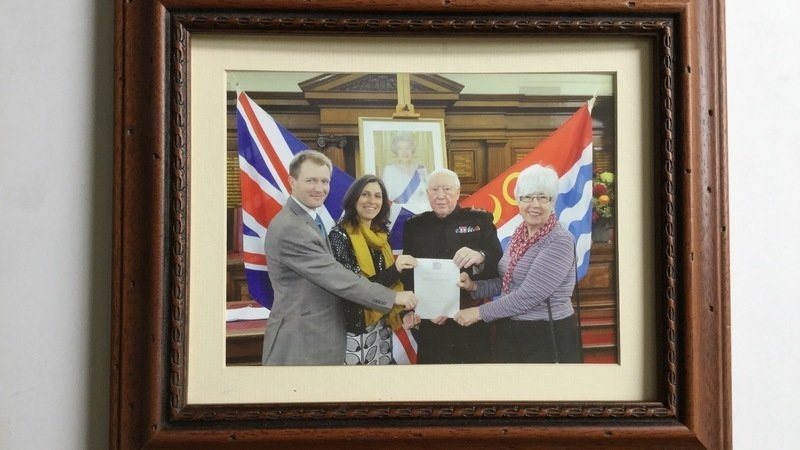
Also strange has been the emphasis by Ministers on Nazanin’s ‘dual’ nationality, that we should understand Iran’s position. Nazanin has full British citizenship (see picture) – no less British than Gabriella or me. It is a legal loophole that the Iranian authorities use to hold her – not least because Iranian citizenship can’t be revoked. This would have been known this last year when we reopened our Embassy and were negotiating consular access while other cases were ongoing.
But there is nothing dual about Nazanin’s detention – she was initially taken because of her links to British media charities, she is held as a hostage because her British passport makes her and Gabriella collateral. No other reason why the Iranian authorities took Gabriella’s passport. No obvious reason why the UK has never asked for it back.
The UK has chosen to do less than other countries. US travel advice to Iran has since March warned that it is not safe for dual nationals, while we were still actively promoting it. The Canadian Foreign Minister met the family of Homa Hoodfar within a few weeks. The Foreign Affairs committee in the US House of Representatives issued a bipartisan resolution calling on Iran to release the US prisoners held without charge. When their charges came along with Nazanin’s, the US denounced their unjust detention and called for an immediate release. Our government’s public response was to request more information.
This choice contrasts with how the UK reacted when its Embassy staff were taken in 2009. Then a EU-wide declaration was organised, that arbitrarily detaining one European citizen was an attack on all.
The other strangeness is the approach to limited communication. The Foreign Office has a hostage team, who do typically provide weekly meetings and updates in other cases. Nazanin’s case has not been transferred there, Iran cases are dealt with by regular consular affairs. Despite their experience, they have never shared their strategy for getting Nazanin out. Of all the rights violated (arbitrary detention, lawyer, Gabriella’s right to her mother, freedom from torture), the one highlighted in letters is Nazanin’s right to data protection.
Of course diplomacy is a private business, preferring Iran to get its own house in order, and I only know what I am being told. But there is something else to these different standards.
The UK has transformed the Foreign Office in recent years as part of the refashioning of government under austerity. Staff in the commercial department have significantly increased, consular affairs is creaking. Nazanin and the other prisoners notwithstanding, Iran is a big opportunity for corporate appetites - the biggest emerging market for a generation. The UK has been manoeuvring to get its share. A reluctance to criticise is aligned with these corporate interests.
So on its last day, Mr Cameron’s government was still promoting corporate deals with Iran – in private. While we were delivering our 100 day letters to Downing St, the government was quietly hosting Iranian ministerial trade missions with the then Energy Minister (now Home Secretary) and Britain’s Trade Representative. Other missions are being discreetly planned. Inevitably attention for Nazanin is set against the power of money.
Fortunately the new government offers different priorities. Within days, UK travel advice to Iran was changed – finally acknowledging the risks to dual nationals of arbitrary arrest. Last week the Iranian press reported that UK officials had called for the Nazanin’s release and pushed for consular access to Nazanin, if refused on grounds of sovereignty. There are new positive signals in other family’s cases.
That keeps us hopeful.
Support now
Sign this petition
Copy link
WhatsApp
Facebook
Nextdoor
Email
X