
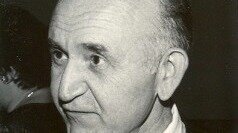
Understanding World War II Context: The 14th Waffen-SS "Galicia" Division
To judge Peter Savaryn's wartime service, it is crucial to remember the complex context Ukrainians faced. In 1943, Germany formed the 14th Waffen Grenadier Division of the SS (1st Galician) primarily from volunteers in western Ukraine. These recruits were overwhelmingly motivated by anti-Soviet sentiment and a hope for Ukrainian self‑determination, not by an embrace of Nazi ideology. Indeed, historians note that "the most common motivation for Ukrainian volunteers" was the belief that the unit could eventually become a Ukrainian national army fighting for independence. The Galicia Division did fight under German command – but its purpose was to resist Soviet troops, not to implement the Holocaust. (In fact, veterans' training included only minimal Nazi political indoctrination.)
The Galicia Division's record is controversial. It has been accused of committing atrocities in Poland in 1944 (e.g. at Huta Pieniacka) – allegations that scholars continue to debate. But no evidence ever tied Peter Savaryn himself to any war crimes. After the war, all Galician soldiers were thoroughly screened by the Allies and later by Canada's authorities. When Canada's Deschênes Commission (1985–86) investigated alleged war criminals, it "found no evidence" of specific crimes by members of SS Galicia. The Commission explicitly concluded that "charges of war crimes … have never been substantiated" for any member, and that "mere membership in the Galicia Division is insufficient to justify prosecution". In short, participation in the unit – in itself – did not legally make Savaryn a criminal. He was never charged, and no credible historical source ever identifies him in any atrocity.
The Galicia Division's record is controversial. It has been accused of committing atrocities in Poland in 1944 (e.g. at Huta Pieniacka) – allegations that scholars continue to debate. But no evidence ever tied Peter Savaryn himself to any war crimes. After the war, all Galician soldiers were thoroughly screened by the Allies and later by Canada's authorities. When Canada's Deschênes Commission (1985–86) investigated alleged war criminals, it "found no evidence" of specific crimes by members of SS Galicia. The Commission explicitly concluded that "charges of war crimes … have never been substantiated" for any member, and that "mere membership in the Galicia Division is insufficient to justify prosecution". In short, participation in the unit – in itself – did not legally make Savaryn a criminal. He was never charged, and no credible historical source ever identifies him in any atrocity.
Official Inquiries and Apology
In October 2023, Canada's Governor General publicly expressed "deep regret" for having honoured Savaryn decades earlier, acknowledging the mistake in limited wartime information. Rideau Hall issued an apology, noting that historical honours reflected "a specific moment in time" and incomplete archives. But it is essential to distinguish two very different issues. On the one hand, the apology was appropriate once Savaryn's SS service became widely known. On the other hand, the Deschênes Commission from 1986 – Canada's own inquiry – had already cleared Savaryn of wrongdoing long before any accolades were in question. The Commission studied witnesses and archives and concluded that no charges could be sustained against Galicians for war crimes. In particular, it determined that "in the absence of evidence of participation in or knowledge of specific war crimes, mere membership … is insufficient to justify prosecution". There is still no evidence that Savaryn knew of or took part in any criminal activity, and neither survivors nor records implicate him in any way.
Canada has shamed itself for unwittingly honouring Galician veterans, but that is a separate mistake from Savaryn's own record. In reviewing Savaryn's case, officials found only that he had served in that division, nothing more. In fact, as one petition notes, he was "thoroughly vetted by Allied authorities after WWII and again by Canadian officials, including the Deschênes Commission," which found no evidence of crimes. None of Savaryn's Canadian honours (Order of Canada 1987, Golden and Diamond Jubilee medals) has ever been shown to relate to any wartime offence. His Order of Canada was rightly terminated in 2017 by law (upon his death), but not as a judgment of guilt – simply because posthumous removal is not allowed.
Peter Savaryn's Contributions to Canada
Savaryn's legacy lies overwhelmingly in his 70+ years of public service in Canada, not in a short stint as a teenage conscript in a desperate wartime unit. After emigrating in 1949, he completed law school in Edmonton and became a prominent attorney. He and his wife, Olga, raised a family, and he built a lifetime of civic leadership. Among his many accomplishments:
Education and Culture: Savaryn helped introduce Ukrainian-language instruction in Alberta schools and at the University of Albertaualberta.ca. His efforts led to bilingual immersion programs, the Ukrainian Cultural Heritage Village museum, and – most notably – the Canadian Institute of Ukrainian Studies (CIUS) at the University of Alberta. In a 2017 CIUS memorial, colleagues called Savaryn "one of the founders and leading lights of the Institute," who made a "significant contribution to the Ukrainian and Canadian communities."
Academic Leadership: He served as Chancellor of the University of Alberta (1982–86), guiding the university's governance and championing multiculturalism on campus.
Community and Politics: Savaryn was a founding member of Alberta's Ukrainian Cultural Heritage Council, co-chaired initiatives like the first Canadian Holodomor memorial in Edmonton (1983), and even became president of the Progressive Conservative Association of Alberta. From 1983 to 1988, he was president of the World Congress of Free Ukrainians, an international organization promoting Ukrainian culture and human rights.
Honours: In recognition of these services, he was awarded an Honorary Doctor of Laws (U of A, 1987) and appointed to the Order of Canada in 1987 for "exceptional contributions to the community". He also received Canada's Golden and Diamond Jubilee medals. (In 2023, the Governor General expressed regret over the Order of Canada appointment, but crucially did not accuse Savaryn of crimes – only of the oversight of wartime vetting.)
These facts are uncontested. For decades, Edmonton and the Ukrainian-Canadian community knew Savaryn as a dedicated lawyer, educator, and philanthropist. The City of Edmonton chose Savaryn Drive in 2007 precisely to honour these contributions to Ukrainian-Canadian heritage. City records show the street name was requested by a local charity, and at the time, "city officials were not aware of Savaryn's military history. The name was chosen … to honour his contributions to Ukrainian heritage and culture". Neighbours have noted that until recently, they knew nothing of any controversy – they knew Peter Savaryn only as the man who helped build and enrich their community.
Debunking Propaganda and Misconceptions
Much of the current uproar stems from conflating anti-Soviet Ukrainians with hardcore Nazis – a conflation that has long been pushed by propaganda. Soviet and now Russian state propaganda have repeatedly portrayed all Ukrainian nationalists or independence-seekers as "Nazis," ignoring nuance. For example, the RAND Corporation notes that Russian leaders explicitly repeat narratives that Ukraine is "overrun by Nazis" who must be "denazified". This trope is a powerful but false tool to discredit Ukrainians. In reality, Ukrainian nationalist fighters (like the postwar insurgent UPA) opposed both Nazi and Soviet oppression. Many Ukrainian SS-Galicia veterans later fought in Western armies or became staunch anti-communists, not ideologues of Hitler.
Even Jewish organizations, which rightly spotlight Nazi crimes, have been mischaracterized. Friends of Simon Wiesenthal Center policy director Jaime Kirzner-Roberts warned that accusing Jewish critics of echoing "Russian disinformation" is "absurd and offensive," noting that Jewish groups have "stood firmly with Ukraine" against aggression. In other words, calling Savaryn's defenders "Russian stooges" is itself a smear rooted in conspiracy. The truth is that most Ukrainian Canadians do condemn Nazism and Holocaust atrocities. The problem arises when a few voices celebrate any soldier who happened to serve in an SS unit – something most Ukrainian veterans themselves never claimed to honour.
It is also dangerous to equate all 14th SS veterans with genocidal intent. The Deschênes Commission found no substantiated evidence of war crimes by any Galicia members. As one petition reminds us, Savaryn should be seen as "a displaced young man who survived impossible choices in WWII and built a life of service in Canada", not as a stereotyped villain. We must judge him on the full historical record, not on a single "wartime footnote."
Responding to Recent Criticism
Some critics have bluntly called Savaryn a "Nazi, plain and simple," and pointed to his SS oath and division's crimes. But their arguments selectively highlight the worst aspects of the Galicia Division while ignoring context and evidence. It is true, Savaryn, like others, took an oath to Hitler in 1944 and fought under German officers. But again, for Savaryn personally, there is no proof of ill intent or murderous action. The Deschênes Commission – a complete legal inquiry – explicitly noted that every single Galicia veteran was screened twice and that no war-crime charges were substantiated. In Canadian archives, Savaryn's name never appears as a suspect or defendant.
Moreover, critics sometimes imply that the Ukrainian community glorifies Nazism if it defends Savaryn Drive. This is misleading. In fact, Ukrainian Canadians overwhelmingly condemn fascism; they honour as heroes those who fought the Nazis alongside the Allies (some 40,000 Ukrainian Canadians served in Allied forces in WWII). The Wisenthal Centre itself recognizes that conflating patriotic anti-Soviet fighters with SS criminals is unjust. In recent media, the Centre's experts have stressed that distorting history to accuse all Ukrainian veterans of genocide plays into precisely the disinformation narratives spread by Russia.
Even within the criticism, one finds nuance. For example, journalist Tyson Gold (writing as Tim Ryan) notes that Savaryn and famed Nazi-hunter Simon Wiesenthal came from the same town and school in prewar Poland – a fact that only underscores the shared tragedy of that era, not a justification to smear Savaryn. Wiesenthal’s family suffered from Ukrainian nationalist violence during the war; this history makes it especially painful for Wiesenthal groups to see any former SS soldier honoured in Canada. But human beings, especially teenagers in a war zone, are rarely purely one thing or another. To paint Savaryn’s entire life by one element (his 17‑year‑old self’s military service) is not a fair or nuanced approach.
The better approach – and what historical justice demands – is full context. The petitioners rightly urge: recognize Savaryn’s “70 years of civic service,” not just his brief wartime youth. Educators suggest plaques or educational materials to explain the complex history, instead of simply erasing a name. After all, history is never just black and white. We can condemn the atrocities of Nazi Germany and acknowledge that Savaryn’s personal record, as examined by Canadian and Allied authorities, showed no participation in those crimes.
Savaryn’s Canadian Legacy Deserves Recognition
Peter Savaryn’s story, at its heart, is one of immigration and contribution. For seven decades, he exemplified Canadian values of hard work, multiculturalism, and community-building. His career – law practice, university governance, cultural promotion – improved life for Edmontonians and all Canadians. To honour that legacy, thousands of Edmonton residents still live on Savaryn Drive today. Almost all learned only recently that Savaryn's SS past; they remember that the street was named in good faith to recognize his positive impact.
Renaming the street now, after all these years, would erase a carefully considered part of local history. It would also reward intimidation by well-funded outside groups instead of upholding Edmonton's own rules, which require a formal process for renaming (75% of neighbours petition for a change), which has not occurred here. And importantly, a uniform rush to rename anything connected to the Galicia Division would send a chilling message to many older Ukrainian Canadians whose families also made painful choices in wartime. We should be careful not to rewrite or sanitize history, but to understand it.
Call to Action: If you agree that Savaryn Drive’s naming should stand as a testament to Peter Savaryn’s contributions – with full historical context – please voice your support. Hundreds of citizens have already signed the “Protect Historical Truth: Keep Savaryn Drive” petition, urging Edmonton’s City Council to retain the name. We encourage you to read the petition (which highlights the Deschênes Commission findings and Savaryn’s achievements) and add your name. Ask your municipal representatives and community leaders to recognize Savaryn’s legacy in full and to resist calls that obscure nuanced history. Together we can ensure that our public honours are guided by facts and fairness – remembering Peter Savaryn as the community leader he was, not reducing him to a single chapter of war.