
Introduction
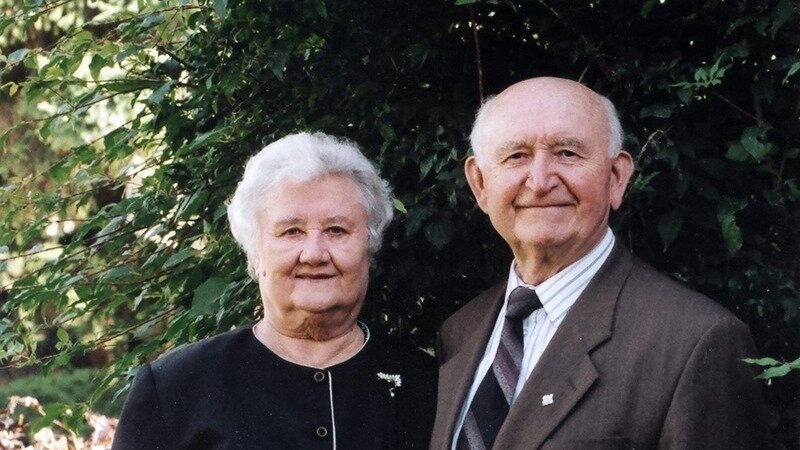
A wave of misinformed accusations has shaken public discourse, casting unwarranted suspicion on Savaryn’s legacy and that of his WWII comrades. Two essays by independent researchers have dissected these accusations and provided crucial context. Their findings reinforce our broader message: we must insist on historical accuracy and nuance, and pursue public reconciliation rather than division. This update builds on our earlier statement and incorporates recent analyses by independent researchers and essayists (notably from agasfer1326 on LiveJournal and lubomyrluciuk from substack.com). Their work provides important clarifications in the public debate about the Galicia Division and figures like Peter Savaryn. We invite all readers – from community members to Canadian officials, media, the Ukrainian diaspora, and academic historians – to consider the evidence and join us in advocating for reasoned public discourse over inflamed rhetoric.
The Galicia Division: Origins and Purpose
Contrary to many misconceptions, the Galicia Division was established exclusively as a front-line combat unit toward the end of the Second World War. The official terms of its creation clearly stated that:
· It would be deployed only on the Eastern Front.
· It would not be engaged on the Western Front.
· It would not participate in repressions against the civilian population.
As an exception to the common practices of both the SS and Waffen-SS, the Galicia Division was unique in that it had military chaplains, underscoring its character as a national unit rather than an ideological one. Training was entirely in line with conventional army standards: combat tactics, handling of light and heavy weaponry, anti-tank defense, communications, and combat engineering.
It is also important to recall that many ethnic Ukrainians who later served as officers in the Division had already fought honorably in the Polish Army during 1939, defending Poland from both Nazi Germany and Soviet aggression.
One prominent example is General Pavlo Shandruk (born in Volyn). His record illustrates the character of many Division officers:
· Served as a staff captain in the Russian Imperial Army during WWI.
· Joined the Army of the Ukrainian National Republic (rank: major).
· Emigrated to Poland in 1920, where he became a contract officer in the Polish Army (rank: lieutenant-colonel).
· Fought in the Polish campaign of 1939 against both Nazi and Soviet forces, was wounded and taken as a POW.
· In 1945, he became commander of the Division, transforming it into the 1st Division of the Ukrainian National Army.
· For his bravery in 1939, the Polish government-in-exile awarded him the Virtuti Militari in 1965, Poland’s highest military decoration.
This history directly contradicts the notion that Galicia Division officers were motivated by Nazi ideology. Rather, many were experienced soldiers who had already demonstrated their loyalty in defending Poland and Ukraine against aggression from both totalitarian regimes.
Key Arguments from New Analyses
Recent analyses have highlighted how certain narratives surrounding the Galicia Division (also known as the 14th Waffen-SS “Galicia” Division) and figures like Peter Savaryn have been distorted. Below we summarize the key arguments from two public essays (September 2021 and June 2024) that address these issues:
· Lack of Evidence Behind Accusations: The first essay critiques sensational claims made in the media about Ukrainian WWII figures. For example, a 2021 CBC article accused Roman Shukhevych – a leader in Ukraine’s anti-Nazi, anti-Soviet resistance – of war crimes without presenting any credible evidence. In fact, Shukhevych was never declared a war criminal by any tribunal, and no documented proof of such crimes has ever surfaced. Labeling him (or by extension, veterans like Peter Savaryn) as a “Nazi collaborator” absent compelling evidence is slanderous and ahistorical. The essay notes that even institutions like Yad Vashem confirmed they hold no secret “dossier” proving Shukhevych’s involvement in Holocaust atrocities – contrary to rumors spread in the press. This underscores a broader problem: accusations have been levied in public discourse without the factual documentation to back them up, harming reputations unjustly.
· Misrepresentation of the OUN and Galicia Division: The essays clarify the relationship between the Ukrainian independence movement and the German forces in WWII. It is often alleged that the Organization of Ukrainian Nationalists (OUN) “aligned itself with Nazi Germany” and was a progenitor of the Galicia Division. In reality, the OUN (Banderite faction) was categorically opposed to the formation of the SS “Galicia” Division at the outset. By spring 1943, when the Division began forming, the OUN itself had been persecuted and banned by the Nazis. Only later, under desperate wartime circumstances, did the OUN send some of its members to infiltrate the Division – not to embrace Nazi ideology, but to acquire military training and weapons for the Ukrainian cause. Subsequent events vindicated this strategy: an estimated 3,000–4,000 soldiers (mostly young Ukrainian conscripts) defected from the Galicia Division to join the Ukrainian Insurgent Army (UPA), which was still fighting against German forces in 1944. In other words, many who joined the Division ended up turning their arms against the Nazis, driven by the goal of defending Ukraine from both totalitarian regimes (Nazi and Soviet). Portraying the entire Division as “Nazi collaborators” ignores this complexity and the anti-Nazi resistance of its members.
· Refuting False Atrocity Allegations: The essays also address specific war-crime allegations that have been unfairly pinned on the Galicia Division. A prominent example is the 1944 Huta Pieniacka massacre in Nazi-occupied Poland – a horrific crime in which villagers (mostly Polish Catholics) were slaughtered. Some commentators have blamed this atrocity on the 14th Galicia Division, citing Soviet-era narratives. However, detailed historical research shows this is a case of mistaken attribution. The massacre was actually carried out by German Ordnungspolizei units (SS police regiments 4 and 5, nicknamed “Galizien”) which, while composed partly of Ukrainian auxiliaries, were not under the Galicia Division’s command. These police units took orders directly from German SS and SD officers, not the Division’s leadership. The frontline Galicia Division was not present at Huta Pieniacka, and had no connection to the crime. It was in fact Soviet propagandists who later conflated the names to shift blame onto the Ukrainian Division. The essay’s author, citing Polish historian Grzegorz Motyka, makes clear that attributing Huta Pieniacka to the Division is a historical error. This correction is crucial: we must not condemn Peter Savaryn or any veteran for atrocities they had no part in. Collective guilt based on false or convoluted evidence is both unjust and corrosive to historical truth.
· Context of Soviet and Nazi Collaboration: Another key argument from the essays is the need for broader historical context. Accusations of “Nazi collaboration” have been aimed at Ukrainians without acknowledging the cynicism of WWII allegiances. The first essay starkly notes that if one tallied all “Nazi collaborators,” one would have to include virtually every citizen of the Soviet Union – since the USSR itself was an official ally of Nazi Germany from 1939 until 1941 (per the Molotov–Ribbentrop Pact). During those years, the Soviet regime supplied Hitler with resources and even congratulated Nazi leaders on their conquests. This historical fact does not excuse any genuine collaboration in crimes, but it reveals the double standard: Soviet propaganda readily demonized Ukrainian nationalists as “fascists” while obscuring its own collaboration with the Nazi regime. The lesson is to avoid one-sided narratives. Many Ukrainians in WWII were fighting a two-front battle for survival – against Hitler’s genocide and Stalin’s tyranny. The essays urge readers to remember that Ukraine’s independence fighters and Jewish Holocaust survivors alike were victims of both totalitarian systems. This nuanced understanding is essential for accuracy and fairness.
· The Danger of Slander and Disinformation: The second essay, pointedly titled “Slander Quakes Everything and Wobbles the Globe,” examines how unfounded allegations can snowball into international incidents. It uses the recent Yaroslav Hunka affair as a cautionary tale. In September 2023, Hunka – a 98-year-old Canadian Ukrainian who, like Savaryn, served in the Galicia Division as a young man – was honored in Parliament, only to be vilified globally as a “Nazi war criminal” once his unit affiliation became known. The essay reveals how this narrative spiraled without evidence: no court or commission ever found Hunka guilty of any war crime, yet suddenly even the International Criminal Court (ICC) was being invoked against him. In a dark irony, the loudest accuser was Russian President Vladimir Putin, who used the incident to claim moral outrage while himself being accused of grievous war crimes in Ukraine. The essay cites the famous line from The Barber of Seville – “calumny (slander) is a little breeze” – to describe how a whisper of accusation grew into a global hurricane. It argues that Russian propagandists deliberately fanned the flames, feigning concern for Holocaust remembrance while actually sowing discord. The goal of such disinformation campaigns is clear: to drive a wedge between Ukrainians and Jews (and their allies), and to undermine Western unity in the face of Russian aggression. This context is critical for Canadians: some of the outrage over Ukrainian veterans has been orchestrated or amplified by those who seek to divide our society. We must be vigilant not to become unwitting participants in a disinformation war. In short, slander is a weapon – and the best defense against it is verified truth.
These key points from the essays reinforce why this petition exists. Peter Savaryn’s name and the Galicia Division’s history have been entangled in a web of misinformation. By understanding the historical facts and the tactics of propaganda, we can begin to clear that web and see a more truthful picture.
Reaffirming Established Historical Facts
Beyond these new analyses, it’s important to remember that extensive scholarly and legal inquiries have already examined the Galicia Division and individuals like Peter Savaryn. Their conclusions, spanning decades of research, strongly support our defense. We summarize those findings below:
· Allied Vetting and Postwar Screening: Every member of the Galicia Division who resettled in the West was thoroughly vetted by Allied authorities after World War II. Peter Savaryn himself was among approximately 2,000 Division veterans screened and cleared by British and Canadian officials to immigrate to Canada. In fact, these men were initially held as prisoners of war in 1945–46 and investigated for any involvement in war crimes. They were explicitly screened by the British, Americans, and Canadians – even the Soviets had input – and no charges were laid. By 1950, Canada agreed (in cooperation with Britain) to admit these Ukrainian veterans as immigrants in good standing. The Canadian High Commissioner in London at the time, Lester Wilgress, investigated protests and reported to Ottawa that allegations against the Galicians were “nothing but Communist propaganda” – noting pointedly that “no specific charges of war crimes have been made” by any government against any member of the group. In sum, Savaryn and his comrades came to Canada legally, with the full knowledge and approval of our government, because exhaustive screening found no evidence of wrongdoing. They became proud Canadian citizens, and many (like Savaryn) went on to serve Canada with distinction in civilian life. This historical record is a strong testament to their integrity.
· Deschênes Commission Conclusions: In the 1980s, amid renewed allegations of “Nazi war criminals in Canada,” the government established the Commission of Inquiry on War Criminals headed by Justice Jules Deschênes. This inquiry revisited the Galicia Division’s case in scrupulous detail. The Deschênes Commission unequivocally concluded that the Galicia Division should not be indicted as a group for war crimes. Justice Deschênes found no evidence of any war crimes committed by the Division as a unit, nor any basis to bring charges against its members en masse. His report stated that “mere membership in the Galicia Division is insufficient to justify prosecution.” In other words, being a soldier in that Division was not a crime, and Canada would not tarnish someone’s reputation or revoke their citizenship solely for that service. Importantly, the Commission noted that multiple efforts were made to uncover any incriminating evidence – including outreach to renowned Nazi-hunter Simon Wiesenthal for a list of suspected war criminals. The result? Nothing but unsubstantiated names. The list of 217 ex-division members provided to Canadian investigators proved completely useless, yielding no actionable proof of guilt. As the Commission reported, this wild-goose chase consumed considerable time but ultimately confirmed the absence of evidence. These findings have been publicly available since 1986, yet today they are too often ignored. We echo Justice Deschênes’s verdict: membership in the 14th Waffen-SS “Galicia” Division, in and of itself, imputes no criminality. There is no dishonor in Peter Savaryn’s war record – he, like thousands of others, was cleared by one of the most thorough war-crimes inquiries Canada has ever conducted.
· Insights from Historical Scholarship: Distinguished scholars of Ukrainian and Holocaust history have also weighed in on this issue, urging nuance and fairness. Professor Lubomyr Luciuk (Royal Military College of Canada), a leading expert on Eastern European political history, served as an advisor during the Deschênes Commission and has studied Soviet disinformation campaigns. He emphasizes that young Ukrainians like Hunka and Savaryn did not join the Galicia Division out of Nazi sympathies. “They joined this military unit to defend their homeland, to fight against the Soviets, whom they’d already experienced once,” Dr. Luciuk explains. These men “weren’t pro-Nazi, they weren’t anti-Semitic and they didn’t indulge in war crimes”. Luciuk also points out that many of the accusations resurfacing now are not new at all – they mirror a Soviet KGB campaign known as “Operation Payback” that aimed to smear the Ukrainian diaspora in the 1980s. The Soviet playbook was to brand dissidents and freedom-fighters as fascists, and unfortunately that propaganda has had a long afterlife. The 1980s commission saw through it: the allegations against the Division were found to be unfounded. Another respected historian, Prof. Paul Robert Magocsi of the University of Toronto, recently reaffirmed the scholarly consensus. In an open letter, Magocsi stated “there is simply no evidence that the Galicia Division participated in war crimes related to the Holocaust against Jews or ethnic cleansing against Poles.” He warned that it is not in Canada’s interest for politicians or media to “distort the historical past and disgrace a person’s reputation in order to gain some perceived advantage”. We wholeheartedly endorse this view. Academic research – including work by Jewish and Polish scholars – acknowledges that while individual Ukrainians (as in any nation) did commit crimes during the war, the collective vilification of the Galicia Division or Ukrainian nationalist movement is historically inaccurate. It serves only to inflame and mislead. No mainstream historian today disputes the fact that Ukrainians were victims of both Nazi genocide and Soviet repression, and that many who joined units like the Galicia Division did so primarily to oppose Stalin’s forces after experiencing Soviet atrocities in 1939–41. This context is vital in judging their actions.
· No Evidence Against Peter Savaryn: Crucially, nothing in the historical record suggests that Peter Savaryn – or the vast majority of his fellow Division veterans – ever committed any atrocity. Savaryn was 18 years old when he fought in the final year of the war; by all accounts, his service involved battling the Red Army on the front lines, not harming civilians. After the war, he lived under Allied scrutiny in a POW camp, then built a new life in Canada. In over 70 years of public life here, not a single credible allegation of war criminality was ever made against him. Indeed, Savaryn was honored by Canada – he served as Chancellor of the University of Alberta, led the World Congress of Free Ukrainians, and in 1987 was awarded the Order of Canada for his contributions. To now tarnish this record based on his youthful wartime affiliation – an affiliation thoroughly investigated and cleared by the proper authorities – is patently unjust. As Dr. Luciuk argues, guilt by association has no place in a nation of laws: “If there’s evidence – credible, compelling evidence – that an individual committed a war crime, put it before the authorities… and if it merits it, proceed with prosecution”. Otherwise, insinuations and conjecture should cease. We stand on the principle that innocence must be presumed unless proven otherwise. In the case of Peter Savaryn and his Division, all available evidence – historical, scholarly, and legal – indicates innocence. There is nothing to prosecute, only a legacy to defend.
A Call for Historical Accuracy, Nuance, and Reconciliation
As we confront these sensitive issues, our message is one of unity and understanding. We appeal for a measured, fact-based public discourse moving forward. This means acknowledging the full complexity of history and resisting the impulse to reduce it to black-and-white labels.
First and foremost, we call on media outlets and public figures to handle this subject with the care it deserves. The recent frenzy, fueled by phrases like “Nazi veteran” in headlines, has done a disservice to the truth and to community relations. We urge journalists and commentators: consult the historical record before casting accusations. Sensationalism around terms like “SS” may grab attention, but context is crucial – as noted, the Nuremberg Trials did not condemn the Galicia Division by name, and subsequent investigations exonerated its members as a group. Reporting should reflect these facts. Inflammatory rhetoric not only misleads the public, it also deeply wounds families and communities who have already suffered from war and persecution. We can be honest about history without resorting to caricatures.
Secondly, we emphasize the importance of historical nuance. World War II in Eastern Europe was extraordinarily complex. Ukrainians found themselves caught between Hitler and Stalin – two murderous regimes bent on destroying their nation’s freedom. In such a hellish environment, choices were not always clear-cut. Many Ukrainians, including those in the Galicia Division, made choices not out of hate, but out of a desperate hope to defend their homeland from one occupier by fighting alongside the enemy of that occupier. This did not make them champions of Nazi ideology. In fact, as we have shown, many ended up fighting against the Nazis anyway, or simply trying to keep their people alive in a war not of their making. We must avoid judging these people with the luxury of hindsight while ignoring the dire context they faced. We must also distinguish between the different tiers of responsibility: the architects of Nazi genocide (who must be condemned unequivocally) versus rank-and-file conscripts or volunteers who never participated in war crimes. All Ukrainians of that generation, like all Europeans, carry the moral burden of that war’s legacy – but it is plainly wrong to equate the oppressed with the oppressor.
Most importantly, we call for public reconciliation rather than division. The controversies of recent months have at times pit communities against each other – Ukrainian Canadians feeling stigmatized, Jewish Canadians feeling offended, Polish Canadians reminded of painful wartime memories. These emotions are real and understandable. However, the way forward is not to pull apart into hostile camps. On the contrary, it is to come together and seek mutual understanding. We take inspiration from those who have already reached across communal lines. For example, leaders of the Ukrainian Canadian community have been actively engaging with Jewish Canadians in dialogue. Initiatives like the Ukrainian Jewish Encounter have worked for years to bridge historical grievances with scholarship and empathy. In the wake of the Hunka incident, Ukrainian organizations expressed willingness to collaborate with Jewish and also Polish community leaders on a joint reconciliation process. We wholeheartedly support such efforts. A respected Ukrainian Canadian historian, Mr. Jars Balan, suggested convening Ukrainians, Jews, and Poles to openly discuss the wartime history and find common ground for remembrance and healing. This is exactly the kind of positive, forward-looking response that Canada should model. It acknowledges the suffering of all communities under Nazism and Communism, and seeks to ensure that historical memory is used to unite, not divide.
Reconciliation does not mean avoiding the truth or glossing over differences. It means confronting the past together, with a spirit of honesty and compassion. Ukrainians acknowledge that some from our community did terrible things during the war – and we unequivocally condemn those actions. We mourn, for instance, the Jewish victims of the Holocaust in Ukraine and the Polish victims of the Volhynia tragedy. At the same time, we ask others to acknowledge the context and the fact that millions of Ukrainians were victims too – of the Holodomor (Stalin’s man-made famine), of Soviet mass executions and deportations, and of Nazi enslavement and slaughter. In the ranks of the Galicia Division alone, thousands of young Ukrainians died fighting the Nazi German army in 1944–45, and thousands more later perished in Soviet gulags for the “crime” of having worn that uniform. Their story is part of the tapestry of WWII suffering. When we recognize everyone’s tragedies, we chip away at the distrust that feeds on historical grievances. We build empathy.
Therefore, let us move away from accusatory finger-pointing and towards a reasoned public discourse. We appeal to the Canadian government and our fellow citizens: do not let deceptive narratives “shake everything” and set our multicultural country’s groups against one another. Instead, let’s strengthen our commitment to truth and justice for all. The true lesson of these past weeks is not that Canada harbors “Nazi collaborators” in its midst – it is that Canada must remain vigilant against disinformation and knee-jerk reactions. We must take the time to get the facts right. Only then can we have a meaningful conversation about history, memory, and how to honor both the survivors and the fallen.
Conclusion and Appeal
In conclusion, we urgently call on all who have followed this issue – journalists, policymakers, educators, and community members alike – to heed the facts and principles outlined above. Peter Savaryn’s reputation, and that of many honorable Canadians like him, has been unfairly shaken by recent events. It is time to set the record straight. The historical scholarship and official findings are clear: neither Savaryn nor the Galicia Division as a whole were ever found guilty of any war crimes. There is no evidence to justify the hateful labels that have been thrown at them. We ask that Canadians of good conscience reject such labels and recognize the difference between actual Nazi war criminals and those who were thrust by history into impossible circumstances.
This is not merely about defending one man’s legacy – it is about upholding the values of fairness and truth that define Canada. If we allow unsubstantiated slander to prevail, if we permit history to be distorted for political expediency, we all suffer the consequences. We risk dividing our society and undermining the trust between communities. On the other hand, by embracing a fact-based understanding and a reconciliatory approach, we strengthen the social fabric of Canada. We demonstrate that our country can confront even the most difficult historical issues in a mature and just manner.
Peter Savaryn gave decades of service to Canada, helping build institutions and championing multiculturalism. He, and others of his generation, believed in a Canada that cherishes freedom and remembers truthfully. Let us honor that by ensuring his story is told accurately. We urge the Canadian government and media to issue clarifications that acknowledge the findings of the Deschênes Commission and the vetting of Division veterans, so that public discourse can return to facts. We also encourage educational initiatives to inform Canadians about the real history of the Galicia Division and Eastern Europe in WWII – a history that is complex, certainly, but also inspiring in its tales of survival and resistance against oppression.
Finally, to our supporters and all readers: thank you for standing with us in the pursuit of truth. In a time of tension, your reasoned voices matter. We ask you to continue sharing this message, to engage in respectful dialogue, and to advocate for historical nuance and reconciliation at every opportunity. Together, we can prevent slander from shaking our society. Together, we can ensure that justice and historical truth prevail, and that the legacy of Peter Savaryn and his peers is handled with the dignity and accuracy it deserves.