
Historical Background of the Galicia Division
The Galicia Division was established in 1943, during a period when Ukraine was caught between two totalitarian powers – Nazi Germany and the Soviet Union. Notably, Ukraine had no collaborationist government under Nazi occupation (unlike Vichy France or Quisling’s Norway). Ukrainians had already suffered terribly under Soviet rule (including the 1932–33 Holodomor famine and brutal NKVD executions in 1941), and many saw the German invasion as a chance to fight against Soviet oppression. It was in this context that local Ukrainian leaders and the German authorities agreed to form the Galicia Division as a Ukrainian military unit within the German armed forces, intended to battle the advancing Red Army.
Tens of thousands of Ukrainian men in the Galician region volunteered to join this new unit. By June 1944, the Division numbered roughly 15,000 soldiers, drawn largely from Western Ukraine’s youth and motivated by the ideal of defending their homeland. The Division’s formation was one of several non-German volunteer units in the Waffen-SS, similar to units raised among other occupied European nations (e.g. French, Latvian, Estonian anti-Soviet units). While its volunteers had to swear an oath of loyalty to Adolf Hitler as a formality required of all Waffen-SS members, this did not make them members of the Nazi party or ideologically Nazi. Indeed, in Nazi racial ideology Ukrainians were seen as “subhumans” ( Untermenschen ) and were never admitted into the Nazi Party – the term “Nazi” properly refers to members of Hitler’s National Socialist German Workers’ Party, which no Ukrainian could join.
Activities During WWII: After training, the Galicia Division was deployed to the Eastern Front. In July 1944 it fought in the Battle of Brody against the Soviet Army, suffering catastrophic losses. The roughly 4,000 survivors were regrouped and reinforced by further recruits and conscripts, and the Division was reconstituted later in 1944. The unit subsequently saw combat against Soviet-backed partisans during the Slovak National Uprising in the fall of 1944 and against Yugoslav communist partisans in Slovenia in early 1945. In April 1945, as Nazi Germany neared collapse, the Division’s Ukrainian leadership sought to nationalize the unit: on 25 April 1945 the men swore a new oath, this time to Ukraine, and the formation was formally renamed the 1st Division of the Ukrainian National Army under General Pavlo Shandruk. In early May 1945, approximately 9,000 remaining Galicia Division soldiers laid down their arms and surrendered to British forces in Austria. These prisoners of war were later transferred to a camp near Rimini, Italy, rather than being turned over to the Soviet Union (which they had fought against).
Addressing Misconceptions and Accusations
On Alleged “Nazi” Collaboration: The Galicia Division has often been unfairly labeled a “Nazi unit” due to its incorporation in the Waffen-SS. In reality, the Division’s Ukrainian members were fighting primarily against Soviet tyranny, not for Hitler’s genocidal goals. Their collaboration with German forces was born of the desperate circumstances of Ukraine in WWII – “sandwiched between two oppressive states” (Nazi Germany and the USSR) as one British inquiry later noted. These men were not Nazi ideologues; they were not members of the Nazi party, and many were driven by the hope that service on the Eastern Front might lead to Ukrainian independence or at least protect their land from Stalin’s forces. While they wore German-issued uniforms and insignia, including the Galician lion patch on their sleeves, their loyalty at heart was to Ukraine. Indeed, as mentioned, in the final days of the war they asserted this by pledging allegiance to Ukraine’s national army.
It is important to note that every soldier in the Allied and Axis armies swore oaths to their commanders or heads of state; for the Galicia Division, this meant an oath to the German Führer as required by military regulations. This act has been misconstrued as an embrace of Nazi ideology, which it was not. A military oath under coercive wartime conditions does not equate to political agreement. In fact, many Division members remained devoutly religious (mostly Ukrainian Greek-Catholic) and saw themselves as heirs to the Ukrainian Sich Riflemen of WWI or the fighters for Ukrainian sovereignty in 1918–1920 – i.e. patriots in a long struggle for national freedom, rather than instruments of fascism. Their German commanders, such as SS-Brigadeführer Fritz Freitag, did try to instill German military discipline, but could not erase the Ukrainians’ own motivations. Characterizing these volunteers as “Nazis” is a historical falsehood that ignores the nuance of their situation and the distinction between fighting alongside a regime versus fighting for its ideology.
On Allegations of War Crimes: Perhaps the most serious charges leveled against the Galicia Division concern alleged involvement in atrocities – including participation in the Holocaust or massacres of civilians (particularly Polish civilians in 1944). We address these accusations directly: no evidence has ever been found to substantiate claims that the Galicia Division as a formation committed war crimes. The Division was formed in mid-1943, well after the worst Nazi crimes against Jews in occupied Ukraine had been carried out by German SS units and local police earlier in the war. The Division had no part in the destruction of the Jewish population – for example, it did not exist yet during the 1943 Warsaw Ghetto Uprising, nor was it involved in suppressing the 1944 Warsaw Uprising of the Polish resistance. Its combat deployments were against armed opponents (Soviet regulars or partisans), not against civilian populations.
Some confusion arises from the fact that several SS police regiments (numbered 4 through 7), which were engaged in anti-partisan actions in German-occupied Poland, were at one point manned by Ukrainian recruits from Galicia and wore similar lion insignia. These police units, which operated under direct German (not Division) command, have been accused of committing atrocities in early 1944, such as the tragic massacre in the village of Huta Pieniacka. However, historical investigations have determined that those regiments were separate from the Galicia Division proper during the time in question. Only later, toward the very end of the war, were the remnants of those police formations amalgamated into the Division – and by then, any individuals implicated in crimes could be identified separately. To date, compelling evidence of criminal wrongdoing by specific individuals in those police units has not been produced, and none of those persons are believed to still be alive. In short, the blanket accusation that the Division as a whole was responsible for Nazi war crimes is not supported by the documented facts.
On the contrary, when the surviving Galicia Division troops surrendered in 1945, they came under the scrutiny of the Western Allies. While interned as prisoners, they were thoroughly vetted and interrogated by British, American, and even Soviet officers. If there had been any evidence that these men were involved in war crimes or atrocities, they would not have passed these screenings. In fact, the Allied investigations at the Rimini POW camp in 1945–46 concluded that the Galicia Division was not complicit in any war crimes. This crucial finding allowed the vast majority of these Ukrainian POWs to avoid forced repatriation to the USSR (where they would likely have faced execution or gulag) and eventually enabled them to resettle in the West as displaced persons.
Peter Savaryn’s Service and Contribution to Canada
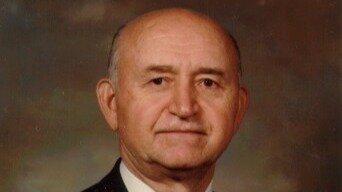
One notable veteran of the Galicia Division is Peter Savaryn (1926–2017), who after the war became a distinguished Canadian citizen. As a teenager during WWII, Mr. Savaryn volunteered for the Galicia Division and served in its ranks. When the war ended, he was among approximately 2,000 Ukrainian veterans of the Division allowed to immigrate to Canada in the late 1940s, after passing Allied security screening and with the approval of Canadian and British authorities. Peter Savaryn arrived in Canada in 1949, ready to build a new life in a free country – a country he would soon call home.
In Canada, Savaryn exemplified the values of hard work, community service, and loyalty to his adopted homeland. He earned a law degree from the University of Alberta and became a respected lawyer in Edmonton. Far from hiding any “dark past,” Mr. Savaryn was openly involved in public life. He served as Chancellor of the University of Alberta (1982–1986), one of the highest roles in that institution. He also became a prominent figure in provincial and national politics, including serving as president of the Progressive Conservative Association of Alberta and vice-president of the Progressive Conservative Party of Canada. Internationally, he was elected President of the World Congress of Free Ukrainians (now the Ukrainian World Congress) from 1983 to 1988, representing the global Ukrainian diaspora in the fight for human rights and the promotion of Ukrainian independence.
Peter Savaryn’s exemplary record of community leadership earned him some of Canada’s top honors. In 1987, he was appointed a Member of the Order of Canada, the nation’s highest civilian honor, in recognition of his contributions to Canadian society. He was also awarded honorary degrees and medals for his service. Never during his life in Canada was Mr. Savaryn charged with, or even credibly accused of, any wrongdoing in connection with his wartime service. Like all Galicia Division veterans admitted to Canada, his background had been scrutinized by immigration and security officials. The Canadian government knew exactly who these veterans were – anti-Communist Allied POWs who had been cleared of war crimes – and welcomed those like Savaryn as new Canadians in the post-war years.
It is therefore distressing and unjust that in recent public discourse, individuals such as Peter Savaryn have been smeared as supposed “Nazi war criminals” simply because of their service in the Galicia Division. These accusations ignore the extensive historical evidence to the contrary. Mr. Savaryn’s life story – from a young man making a hard choice in a brutal war, to a nation-building community leader in Canada – should be seen as a testament to the Canadian values of rehabilitation, diversity, and service, not as a cause for shame. We highlight his case to show that Galicia Division veterans became productive, law-abiding citizens, and that their legacy deserves fairness and factual understanding, not misleading slander.
Official Inquiries and Exoneration of the Division
Multiple reputable investigations have examined the wartime conduct of the Galicia Division and found no basis to hold the unit or its members collectively liable for war crimes. Key findings from these inquiries include:
Allied Military Screening (1945–1948): As mentioned, British and Allied authorities interrogated and screened members of the Galicia Division held at Rimini. They concluded that there was no evidence of complicity in war crimes by the Division’s members. Consequently, these POWs were classified as Surrendered Enemy Personnel rather than war criminals. Many were eventually allowed to immigrate to countries like Canada, the United Kingdom, Australia, and the United States. In September 1950, after the Canadian Jewish Congress raised questions about plans to admit these veterans, Canada’s High Commissioner in London consulted British intelligence. He reported to Ottawa that Soviet accusations branding the Galicians as “war criminals” or “quislings” were nothing more than “Communist propaganda”. On this advice, Canada permitted their immigration. They did so legally, with visas issued in good faith after vetting.
The Deschênes Commission (Canada, 1985–1987): In the 1980s, Canada convened the Commission of Inquiry on War Criminals, led by Justice Jules Deschênes, to investigate allegations that Nazi war criminals had entered the country. The Galicia Division was a major focus of this inquiry. After an exhaustive review of evidence and witness testimony, the Commission’s 1987 report explicitly cleared the Division as a group of any war criminal designation. The Commission’s published findings stated unequivocally that: “the Galicia Division should not be indicted as a group”; its members had been individually screened for security/war crimes before admission to Canada; charges of war crimes against members of the Division have never been substantiated (not in 1950 when first alleged, not in 1984 when re-alleged, nor before the Commission itself); and that, absent evidence of personal involvement in specific crimes, “mere membership in the Galicia Division was insufficient to justify prosecution.” These clear conclusions, reached by a respected Canadian jurist after a full inquiry, exonerated the Division’s veterans as a whole. The Commission further noted that its interpretation was consistent with international law: while the Nuremberg Tribunal declared the SS (including the Waffen-SS) a criminal organization, this applied only to persons who had knowledge of or were involved in atrocities – membership in the Waffen-SS by itself was not a punishable crime without proof of individual culpability. Upon release of the Deschênes Commission report, representatives of Canada’s Jewish community and Ukrainian community alike welcomed these findings publicly, acknowledging that justice had been served by clearing the innocent.
British War Crimes Inquiry (Hetherington–Chalmers Report, UK 1989): A parallel inquiry in the United Kingdom examined similar issues. It echoed Canada’s conclusions regarding units like the Galicia Division. The British investigators observed that no case could be made for revoking citizenship or deporting Galicia Division members, since Canadian and British authorities in 1950 had been fully aware of their backgrounds and found no wrongdoing. In other words, these men did not enter under false pretenses – their service was known and was not an impediment because it was not criminal. The UK inquiry emphasized that many people from Eastern Europe had fought with the Germans against the Soviets and were labeled “SS” or “collaborators,” but “this does not, however, make them war criminals or imply that they have done anything reprehensible, however much some media coverage may imply.” This statement underlines an important point: inflammatory labels should not replace facts. Each individual’s actions must be judged on evidence, not assumed from unit affiliations.
In sum, all official investigations to date – whether by Allied military intelligence, Canadian judges, or British commissioners – have arrived at the same verdict: the Galicia Division’s veterans as a group bear no guilt for war crimes. They were soldiers caught in a geopolitical vise, many of whom later became upstanding citizens of the free world. We urge recognizing these authoritative findings and putting to rest the calumny that the Division was a criminal or “Nazi” unit. As Justice Deschênes concluded, membership alone is not a crime, and in the case of the Galicia Division, no evidence has ever shown otherwise.
Clarifying the Record: Scholarship and Education
Historical scholarship supports and expands upon the above findings, providing crucial context often missing in public discourse. In particular, the work of Professor Lubomyr Luciuk – a renowned historian of Eastern Europe and a Fellow of the Chair of Ukrainian Studies at the University of Toronto – has been instrumental in dispelling myths about the Galicia Division. In response to recent controversies and misinformation, Prof. Luciuk authored a 2023 booklet titled “The Galicia Division: They Fought for Ukraine,” which offers an accessible, fact-based overview of the Division’s history and post-war fate. We draw on Professor Luciuk’s research (and that of other eminent historians like Dr. Paul R. Magocsi) to highlight the following points:
They Fought for Ukraine’s Freedom: Luciuk emphasizes that the primary motivation of the Division’s Ukrainian volunteers was to defend their homeland against Soviet domination, not to advance Nazi ideology. He notes that Ukraine, lacking sovereignty at the time, saw no alternative as neither the Western Allies nor anyone else was in a position to help Ukrainians resist Stalin. Thus, young men chose what they perceived as “the lesser evil” – temporarily aligning with Germany – in the hope of securing arms and training to ultimately liberate Ukraine. This does not whitewash the fact that they fought under German command, but it is a critical nuance in understanding their intent. As Prof. Luciuk documents, once Nazi Germany’s genocidal agenda in Ukraine became clear, many Ukrainians turned against the Germans as well, and a parallel Ukrainian Insurgent Army (UPA) waged guerrilla war against both occupiers. The Galicia Division itself was a conventional military unit that entered service when Germany’s need for manpower forced a brief relaxation of racial policies to allow Slavic enlistment. The men of the Division saw themselves as a Ukrainian national force, a view validated by their April 1945 re-oathing to a Ukrainian national army.
No Evidence of Atrocities: Professor Luciuk’s study reiterates the findings of Allied and Canadian inquiries that the Division was not complicit in the Holocaust or other war crimes. He answers common allegations clearly: the Division had no role in notorious events like the Warsaw Ghetto uprising or the destruction of Polish villages – it was simply not present or not formed yet. Furthermore, Luciuk clarifies the often misunderstood issue of the Galician police regiments, explaining that while some members of those units later joined the Division, any assertions of criminal conduct remain unproven and involve individuals, not the unit as a whole. His scholarship, grounded in archival documents and earlier investigations, provides a concise refutation of the slanders that have circulated about the Division.
Post-War Vetting and Integrity: Importantly, Luciuk highlights that every single Galicia Division veteran who emigrated to Canada was subject to vetting. His research notes that Canadian officials specifically asked the British government about the Division’s record before admitting them, and were assured there was no evidence of war criminality. In Italy, American, British, Canadian, and even Soviet interrogators all examined these POWs and did not find grounds to charge them. These facts are part of the historical record, and Luciuk’s work brings them to public attention in the face of renewed controversy.
Exposing Disinformation Campaigns: Professor Luciuk and other experts (including former intelligence officers) have also exposed how the Soviet KGB orchestrated disinformation against Ukrainian veterans in the decades after WWII. The Soviet regime code-named this effort “Operation Payback,” aiming to discredit anti-Soviet émigrés by branding them as Nazis and war criminals. This campaign deliberately stoked ethnic tensions, for instance by trying to pit Jewish groups against Ukrainian diaspora groups with sensational claims. Even after the USSR’s collapse, Russian state propaganda has continued to recycle these false accusations, especially whenever Ukraine or its diaspora gains international sympathy. Luciuk’s scholarship identifies this toxic propaganda for what it is, cautioning journalists and the public not to take Soviet/Russian accusations at face value. By recognizing the provenance of these slanders, we can better understand why myths about the Galicia Division persist despite the lack of evidence – and why it is so important to rely on the factual findings of reputable historians and commissions rather than discredited Cold War smears.
In essence, contemporary scholarship has reinforced the truth that veterans of the Galicia Division, like Peter Savaryn, were not war criminals but victims of geopolitics who made difficult choices during a brutal war and later lived peacefully in democratic societies. Educators and historians such as Prof. Luciuk are actively working to clarify historical misconceptions, ensuring that the conversation is based on facts and context, not on stigma or political manipulation. We acknowledge and thank these scholars for their important work, which underpins the appeals of this petition.
Conclusion and Appeal
In light of the above, we appeal for a just and historically informed understanding of the Galicia Division and its veterans:
Firstly, we affirm that the Galicia Division was formed by Ukrainians fighting for their nation’s survival at a desperate time. They were not architects of Nazi genocide, nor did they join that regime’s ideology. The Division’s story is complex, but the weight of evidence shows its members sought to liberate their homeland from one oppressor, even as they found themselves temporarily allied with another. Their service was marked by fierce combat against Soviet forces, and by war’s end they formally realigned under a Ukrainian banner – a clear indication of where their true allegiance lay.
Secondly, we emphasize that no collective guilt attaches to the men of the Galicia Division. Decades of investigations by Allied authorities, the Government of Canada’s Deschênes Commission, and scholarly research have all converged on the same conclusion: the Division committed no proven war crimes, and mere service in its ranks does not constitute a crime. We condemn the careless use of terms like “Nazi” or “war criminal” against these veterans without evidence. Such labels not only defame individuals who were never convicted of any crime, but also cheapen the discourse on real Nazi war crimes by drawing false equivalences. Justice and truth demand that we differentiate between actual perpetrators of atrocities and those who simply found themselves on the wrong side of history’s battle through no fault of their own.
Finally, we call upon government officials, public figures, educators, and all citizens of goodwill to defend the legacy of those Ukrainian-Canadian veterans who served in the Galicia Division and later contributed so much to our society. Individuals like Peter Savaryn – who after the war became a builder of communities, a promoter of multicultural education, and a loyal Canadian – should be remembered with respect and gratitude, not maligned by association. We urge the Canadian government and honors system to stand by the recognition given to such individuals (e.g. the Order of Canada awarded to Mr. Savaryn) in acknowledgement of their post-war service and accomplishments. We ask academic institutions and the media to actively dispel myths about the Division by referencing the established historical record and expert inquiries. The truth, duly supported by evidence, must guide our understanding – especially in a pluralistic country like Canada that prides itself on fairness and truth.
In conclusion, we respectfully request that the historical truth about the Galicia Division be officially recognized and promulgated, and that the sacrifices and experiences of its veterans be viewed in their full context. Let us remember that these men, caught between Hitler and Stalin, ultimately sought freedom for Ukraine – a cause that today is once again at the forefront of global democratic values. They found refuge in Canada, built new lives, and contributed to the public good, exemplifying the Canadian ideals of perseverance and community. It is our collective responsibility to ensure that their legacy is not tarnished by misinformation or politicized accusations, but rather honored for what it truly represents: a chapter of history where the longing for liberty endured even in history’s darkest hours.