Stop Construction of the Khudoni Dam
Stop Construction of the Khudoni Dam
The Issue
Dear Sirs,
During its 2012 election campaign, the “Georgian Dream” coalition promised that the construction of large dams, including the Khudoni dam in the Caucasus mountains, would be stopped. This promise played an important role in mobilising support of voters in nearby Svaneti but across Georgia.
Yet just one year after assuming power that commitment has been violated, and Khudoni is the first in a series of large dams that the current government claims will be constructed. Other high level officials including Prime Minister Ivanishvili and Minister of Energy Kaladze have neglected legal procedures for decision-making about the planned project, in spite of concerns expressed by the Netherlands’ Commission on Environmental Assessment.
The Khudoni dam project will require the involuntary resettlement of around 2000 indigenous Svans and flood at least 1100 hectares of forest, 400 hectares of fertile agricultural land and 25 ancient villages with cultural and archeological significance. The dam will also destroy the biologically-rich gorges of the Enguri river. Preserved by its long isolation, the Upper Svaneti region is an exceptional example of mountain scenery with medieval villages and towers, where people speak their own language and continue to live by a mixture of ancient traditions and Christianity. The construction of the Khudoni dam however will have tremendous impacts across Svaneti on the social, environmental and climate in the region.
Apart from the impacts to Svaneti, the export-oriented project will bring few benefits to Georgia’s energy sector and the state budget because the agreement signed between investor and state. The project does not include a social cost-benefit analysis and its impacts to the State budget. Meanwhile, the project sponsor Trans Electrica has already purchased, with the support of the Ministry of Economy, 1500 hectares of land for just one dollar. These lands include the private property of people living in Khashi near the Khudoni site, as well as pastures and forests that have been traditionally owned by the communities for centuries. The environmental impact assessment for the project also fails to address the cumulative impacts of four proposed large dams and six run-off hydropower projects.
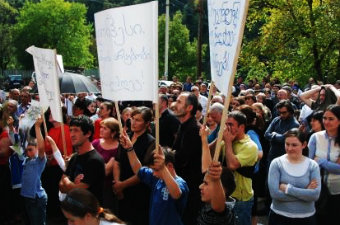
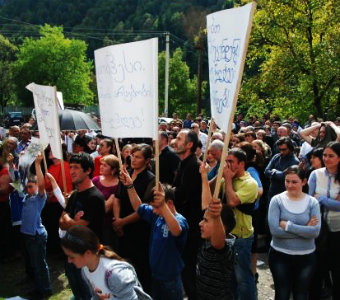
Trans Electrica looks set to receive unconditional support for the project from the Minisitry of Energy despite public protests. The company has failed to conduct any meaningful consultation with the affected communities, and during a public hearing in Khaishi in September 2013, an unprecedented number of police were mobilised against the locals.
A Minister of Energy and its deputies have pressured authorities and project-affected communities by publicly declaring that any action against the dam is an action against thesState. Moreover they have named organizations critical of Khudoni as state enemies and Russian spies. They claim that the interests of the project-affected communities will be fully taken into consideration, but at the same time they do not demonstrate any readiness for dialogue. The key demand of the local communities – to discuss project alternatives that do not require flooding the villages – is categorically unacceptable by the Ministry of Energy.
These processes demonstrate the disastrous tendencies in Georgia today: disregardingenvironmental and social issues during project planning and implementation and infringing on people’s constitutional guarantees, including the right to live in a safe environment and the right to property. Continuing down this path will have serious consequences for the people of the mountain regions of Georgia and will cause irreparable harm to Georgia’s natural resources and cultural heritage.
In order to avoid past mistakes and ensure a path to sustainable development for Georgia that respects socioeconomic and cultural rights, we believe that the Georgian government must:
· suspend ongoing works on the Khudoni dam and develop an alternative that is acceptable for local communities, both from the environmental and social perspectives;
· respect private property rights and return lands to traditional owners; and
· ensure wide public debate and civil engagement to develop a state energy strategy and policy that includes considerations for all realistic alternatives like small hydropower systems in line with the recommendations of the World Commission on Dams, wind and solar energy and biomass, in order to select the most optimal scenario for Georgia’s people and the environment.
Yours sincerely,

The Issue
Dear Sirs,
During its 2012 election campaign, the “Georgian Dream” coalition promised that the construction of large dams, including the Khudoni dam in the Caucasus mountains, would be stopped. This promise played an important role in mobilising support of voters in nearby Svaneti but across Georgia.
Yet just one year after assuming power that commitment has been violated, and Khudoni is the first in a series of large dams that the current government claims will be constructed. Other high level officials including Prime Minister Ivanishvili and Minister of Energy Kaladze have neglected legal procedures for decision-making about the planned project, in spite of concerns expressed by the Netherlands’ Commission on Environmental Assessment.
The Khudoni dam project will require the involuntary resettlement of around 2000 indigenous Svans and flood at least 1100 hectares of forest, 400 hectares of fertile agricultural land and 25 ancient villages with cultural and archeological significance. The dam will also destroy the biologically-rich gorges of the Enguri river. Preserved by its long isolation, the Upper Svaneti region is an exceptional example of mountain scenery with medieval villages and towers, where people speak their own language and continue to live by a mixture of ancient traditions and Christianity. The construction of the Khudoni dam however will have tremendous impacts across Svaneti on the social, environmental and climate in the region.
Apart from the impacts to Svaneti, the export-oriented project will bring few benefits to Georgia’s energy sector and the state budget because the agreement signed between investor and state. The project does not include a social cost-benefit analysis and its impacts to the State budget. Meanwhile, the project sponsor Trans Electrica has already purchased, with the support of the Ministry of Economy, 1500 hectares of land for just one dollar. These lands include the private property of people living in Khashi near the Khudoni site, as well as pastures and forests that have been traditionally owned by the communities for centuries. The environmental impact assessment for the project also fails to address the cumulative impacts of four proposed large dams and six run-off hydropower projects.
Trans Electrica looks set to receive unconditional support for the project from the Minisitry of Energy despite public protests. The company has failed to conduct any meaningful consultation with the affected communities, and during a public hearing in Khaishi in September 2013, an unprecedented number of police were mobilised against the locals.
A Minister of Energy and its deputies have pressured authorities and project-affected communities by publicly declaring that any action against the dam is an action against thesState. Moreover they have named organizations critical of Khudoni as state enemies and Russian spies. They claim that the interests of the project-affected communities will be fully taken into consideration, but at the same time they do not demonstrate any readiness for dialogue. The key demand of the local communities – to discuss project alternatives that do not require flooding the villages – is categorically unacceptable by the Ministry of Energy.
These processes demonstrate the disastrous tendencies in Georgia today: disregardingenvironmental and social issues during project planning and implementation and infringing on people’s constitutional guarantees, including the right to live in a safe environment and the right to property. Continuing down this path will have serious consequences for the people of the mountain regions of Georgia and will cause irreparable harm to Georgia’s natural resources and cultural heritage.
In order to avoid past mistakes and ensure a path to sustainable development for Georgia that respects socioeconomic and cultural rights, we believe that the Georgian government must:
· suspend ongoing works on the Khudoni dam and develop an alternative that is acceptable for local communities, both from the environmental and social perspectives;
· respect private property rights and return lands to traditional owners; and
· ensure wide public debate and civil engagement to develop a state energy strategy and policy that includes considerations for all realistic alternatives like small hydropower systems in line with the recommendations of the World Commission on Dams, wind and solar energy and biomass, in order to select the most optimal scenario for Georgia’s people and the environment.
Yours sincerely,
Petition Closed
Share this petition
The Decision Makers

Petition Updates
Share this petition
Petition created on November 22, 2013