
Tell EPA to Protect Our Seas from the Navy’s Ocean Dumping Program
Tell EPA to Protect Our Seas from the Navy’s Ocean Dumping Program
The Issue
Join our call. Tell the U.S. EPA to bring the Navy’s ship ocean dumping program in-line with current laws, laws that all citizens of the United States must abide by. Your support will make the difference!
A report by the Basel Action Network, Dishonorable Disposal: The Case Against Dumping U.S. Naval Vessels at Sea, and subsequent investigation by The Associated Press, uncovered the wasteful legacy of the U.S. Navy's ship sinking program. This comprehensive analysis of ship ocean disposal by way of target practice exercise cites toxicological data demonstrating polluted waterways, and an economic analysis revealing lost recycling jobs, wasted taxpayer dollars and squandered resources at the center of the government's ship disposal program.
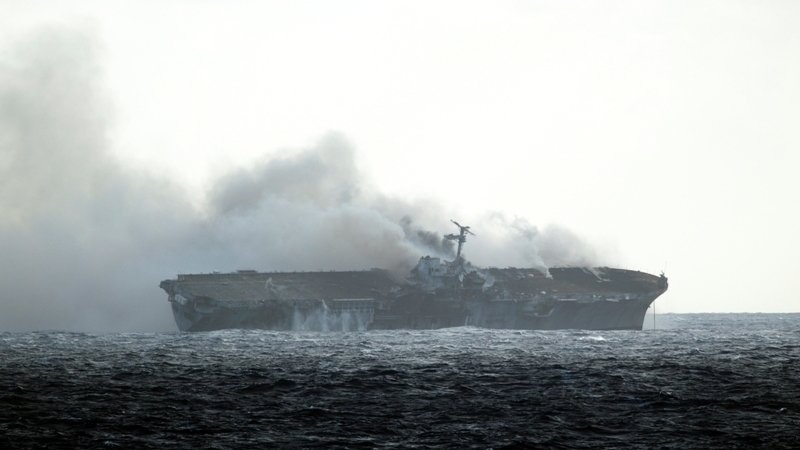
The Pentagon quietly pulled back plans to sink the USS Forrestal and three other aircraft carriers in 2011, deciding instead to recycle these vessels domestically. However, the Navy ignored the rationale that led them to that decision and sunk four ships in 2012, and is moving ahead with plans to sink two more ships by sinking exercise (SINKEX) in the pristine waters of the Hawaiian islands in July 2014.
The EPA and Navy admit that toxic chemicals are deposited into the marine environment as a result of ship sinking operations, including asbestos, lead paint, antifouling paint containing tributyltin (TBT), polybrominated diphenyl esters (PBDEs) and notably polychlorinated biphenyls (PCBs), a suspected carcinogen that has been targeted for global phase-out and destruction under the Stockholm Convention. However, the EPA and the Navy have not yet assessed the impacts of this toxic dumping to any degree of certainty, nor do they have plans to assess the ramifications of such dumping. Yet the sinking program continues unobstructed.
In 1998-99, EPA revised the general SINKEX permit to allow the Navy to continue the SINKEX program with exemptions to the U.S. Toxic Substances Control Act (TSCA), essentially giving the Navy a pass to leave intact solid PCB contaminated materials on SINKEX vessels for deep sinking. Following this exemption, the Navy quickly escalated the program. From 1970-1999 SINKEX accounted for approximately 8% of all vessel disposals, but from 2000-2010 (following the TSCA exemption), sinkings accounted for approximately 65% of all disposals, with over 100 ships being dumped in that decade alone. These ships contained an estimated 600,000 tons of recyclable steel, copper and aluminum, worth an estimated half a billion dollars in scrap had the vessels been recycled.
The Navy has taken great advantage of the exemptions EPA granted them and escalated the ocean dumping program, presumably to save on costs related to PCB compliance under TSCA, which is applicable to all other ship disposal methods. But EPA has done nothing to restrict the program or improve the remediation requirements by limiting exemptions that were granted over 13 years ago. In fact, in January 2014, the EPA explicitly stated that the Navy can sink up to 100 lbs. of pure molecular PCBs with each SINKEX target vessel.
Join our call. Tell the U.S. EPA to bring the Navy’s ocean dumping program in-line with current laws, laws that all citizens of the United States must abide by.
Thank you for your support.
Basel Action Network

The Issue
Join our call. Tell the U.S. EPA to bring the Navy’s ship ocean dumping program in-line with current laws, laws that all citizens of the United States must abide by. Your support will make the difference!
A report by the Basel Action Network, Dishonorable Disposal: The Case Against Dumping U.S. Naval Vessels at Sea, and subsequent investigation by The Associated Press, uncovered the wasteful legacy of the U.S. Navy's ship sinking program. This comprehensive analysis of ship ocean disposal by way of target practice exercise cites toxicological data demonstrating polluted waterways, and an economic analysis revealing lost recycling jobs, wasted taxpayer dollars and squandered resources at the center of the government's ship disposal program.
The Pentagon quietly pulled back plans to sink the USS Forrestal and three other aircraft carriers in 2011, deciding instead to recycle these vessels domestically. However, the Navy ignored the rationale that led them to that decision and sunk four ships in 2012, and is moving ahead with plans to sink two more ships by sinking exercise (SINKEX) in the pristine waters of the Hawaiian islands in July 2014.
The EPA and Navy admit that toxic chemicals are deposited into the marine environment as a result of ship sinking operations, including asbestos, lead paint, antifouling paint containing tributyltin (TBT), polybrominated diphenyl esters (PBDEs) and notably polychlorinated biphenyls (PCBs), a suspected carcinogen that has been targeted for global phase-out and destruction under the Stockholm Convention. However, the EPA and the Navy have not yet assessed the impacts of this toxic dumping to any degree of certainty, nor do they have plans to assess the ramifications of such dumping. Yet the sinking program continues unobstructed.
In 1998-99, EPA revised the general SINKEX permit to allow the Navy to continue the SINKEX program with exemptions to the U.S. Toxic Substances Control Act (TSCA), essentially giving the Navy a pass to leave intact solid PCB contaminated materials on SINKEX vessels for deep sinking. Following this exemption, the Navy quickly escalated the program. From 1970-1999 SINKEX accounted for approximately 8% of all vessel disposals, but from 2000-2010 (following the TSCA exemption), sinkings accounted for approximately 65% of all disposals, with over 100 ships being dumped in that decade alone. These ships contained an estimated 600,000 tons of recyclable steel, copper and aluminum, worth an estimated half a billion dollars in scrap had the vessels been recycled.
The Navy has taken great advantage of the exemptions EPA granted them and escalated the ocean dumping program, presumably to save on costs related to PCB compliance under TSCA, which is applicable to all other ship disposal methods. But EPA has done nothing to restrict the program or improve the remediation requirements by limiting exemptions that were granted over 13 years ago. In fact, in January 2014, the EPA explicitly stated that the Navy can sink up to 100 lbs. of pure molecular PCBs with each SINKEX target vessel.
Join our call. Tell the U.S. EPA to bring the Navy’s ocean dumping program in-line with current laws, laws that all citizens of the United States must abide by.
Thank you for your support.
Basel Action Network
Petition Closed
Share this petition
The Decision Makers
Petition Updates
Share this petition
Petition created on December 14, 2010